

Blog

All Las Cruces Volkswagen Dealer Volkswagen New Cars News New Inventory Informative Las Cruces Volkswagen Service Technology Awards and Recognition Features Golf GTI Volkswagen Volkswagen Atlas Las Cruces Used Cars Golf R Safety Specs Volkswagen Jetta Volkswagen Taos Volkswagen Tiguan Comparison Finance Events Pre-Owned Inventory Volkswagen Jetta GLI Service Sisbarro Autoworld Volkswagen Service Volkswagen Atlas CrossSport Volkswagen ID.4 Volkswagen ID.Buzz Electric Vehicle Review Sedan Towing SUV Volkswagen Jetta Sport
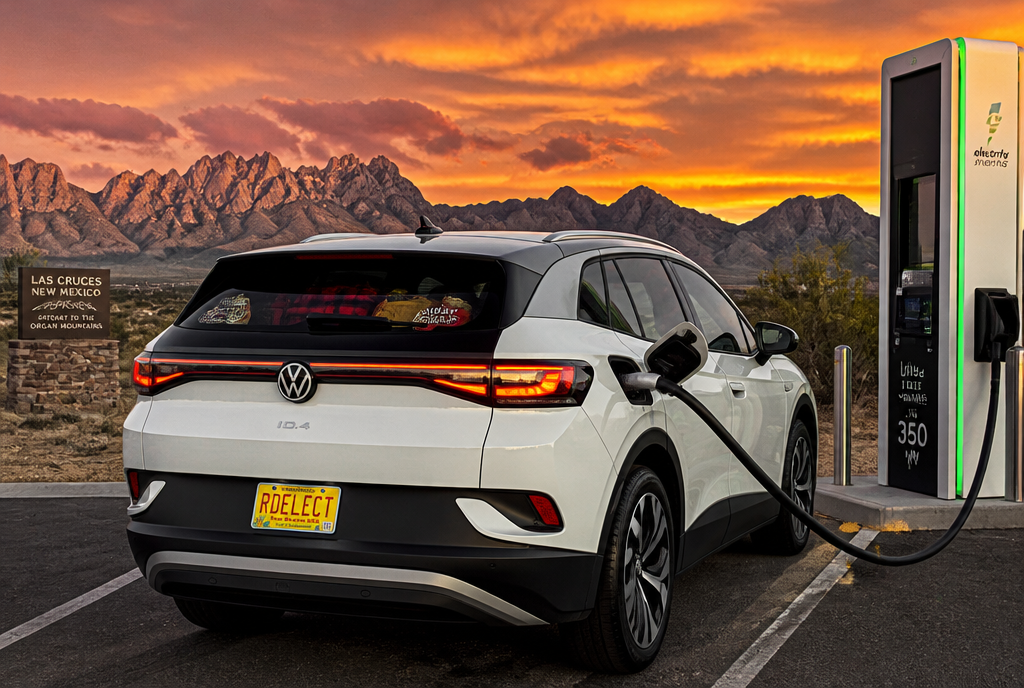
2026 Volkswagen ID.4 at a DC fast-charging station near Las Cruces, New Mexico with the Organ Mountains at sunset
in Volkswagen ID.4

Volkswagen ID.4 Holiday Charging and Trip-Planning Guide

In this article How Far Will the ID.4 Really Go Here? Where Do You Charge Locally and Along the Corridor? A Pre-Trip Checklist for Holiday Runs Plan Your Route This Way The 2026 Volkswagen ID.4 gives you up to 291 miles of EPA-estimated range on the RWD Pro, and it now ships with a standard NACS adapter that opens the Tesla Supercharger network. Put those two together and holiday road-tripping from Las Cruces is genuinely workable. It won't do your planning for you. Before a long holiday run, we tell every ID.4 owner the same three things. Know the number your trim actually delivers, know where the gaps sit on your corridor, and account for cold nights. We'll walk through all three. How Far Will the ID.4 Really Go Here? Expect the RWD Pro to cover close to its 291-mile EPA figure in mild daytime driving, but treat that EPA number as a starting point and nothing firmer, because a cold night at elevation will pull it down well before you notice. The table below lays out what the 2026 lineup delivers under the EPA test cycle, alongside the practical corridor reality for a Las Cruces departure. Trim Drive EPA Range I-10 to El Paso (~45 mi) I-25 to Albuquerque (~225 mi) Cold-Night Estimate (25 degrees F with heat) ID.4 Pro RWD 291 mi Easy, one-way with charge to spare Reachable in one leg if you leave full ~190-200 mi ID.4 Pro S RWD 291 mi Easy, one-way with charge to spare Reachable in one leg if you leave full ~190-200 mi ID.4 AWD Pro AWD 263 mi Easy, one-way with charge to spare Needs a stop without a full charge ~170-180 mi ID.4 AWD Pro S AWD 263 mi Easy, one-way with charge to spare Needs a stop without a full charge ~170-180 mi ID.4 AWD Pro S Plus AWD 263 mi Easy, one-way with charge to spare Needs a stop without a full charge ~170-180 mi The EPA rates the RWD Pro at 291 miles and the AWD trims at 263 miles. The cold-night column is where the surprise lives. AAA's May 2026 study found that at 20 degrees Fahrenheit with the cabin heater running, EVs lose approximately 39 percent of their rated range. Las Cruces winters run mild by northern standards, but November nights at 3,900 feet regularly drop into the mid-20s to low 30s Fahrenheit. Plan conservatively. A 291-mile car on a December Thanksgiving run to Santa Fe or Albuquerque at night, in 28-degree air, is realistically a 185-mile car until it warms up. Pre-condition the cabin while the car's still plugged in at home. The fix is simple, and it costs you nothing. The ID.4 lets you handle this through the myVolkswagen app, so you warm the interior and the battery from grid power instead of your stored range. It beats most generic EV tips. Where Do You Charge Locally and Along the Corridor? Las Cruces sits at the crossroads of I-10 and I-25, so you've got dependable fast-charging in town and along both I-10 legs before you leave, but the northbound I-25 run toward Truth or Consequences and Albuquerque is thinner and asks for more deliberate planning. West toward Deming and east toward El Paso, the I-10 coverage holds up. The I-25 northbound run is a different story. Plan it deliberately. Browse our current ID.4 inventory to confirm your trim before mapping your route. For in-town and departure charging, the standard NACS adapter on the 2026 ID.4 pays off. The Tesla Supercharger on W. Amador Ave. in Las Cruces, right off I-10, makes a fast, convenient top-off before you head out. Electrify America runs an established location in El Paso on Gateway Blvd. W. Between them, Supercharger and Electrify America cover the main I-10 spokes out of Las Cruces well. A simplified stop-by-stop framework for the most common holiday runs from Las Cruces looks like this. Route Leg Recommended Charging Stop Connector Approx. Dwell (10-80%) Range Notes Las Cruces departure Tesla Supercharger, W. Amador Ave (I-10 access) NACS 30 min Leave at 90-100% for northern routes I-10 east to El Paso Electrify America, Gateway Blvd W, El Paso CCS or NACS ~30 min Useful for AWD trims before long I-10 east legs I-25 north toward T or C Plan 1 stop (charger density is thin midpoint) CCS/NACS ~30 min Confirm station status before departure I-25 north to Albuquerque ABQ has strong network coverage CCS/NACS 20-30 min AWD trims plan on 1 corridor stop US-70 east to White Sands area Limited fast-charging; use Las Cruces as base Leave full Day-trip with full charge is the right call Charging caution worth knowing. The I-25 corridor between Las Cruces and Truth or Consequences has historically been thin on DC fast-charging options. Infrastructure is expanding under New Mexico's federal EV corridor funding, but on a holiday weekend you'll want to verify station availability in real time using the PlugShare app or the built-in route planner before you leave. Keeping a backup station identified is good practice on any corridor that is still building out, and this one qualifies. The Electrify America Plug&Charge feature of the ID.4 earns its keep here. You plug in, the car authenticates on its own, and billing runs in the background (no app to fish out of your pocket at the charger). For a family juggling kids and holiday luggage at a rest stop, that convenience counts. The standard 2-year Electrify America Pass+ membership comes with new 2026 ID.4 purchases, so your first two years of Electrify America sessions are covered under that plan. Ask our finance team about ID.4 ownership programs if you've got questions about what comes included. A Pre-Trip Checklist for Holiday Runs A little prep the night before keeps a holiday departure calm, so walk this list before you back out of the driveway, and treat it as a starting point, since your corridor and the forecast can each add a line of their own. Run through the items below before you leave. [ ] Charge to 90-100% the night before, since a holiday trip is the right time for a full charge [ ] Set pre-conditioning in the myVolkswagen app 20-30 minutes before departure so the cabin and battery warm on grid power [ ] Confirm charging stops in PlugShare or A Better Routeplanner, known as ABRP, with real-time availability [ ] Identify a backup charger for each planned stop, especially on I-25 north [ ] Set tire pressure, because cold mornings drop it and a correctly inflated tire rolls more efficiently to extend your real range [ ] Download or update the Electrify America and Volkswagen apps and confirm Plug&Charge is activated [ ] Pack the standard 2-in-1 mobile EV charging cable the 2026 ID.4 ships with, handy at a hotel with a standard outlet as a last resort [ ] Check weather along your corridor the morning of, because wind on I-10 and I-25 is a real range variable and a headwind at 70 mph costs range The Chihuahuan Desert stays reliably sunny, and in a modern EV that sunshine works in your favor. Solar gain through the glass takes some load off the heater on a bright cold day. That gain won't show up as a dramatic number, yet it's real, and it's the kind of detail that sets a Las Cruces departure apart from a Minneapolis one. Plan Your Route This Way A well-planned ID.4 holiday trip from Las Cruces really comes down to three decisions you make before turning the key, namely your departure state of charge, your first stop, and your backup stop, and everything else follows from those three. Get them right and the rest of the drive sorts itself out. For families heading north to see relatives in Albuquerque or Santa Fe, the RWD Pro's 291-mile EPA rating makes a one-stop run realistic in mild weather. Leave at or near 100 percent, pre-condition the battery, and build your charging stop around a meal or a coffee break so the car tops up over your lunch. That framing changes the whole experience. You're stopping because you want to, not because you have to. For AWD owners, with their 263-mile EPA range, the same logic holds, just with one more stop built in on the Albuquerque corridor. That stop runs about 30 minutes at a 175 kW DC fast charger to climb from 10 to 80 percent, according to the published charging specifications of Volkswagen. At most I-10 and Supercharger locations that sit next to restaurants, the math works out. You charge while you eat. The tradeoff is worth stating plainly. The ID.4 shines for this market's daily driving and regional trips. It isn't a coast-to-coast marathon machine in the same class as vehicles with 400-plus miles of range, and you shouldn't plan a 600-mile Thanksgiving run as if it were. None of that is a failing. Setting the right expectation up front is all it takes. For the Las Cruces-to-Albuquerque, Las Cruces-to-El Paso, and day-trip-to-White Sands routines our customers actually drive, the range is more than adequate, and the charging network has matured enough to make it work. If you want to look at what we've got on the lot right now, our team is happy to walk you through which trim fits your corridor. Schedule a service check if your existing ID.4 is due for a pre-trip inspection before the holiday season kicks in. Schedule a Pre-Trip Service Check Planning to get into an ID.4 before the holidays? Come see us on South Valley Drive. By the Sisbarro Volkswagen Team | November 2026 Frequently Asked Questions Does the 2026 Volkswagen ID.4 lose range in cold weather? Yes, and it's worth planning around. Cold battery chemistry and cabin heating both pull from the same pack. AAA's May 2026 testing found that at 20 degrees Fahrenheit with the heater running, EVs lose approximately 39 percent of their EPA-rated range. For Las Cruces, where winter nights regularly reach the mid-20s to low 30s Fahrenheit, that means a RWD Pro's 291-mile EPA rating could effectively run closer to 185-200 miles on a cold morning before the battery and cabin warm up. The practical fix is pre-conditioning through the myVolkswagen app while the car's still plugged in, so you warm everything on grid power and preserve your stored range for the road. How fast does the 2026 ID.4 charge at a DC fast charger? The 2026 Volkswagen ID.4 supports up to 175 kW DC fast charging, and the published specification of Volkswagen puts the 10-to-80-percent charge time at approximately 30 minutes at a compatible charger. It also ships with a standard NACS adapter, so it can use the Tesla Supercharger network's 25,000-plus compatible DC fast chargers in addition to Electrify America and other CCS-compatible networks. At home, the 11 kW onboard charger takes the battery to full in approximately 8 hours on a Level 2 connection. Where can I charge a Volkswagen ID.4 near Las Cruces before a road trip? The most convenient local fast-charging options are the Tesla Supercharger on W. Amador Ave. in Las Cruces (accessible from I-10) and the Electrify America station on Gateway Blvd. W. in El Paso, roughly 45 miles east. Both accept the standard NACS adapter that comes on every 2026 ID.4. For the I-25 northbound corridor toward Truth or Consequences and Albuquerque, DC fast-charging infrastructure is thinner midpoint, so we recommend confirming station availability in PlugShare or the built-in route planner before departing on a long run. Explore Financing Options Sisbarro Volkswagen 1115 S Valley Dr, Las Cruces, NM 88005 (575) 319-9131

Read More
2027 Volkswagen Atlas

What's New About the 2027 Volkswagen Atlas

A fair question comes up when folks start shopping the new Atlas. Didn't Volkswagen already redo this thing in 2024? It's reasonable to think so, since the 2024 model year brought a genuine mid-cycle update with a new engine and a restyled face. Assuming Volkswagen is running the same playbook again would be understandable. But it isn't. The 2027 Atlas is a second-generation redesign, not a face-lift, and the difference matters to anyone deciding whether to buy now or wait. The short version runs like this. New platform, new engine, new interior architecture, more standard equipment, and better fuel economy. Every surface you touch and every screen you look at is different. We've been following this launch closely here at Sisbarro Volkswagen, and the changes are substantial enough to clear up a few things that keep getting glossed over online. Let's go spec by spec. The short version The 2027 Atlas is the full second-generation redesign of Volkswagen, not a mid-cycle refresh like 2024 was. The engine is the EA888 evo5, producing 282 horsepower, a genuine 13-hp increase over the 2026 model. Fuel economy improves to an EPA-estimated 25 mpg combined (FWD) and 23 mpg combined (AWD). 2 mpg better than the outgoing model despite the added power. Standard equipment now includes a power liftgate, rear sunshades, dual wireless charging, and a front center airbag (seven airbags total). A hybrid variant is planned but not for this generation. The 2027 Atlas launches as a gasoline-only model. Is the 2027 Atlas Really a New Vehicle, or Just Another Update? The 2027 Atlas really is a new vehicle rather than another update, and answering that head-on changes how you'll shop, which is why the table below lines up the most-discussed claims against the verified reality beside each one. The Claim What's Actually True "It's the same refresh Volkswagen did in 2024" The 2027 is the second-generation Atlas, built on the new MQB evo platform with all-new exterior sheet metal. The 2024 was a mid-cycle update of the first-generation vehicle. Different category of change entirely. (Source: Volkswagen of America press materials) "It uses the same engine they've always had" The 2027 Atlas gets the EA888 evo5, a newer-generation unit producing 282 hp. The 2026 model used the EA888 evo4 at 269 hp. Same displacement, meaningfully different tune and output. (Source: Volkswagen media press kit) "More horsepower means worse fuel economy" The official EPA-estimated ratings of Volkswagen for the 2027 Atlas FWD are 22 city / 29 highway / 25 combined mpg, 2 mpg better than the 2026 model in every cycle. (Source: Volkswagen of America / EPA, media.vw.com) "The third row space is the same so nothing changed inside" The interior is completely rearchitected: new column-mounted shifter (freeing the center console for dual wireless charging), a standard 12.9-inch infotainment screen (15 inches on upper trims), a new Driver Experience Dial, standard ambient lighting, and available real-wood decor. The cabin isn't tweaked. It's rebuilt. (Source: Volkswagen of America press materials) "It's already available as a hybrid" No. The 2027 Atlas launches exclusively with the 2.0L turbocharged gasoline engine. Volkswagen has confirmed a hybrid is planned for a future midcycle refresh. (Source: Volkswagen of America) "The safety tech is basically the same IQ.DRIVE as before" IQ.DRIVE is now updated with a seventh standard airbag (a new front center unit), Travel Assist that supports driver-initiated lane changes, and Emergency Assist capable of guiding the vehicle to the roadside. That's not the same system. (Source: Volkswagen of America press materials) What the Redesign Actually Means for Your Day-to-Day Drive The redesign shows up in daily driving more than a spec sheet lets on, especially for Mesilla Valley families covering serious ground on the I-10 run between Las Cruces and El Paso or the US-70 stretch toward White Sands, where an SUV's highway manners and real-world efficiency turn into something you'll actually feel. The EPA's 29 mpg highway rating on the FWD 2027 Atlas matters on those runs in a way a brochure number sometimes doesn't. You're looking at 2 additional highway miles per gallon compared to the outgoing model, from an engine that also makes 13 more horsepower, and the published press materials of Volkswagen confirm the fuel economy improvement runs across every driving cycle, not just highway. Getting both at once is genuinely uncommon. Typically you trade one for the other. Browse what's available on our lot to see which trims and configurations we've got in stock. On the interior, the column-mounted shifter is one of those changes that sounds minor but reorganizes the whole driving experience. The center console now holds dual wireless charging pads and a rotary Driver Experience Dial that controls audio volume, drive modes, and the new Atmospheres feature (ambient lighting and audio presets in one knob). The Atlas Cross Sport carries these same interior changes in its two-row configuration if the longer three-row isn't what your household needs. You'll find the standard equipment list has moved meaningfully upmarket. Power liftgate, rear sunshades, auto-dimming driver mirror, front and rear Park Distance Control, and dual wireless charging are all standard across the 2027 Atlas lineup. On previous Atlas trims, several of those required a package or a higher trim level. Four trims are available for 2027: SE, SE with Technology, SEL R-Line, and SEL Premium R-Line. AWD is available on the SE and SE with Technology, and standard on the two SEL trims. The 2027 Atlas delivers 282 hp and an EPA-estimated 29 mpg highway (FWD) from the same vehicle, which is a combination the outgoing model couldn't match. Seven standard airbags (the new front center airbag joins the previous six) 12.9-inch infotainment screen standard; 15-inch available on upper trims 10.25-inch Digital Cockpit Pro gauge cluster, standard on all trims Three new exterior colors: Blackberry, Sacramento Green, and Sandstone Towing capacity: up to 5,000 lbs when properly equipped (unchanged from outgoing model) See What Your Current SUV Is Worth So What Should You Actually Do With This Information? What you'll want to weigh first is one honest tradeoff, because the evo5 engine gains 13 hp over the 2026 Atlas but gives up some torque, 258 lb-ft versus 273 lb-ft on the outgoing evo4. The calibration of Volkswagen prioritizes efficiency alongside power, which is why the fuel economy improves even as the output goes up. In everyday driving, the torque difference is unlikely to be noticeable. If you regularly tow at or near the 5,000-lb maximum, it's a question worth asking when you come in, because towing behavior at the upper end of capacity can reflect torque characteristics in ways that flat-road highway driving doesn't. The other honest note concerns the hybrid variant that keeps getting talked up online. It isn't part of the 2027 launch. Volkswagen has confirmed it for a future midcycle refresh. If you're holding out specifically for a hybrid Atlas, you're realistically waiting a few years at minimum. If what you need right now is seven seats, real cargo room, and an SUV that handles a Las Cruces-to-White Sands round trip efficiently, the 2027 Atlas is the vehicle on sale today, and it's a stronger one than the generation it replaces. Our team's read is straightforward. If you've been waiting for a reason to revisit the Atlas, this is it. The 2026 model was good. The 2027 is a genuine step up in every category Mesilla Valley families actually care about, from interior quality and tech to standard features, efficiency, and safety. Our finance team can walk you through the trim options and available configurations to find what works for your situation, and the conversation is always obligation-free. Come look at it in person. Frequently Asked Questions Is the 2027 Volkswagen Atlas a completely new vehicle? Yes. The 2027 Atlas is the full second-generation redesign of Volkswagen, not a mid-cycle refresh. It rides on the updated MQB evo platform, wears all-new exterior sheet metal, features a completely rearchitected interior, and uses a newer-generation EA888 evo5 engine producing 282 horsepower, 13 more than the outgoing model. What is the fuel economy on the 2027 Volkswagen Atlas? According to the official EPA-estimated ratings from Volkswagen of America, the 2027 Atlas is rated at 22 city / 29 highway / 25 combined mpg with front-wheel drive, and 20 city / 27 highway / 23 combined mpg with 4MOTION all-wheel drive. Both figures represent a 2 mpg improvement in every driving cycle over the 2026 model. Explore Financing Options for the 2027 Atlas Sisbarro Volkswagen 1115 S Valley Dr, Las Cruces, NM 88005 (575) 319-9131
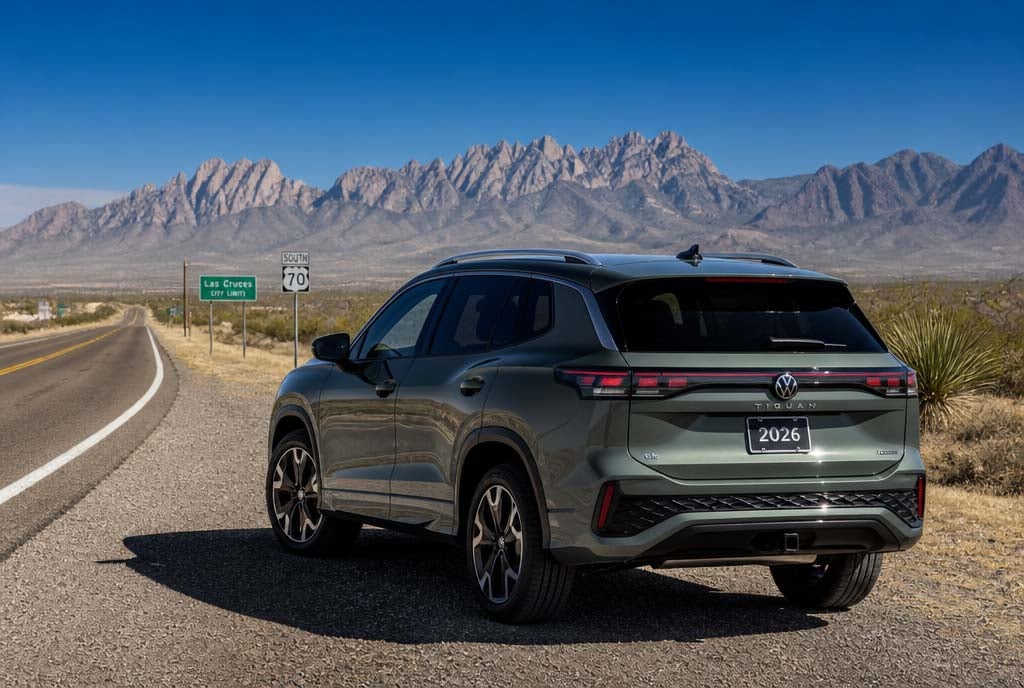
2026 Volkswagen Tiguan on a desert highway near Las Cruces NM with the Organ Mountains in the background

Why Desert Driving Requires Regular Volkswagen Maintenance

The Volkswagen maintenance schedule already includes language written for drivers like you. Plenty of Las Cruces owners never read it. Tucked inside the 2026 Volkswagen service literature you'll find a clause about "severe operation." Excessive dust and extreme heat both qualify, and the Chihuahuan Desert around Las Cruces clears that bar every single summer. The clause shortens specific intervals for filters, fluids, and drivetrain components. Not all of them. Not dramatically. But enough that skipping the fine print costs you real money and real reliability. We drive these roads with our customers in mind. Below is what the schedule actually says, and what it means for the way you use your Tiguan on US-70 toward White Sands, on I-10 heading south to El Paso, or just running daily errands across Las Cruces in heat that still touches 90 degrees F. Browse our 2026 Volkswagen Tiguan inventory The 2026 Volkswagen service schedule explicitly lists "excessive dust" and severe heat as conditions that shorten air filter and engine oil intervals. Las Cruces Chihuahuan Desert driving qualifies. What Do the Volkswagen Service Intervals Actually Mean for Desert Drivers? The standard Volkswagen schedule runs on a 10,000-mile or 12-month cadence (whichever comes first), covering oil and filter, brake inspection, and a multi-point safety check, and that baseline still stands in the desert. What changes is the fine print. The schedule spells out that severe conditions including excessive dust push certain items to earlier attention than you'd otherwise plan. Airflow components get dirty faster. Brake fluid absorbs moisture faster when temperature swings are wide, and coolant condition degrades under sustained heat load. Service Item Standard Volkswagen Interval Desert/Severe Condition Note Engine oil and filter Every 10,000 miles or 1 year Check sooner if driving in excessive dust or sustained heat Engine air filter Every 15,000-30,000 miles May need inspection or replacement before standard interval in high-dust conditions Cabin air filter Annually or per inspection In dusty desert climates, annual replacement is often not enough Brake fluid First flush at 3 years, then every 2 years Time-based regardless of mileage; desert heat cycling can accelerate moisture absorption Spark plugs (Tiguan 2.0T) Every 80,000 miles or 6 years Interval unchanged, but carbon buildup on turbocharged engines accelerates with heat DSG transmission fluid Every 60,000 miles (severe), 80,000 miles (normal) High-load or hot-climate driving qualifies as severe for this interval Sources: official 2026 Volkswagen maintenance schedule (Volkswagen Group of America); Tiguan-specific service documentation confirmed for the RM1 platform. The DSG figure is the one worth a double take. Sixty thousand miles sounds distant when you're buying new, but if you're running the El Paso commute five days a week and the gearbox is working in triple-digit ambient temperatures, the clock runs faster than paper shows. The Three Desert Realities That Change the Math Las Cruces isn't just hot; it's a specific combination of heat, altitude, and alkaline dust that hits multiple vehicle systems at once, and that overlap is exactly what the Volkswagen severe-conditions language was built to address. Each of the three works on the Tiguan a little differently. Fine alkaline dust is the quiet threat. Check the engine air filter sooner than the calendar alone suggests. The Chihuahuan Desert produces exceptionally fine particulate (the kind that defeats a loose or partially clogged engine air filter before you notice reduced power). The official Volkswagen service note specifically flags excessive dust as a trigger for between-interval attention. Our team pulls cabin filters at the one-year mark and finds them noticeably loaded compared to what we'd see in a humid climate. A restricted cabin filter doesn't just affect air quality inside. It forces the HVAC blower to work harder, which puts additional load on the system that's already cooling your cabin against 95 degrees F ambient air. Schedule a service appointment with our team Heat cycles accelerate moisture in brake fluid. The brake fluid replacement schedule per Volkswagen runs on the calendar, not the odometer. First flush comes three years after registration, then every two years after that. That interval doesn't change in the desert, but the reason it matters does. Brake fluid is hygroscopic (it absorbs moisture from the air). Las Cruces temperature swings between 110 degrees F daytime and 60 degrees F overnight create condensation cycles inside brake lines. Old, moisture-laden fluid has a lower boiling point. For most daily driving that's a background concern. On a steep I-25 descent or a canyon road coming back from Organ Mountains-Desert Peaks National Monument, it's not background at all. Turbocharged engines and desert heat need the right oil spec. Every 2026 Volkswagen Tiguan runs a turbocharged engine. Volkswagen specifies SAE 0W-20 full synthetic meeting Volkswagen 508 00 specification. That spec isn't interchangeable. In sustained desert heat, the wrong oil viscosity means inadequate film protection at operating temperature, which the turbocharger notices first. Carbon buildup on turbocharged Volkswagen engines is a documented pattern. Heat accelerates it, and short low-speed trips in hot conditions make it worse. Per the 2026 Volkswagen maintenance schedule (Volkswagen Group of America): "In case of severe conditions, such as extremely low temperatures, excessive dust, etc., it is necessary for certain operations to be carried out in between the given intervals. This applies particularly to engine oil changes and the cleaning or replacing of the air cleaner filter element." See our Volkswagen Jetta lineup for the commuter in your family Maintenance note: The 2026 Volkswagen schedule lists 4MOTION AWD models separately. If your Tiguan has 4MOTION, the Haldex coupling fluid and rear differential carry their own inspection points, and on desert surfaces (anything from paved highway to graded dirt near recreational areas) they'll wear faster if service gets deferred. Who This Maintenance Approach Actually Fits Staying on the OEM schedule isn't the same as over-servicing, and that distinction matters for any owner worried we're padding the ticket, because the honest reading is that the desert clause simply moves a few intervals earlier rather than inventing new ones. We're not suggesting you double every interval. We're saying the Volkswagen schedule has a desert clause, Las Cruces trips that clause, and ignoring it is the only thing that counts as skipping maintenance. The Tiguan is a composed, well-engineered crossover, and it handles Las Cruces driving well. I-10 runs south from Las Cruces to El Paso. It's comfortable on that long run, capable enough for the dirt pullouts east of the city, and refined enough that university families at NMSU find it a notch above the generic compact SUV options. The tradeoff you accept is that its turbocharged 2.0T engine and DSG transmission are more specification-sensitive than a naturally aspirated engine paired with a conventional automatic. They reward owners who follow the right fluids and intervals. They're less forgiving of the "I'll do it next month" drift. None of that is a knock. It's a design tradeoff in favor of driving feel and efficiency that Volkswagen engineers made deliberately. Our job is making sure you get the benefit of it across the full ownership arc in this climate. Explore the Volkswagen Taos for a lighter footprint in the desert Frequently Asked Questions Does the desert count as "severe" driving conditions for my Volkswagen? Yes. The official 2026 Volkswagen maintenance schedule explicitly names excessive dust and extreme temperatures as examples of severe conditions that warrant between-interval attention for engine oil and air filter elements. The Chihuahuan Desert environment around Las Cruces (with fine alkaline particulate, summer highs approaching 100 degrees F, and wide day-to-night temperature swings) meets that threshold. It doesn't mean every interval changes, but it does mean air and oil filtration deserve earlier inspection than standard-conditions guidance suggests. How often should I replace the cabin air filter on my Volkswagen in Las Cruces? The standard recommendation is annually or per inspection. In Las Cruces conditions (high dust loading from desert particulate combined with heavy A/C use across a long summer) annual replacement is often the right cadence, and in some cases you'll want a mid-year inspection if you notice reduced airflow from your vents or unusual odors when the HVAC runs. A restricted cabin filter puts extra load on the blower motor and reduces the cooling efficiency you need most in a desert climate. Book Your Volkswagen Desert Service Check Sisbarro Volkswagen 1115 S Valley Dr, Las Cruces, NM 88005 (575) 319-9131

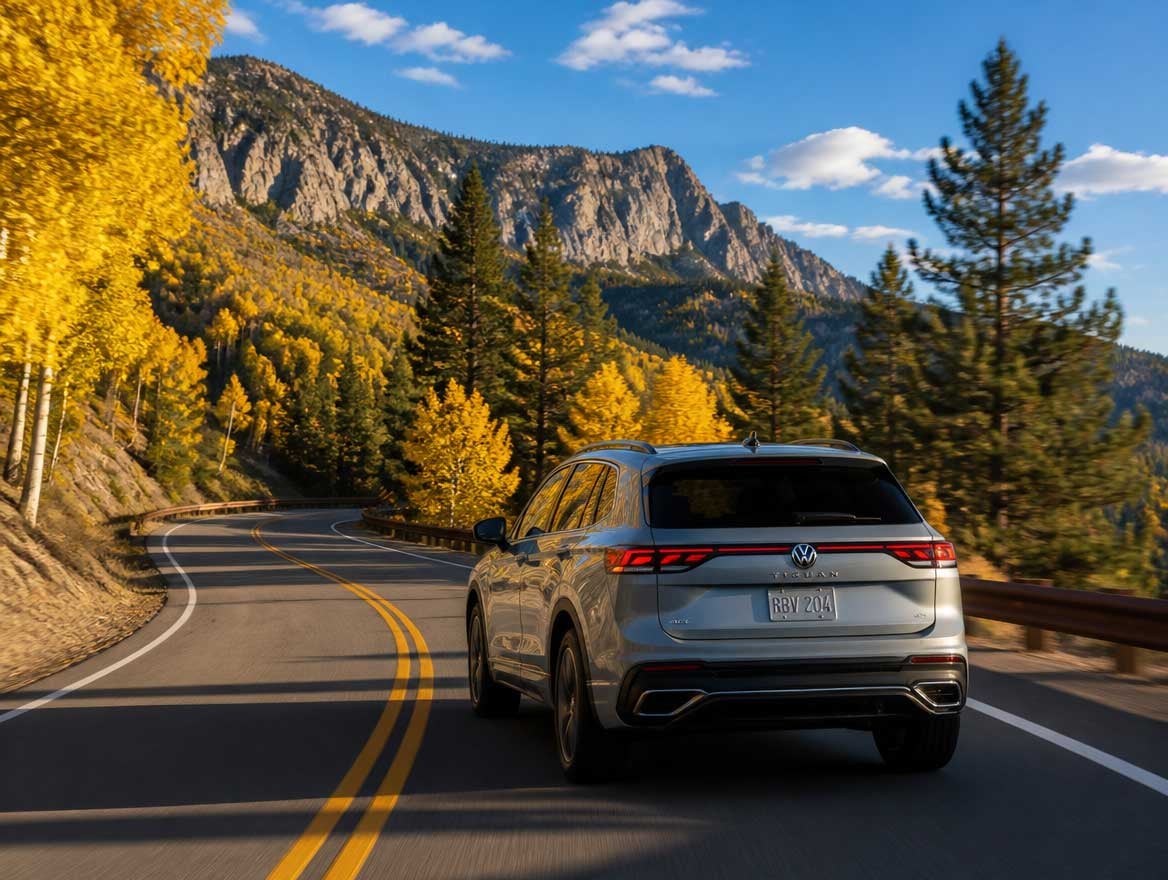
2026 Volkswagen Tiguan on a winding mountain road through the Sacramento Mountains in fall foliage

Volkswagen Tiguan Fall Road Trip to Cloudcroft

In this article Which Trim and Drivetrain Should You Choose for the Cloudcroft Drive? What Does the US-82 Mountain Climb Actually Demand From the Tiguan? How Do You Prepare the Tiguan for This Specific Drive? How Does the Tiguan Compare to the Taos for This Trip? Yes. For the Las Cruces-to-Cloudcroft run via US-70 and US-82, the 2026 Volkswagen Tiguan lines up nicely with what the drive actually asks for. You get a sustained 4,300-foot elevation gain on US-82's switchbacks, cargo room for fall weekend gear, and a cabin comfortable enough that the hour-and-a-half each way doesn't feel like a commute. The fair caveat is that the Taos gets better fuel economy. If the mountain climb is a regular thing and cargo space matters, the Tiguan earns the nod. Which Trim and Drivetrain Should You Choose for the Cloudcroft Drive? For most families making this climb, 4MOTION on the SE R-Line is the balanced pick, though a dry-season day trip runs fine on front-wheel drive. US-82 climbs from roughly 4,300 feet in Alamogordo to 8,676 feet in Cloudcroft, with switchbacks that load the drivetrain in ways a flat I-10 commute simply doesn't. That framing sits behind every spec decision below. Decision Axis Tiguan FWD (S / SE) Tiguan 4MOTION AWD Why It Matters on US-82 Engine output 201 hp / 221 lb-ft torque 201 hp (S/SE/SE R-Line) or 268 hp / 258 lb-ft (SEL R-Line Turbo) More torque means less gear-hunting on sustained grades Fuel economy (EPA est.) 26 city / 34 hwy / 29 combined 22 city / 30 hwy / 25 combined FWD saves fuel on the flat desert run; AWD trades some efficiency for grip Ground clearance 6.6 inches 7.0 inches The extra 0.4 inch matters if you pull into a forest-road pullout Tow capacity (properly equipped) 1,800 lbs 1,800 lbs Enough for a small trailer or roof box loaded with bikes Cargo (seats up / folded) 33.8 / 69.8 cu ft 33.8 / 69.8 cu ft Identical either way; fits a weekend's worth of gear without folding seats Best fit Day trip, dry-season fall run, solo or couple Overnight cabin trip, family with gear, early-season or late-October run Fall weather in the Sacramentos can shift fast above 8,000 feet The EPA rates the FWD Tiguan S at 26 city / 34 highway / 29 combined. Move up to 4MOTION on any trim and those numbers shift to 22 city / 30 highway / 25 combined. For an 80-mile round trip that's a real difference, though not a dramatic one. Where 4MOTION earns its keep is on the switchback section of US-82 itself, especially on a wet or shaded October morning when road temperatures at elevation drop well before Las Cruces feels cold. We see this pattern with fall drives. Customers heading to Cloudcroft in September often start in the valley at around 90 degrees and arrive in conditions 20 to 25 degrees cooler. That temperature swing is a useful cue to check tire pressure before you leave (cold pressure reads change in big elevation shifts), and it's a real reason to prefer the extra drivetrain security if you're traveling with kids or staying overnight. Trail Note: The Tiguan is built for paved roads and light gravel, not off-road tracks. The 7.0-inch AWD ground clearance handles forest-road pullouts and unpaved cabin driveways without drama, but it is not a replacement for a dedicated off-roader on rocky backcountry routes. The Volkswagen Taos is worth a quick mention here. Its 1.5-liter turbocharged engine produces 174 horsepower and 184 lb-ft of torque, and the EPA rates the FWD version at 28 city / 36 highway / 31 combined. That's a clearly better fuel economy number. The tradeoff comes in cargo, since the Taos carries less (65.9 cubic feet maximum with seats folded versus the 69.8 of the Tiguan), and for a family loading a roof box and weekend bags the extra room of the Tiguan adds up. If you're making this run light and solo, the Taos is worth a look. If the trip involves gear, the Tiguan is the practical call. For a Las Cruces family doing a fall overnight to Cloudcroft with gear and passengers, the Tiguan 4MOTION hits the sweet spot: enough cargo, confident on US-82's switchback grades, and a cabin that handles 90 minutes each way without complaint. What Does the US-82 Mountain Climb Actually Demand From the Tiguan? It demands sustained uphill torque more than outright horsepower, and the Tiguan turbo four delivers that early enough to climb comfortably, though the top engine makes it easier still, and you'll feel that on the grade. The stretch of US-82 between Alamogordo and Cloudcroft is the portion of the drive that separates a capable road-trip SUV from one that just looks the part. The road gains more than 4,300 feet of elevation in roughly 16 miles, which means steady uphill pull the whole way up. Volkswagen rates the standard 2.0-liter turbocharged four-cylinder at 201 horsepower and 221 lb-ft of torque, paired with an 8-speed automatic. Turbocharged torque arrives early in the rev range (Volkswagen lists peak torque from 1,500 rpm), which is exactly what a loaded SUV needs on a long grade, power you can use without revving the engine into a frenzy. The top-trim SEL R-Line Turbo steps the engine up to 268 horsepower and 258 lb-ft, and that version comes standard with 4MOTION. Truth be told, the base 201-hp engine handles US-82 without distress. The 268-hp version makes the climb feel effortless. Neither is a wrong choice here. The Volkswagen Atlas is the right answer if you're regularly hauling three rows and substantially more cargo room. But for a Cloudcroft overnight, the 33.8 cubic feet behind the Tiguan second row (or 69.8 with the bench folded) handles sleeping bags, coolers, and hiking boots for four people without asking anyone to pack light. Fall foliage window: Cloudcroft and the surrounding Lincoln National Forest typically show peak fall color in October, with aspen going gold and oaks turning russet at elevation. September arrivals see the green transition beginning. Plan accordingly for your photography stops at the Mexican Canyon trestle viewpoint on US-82. How Do You Prepare the Tiguan for This Specific Drive? Preparing the Tiguan for the Cloudcroft run takes only a short checklist, mostly tires, tire pressure, and where you fill up, and the one step you'll want to never skip is the cold tire-pressure check before you pull out of the valley. Get those sorted and the drive is easy. Start with tires and tire pressure, the two things that matter most on this drive. US-82 is well-maintained, but conditions above 8,000 feet can be wet, shaded, or (in late October) icy in ways that Las Cruces never signals at departure. Tire pressure drops roughly one PSI for every 10-degree temperature drop, and you'll see swings of 20 to 25 degrees between the Mesilla Valley floor and the Cloudcroft village. Check pressure cold before leaving, not after parking in Alamogordo's heat. Fuel is the other point. Alamogordo is where you fill up. The tank range of the Tiguan on the highway is generous (the EPA's 34-highway figure on FWD trims means a full tank covers the round trip comfortably), but Cloudcroft's village services are limited, so top off before you climb. You'll want the return on your terms. The cargo setup of the Tiguan makes packing straightforward. A 60/40 split-fold rear bench gives you a flat load floor when you need it. A weekend bag for two, a small cooler, hiking daypack, and a layer of jackets fit behind the second row without folding anything. Family of four with more gear? Drop the bench and you'll load 69.8 cubic feet of nearly flat space. That dimension is worth knowing before you start the Tetris. Service before a longer mountain run is worth doing, particularly if you're overdue on tire rotation or approaching a fluid check interval. Our service team is here when you're ready. Schedule a Pre-Trip Service Check How Does the Tiguan Compare to the Taos for This Trip? For this specific trip, the elevation change and cargo reality tilt the pick toward the Tiguan for most Mesilla Valley families, though the Taos stays the better call for a light, fuel-minded day trip. We carry both, and they're both solid, for what it's worth. 2026 Volkswagen Tiguan 2026 Volkswagen Taos Engine 2.0T, 201 hp / 221 lb-ft 1.5T, 174 hp / 184 lb-ft Best MPG (EPA combined) 29 mpg (FWD) 31 mpg (FWD) AWD option 4MOTION, available on S/SE/SE R-Line; standard on SEL R-Line Turbo 4MOTION available on S/SE/SE R-Line Black; standard on SEL Max cargo (seats folded) 69.8 cu ft 65.9 cu ft Tow rating 1,800 lbs (properly equipped) No official rating Ground clearance (AWD) 7.0 inches Not officially published Best fit for Cloudcroft Overnight, family, gear-heavy, early or late season Day trip, light packer, fuel economy priority For a quick day trip, traveling light and wanting the fuel economy advantage back on the I-10 commute the rest of the week, the Taos is the smarter choice. The Tiguan is the smarter choice if you're staying overnight, bringing gear for four, or heading up after mid-October when weather at 8,676 feet behaves less predictably. Neither vehicle is a compromise. They're just calibrated for different versions of this trip. Browse our current Volkswagen inventory to see which trims are available, and reach out if you'd like to talk through which configuration fits your road trip routine before you commit. Frequently Asked Questions Is the 2026 Volkswagen Tiguan good on mountain roads? Yes. The turbocharged 2.0-liter engine of the 2026 Volkswagen Tiguan delivers 221 lb-ft of torque from low in the rev range, which handles sustained grades like the US-82 climb to Cloudcroft without strain. Its 4MOTION AWD option (standard on the SEL R-Line Turbo) adds traction security on shaded or damp switchbacks. For paved mountain drives, the Tiguan is well-suited. Do I need AWD to drive to Cloudcroft in the fall? For a dry October day trip, FWD is adequate. The road is paved and well-maintained. By mid-October, morning temperatures above 8,000 feet can produce wet or icy patches on US-82, particularly on shaded sections. If you're planning overnight stays or traveling in late October, the Tiguan 4MOTION all-wheel drive is worth choosing for the added security on those switchbacks. How much cargo space does the 2026 Volkswagen Tiguan have for a road trip? The 2026 Volkswagen Tiguan offers 33.8 cubic feet of cargo space behind the second row with all seats up, expanding to 69.8 cubic feet when the 60/40 split-fold rear bench is folded flat. For a Cloudcroft overnight with two to four people, that's enough for duffels, a cooler, hiking gear, and cold-weather layers without needing a cargo carrier. Explore Financing Options Sisbarro Volkswagen 1115 S Valley Dr, Las Cruces, NM 88005 (575) 319-9131
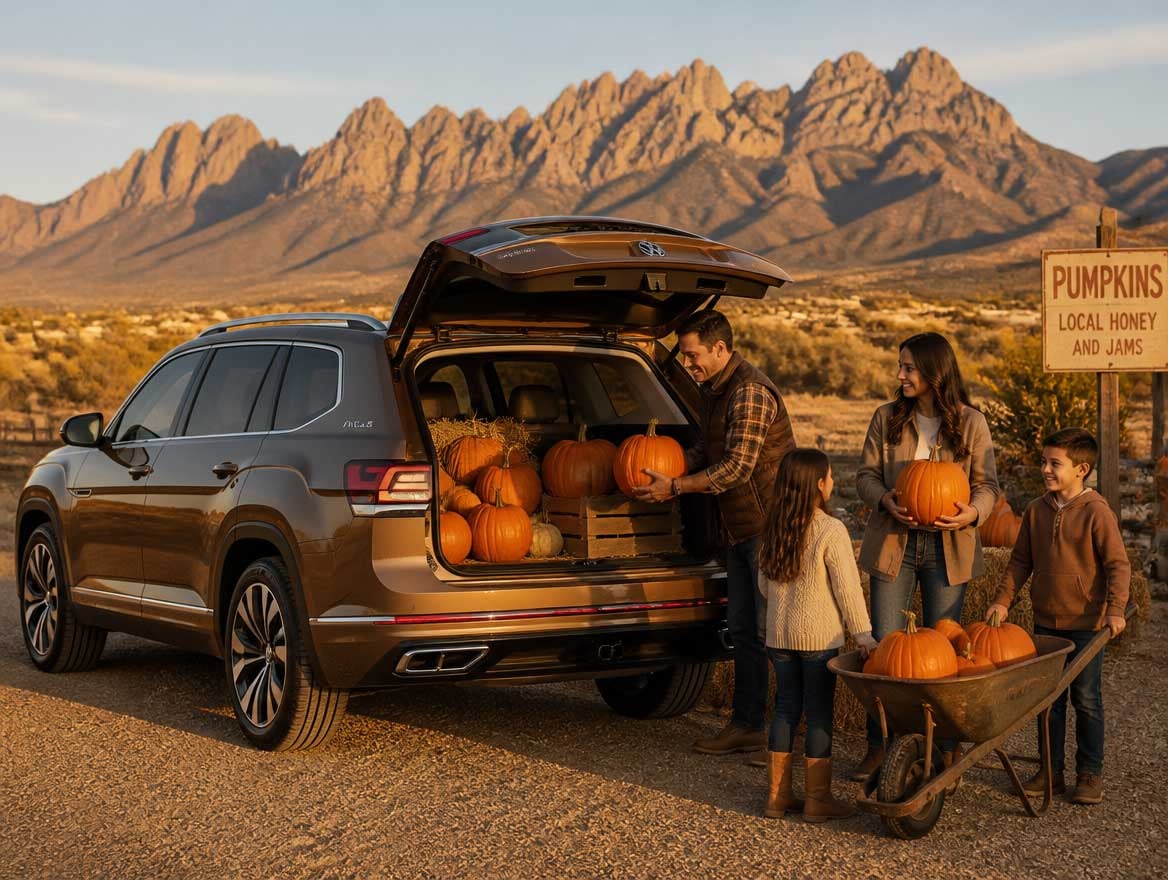
2026 Volkswagen Atlas with rear liftgate open at a Las Cruces-area pumpkin patch farm lot, pumpkins loaded in cargo area, Organ Mountains in the distance

Best Volkswagen Vehicles for Visiting Pumpkin Patches Around Las Cruces

In this article The Ranking at a Glance 1. The Atlas: Built for the Full Chaotic Pumpkin-Patch Family Day 2. The Tiguan: The Smarter Pick for a Family of Four or Five Pros and Cons: Atlas vs. Tiguan vs. Taos for Pumpkin-Patch Day 3. The Taos: For the Light-Loading Las Cruces Trip The Atlas Is Still Our Top Pick for Pumpkin-Patch Day October in the Mesilla Valley is a good stretch to be outside, and if you've done a pumpkin-patch run before, you already know the question that decides your afternoon isn't "which pumpkin," it's whether all of it fits in the car. The 2026 Volkswagen Atlas is our top pick for families doing a full pumpkin-patch day out here. Three rows, up to 96.6 cubic feet of cargo when you need it, and enough headroom that a giant pumpkin in the back doesn't turn into a Tetris emergency. Not every household needs a full three-row hauler, though, so we've ranked all three of our 2026 Volkswagen SUVs against what this outing actually demands. Think farm-lot parking, sticky-fingered kids, awkward pumpkin shapes, and a warm October afternoon on the drive home. The Ranking at a Glance Rank Pick Best For Standout Spec 1 Atlas Big families, max cargo 96.6 cu ft cargo (all rows folded); 7 seats 2 Tiguan Families of 4-5, practical balance 69.8 cu ft cargo (seats folded); 5 seats 3 Taos Couples, solo parents, lighter loads 65.9 cu ft cargo (FWD, seats folded); 5 seats 1. The Atlas: Built for the Full Chaotic Pumpkin-Patch Family Day The Atlas earns the top spot because it hauls a full family and a full pumpkin load at the same time, with three rows, seven seats, and a cargo floor that swallows what you figured wouldn't fit, though its size is the price you pay for all that room. Volkswagen rates the 2026 Atlas at 20.6 cubic feet behind the third row (enough for a stroller and a medium pumpkin already), 55.5 cubic feet with the third row folded, and a flat-loading 96.6 cubic feet when both rear rows go down. What that means on the day is simple. You can haul the kids in the second row, load the third-row floor with gourds and corn stalks, and still have room for the cooler and the face-painting cape your six-year-old won't take off. The 4MOTION AWD system is available across the lineup and comes standard on upper trims. It matters less for the Mesilla Valley Maze in Fairacres, where the lot is relatively flat, and more if you end up on softer ground after a late-monsoon shower. October in southern New Mexico still catches the tail of monsoon season now and then, and a gravel farm lot after rain is a different surface than dry caliche. The 2026 Atlas is powered by a 2.0-liter turbocharged four-cylinder rated at 269 horsepower and 273 lb-ft of torque, paired with an eight-speed automatic. There's enough pull there to make the I-10 leg home feel relaxed under a full load. One tradeoff worth naming is the size. At 200.7 inches bumper to bumper, the Atlas can feel tight on an improvised farm lot. It parks fine in standard spaces, though on a busy Saturday at a pumpkin patch somebody may pull a pickup in beside you, and you'll be glad for those front and rear parking sensors. See 2026 Atlas availability on our lot Explore Financing Options 2. The Tiguan: The Smarter Pick for a Family of Four or Five For a family of four or five, the Tiguan is the smarter pick than the Atlas, since the 2026 redesign dropped its optional third row and handed it a cargo floor that lays flatter and loads cleaner, and for a pumpkin-patch day that lost seat row is a fair trade rather than the setback it sounds like. The 2026 Volkswagen Tiguan delivers 33.8 cubic feet behind the rear seats and 69.8 cubic feet with the seats folded, and that near-flat load floor is genuinely easy to slide a big, lumpy pumpkin across without worrying about the seat-fold mechanism. For a family of four (two adults, two kids in car seats), the Tiguan is the more natural size, though a carful of grandparents plus kids will fill every seat. At 184.4 inches long, farm-lot parking is noticeably less stressful. The SEL Turbo trim is EPA-rated at 29 highway MPG with AWD, which makes the round trip from Las Cruces to La Union Maze and back an efficient one. Every 2026 Tiguan comes standard with forward collision warning, automatic emergency braking, blind-spot monitoring, and rear cross-traffic alert. All of that active safety tech runs whether you're on I-10 or picking your way up the gravel approach road to a farm. The tradeoff against the Atlas is passenger count. Five is the ceiling for the Tiguan. Buying caution: Cargo numbers shift between the FWD and AWD Taos trims. If you're picking a Taos mainly for its cargo space and you plan to add AWD, know that the 4MOTION configuration drops the behind-seat figure to 24.9 cubic feet (down from 27.9 on FWD models). For big pumpkin ambitions, that gap's worth weighing. Size up to the Tiguan if cargo matters to you more than the smaller footprint. Pros and Cons: Atlas vs. Tiguan vs. Taos for Pumpkin-Patch Day Pros Cons Atlas 96.6 cu ft max cargo, 7 seats, towing-capable (5,000 lbs properly equipped), 4MOTION AWD available Largest footprint (200.7 in); tighter on improvised farm lots Tiguan Near-flat cargo floor at 69.8 cu ft, 5-seat practicality, 29 hwy MPG (SEL Turbo AWD), easier parking No third row; five-passenger ceiling Taos Most manageable size, EPA-rated 33 hwy MPG (AWD), easy to park anywhere Smallest cargo (24.9 cu ft seats-up with AWD); not rated for towing 3. The Taos: For the Light-Loading Las Cruces Trip The Taos is the right call when the pumpkin run is a lighter affair, two adults, a toddler, and a plan to come home with three pumpkins and one big decorative gourd, though it trades cargo room and towing for its easy size. The 2026 Volkswagen Taos carries 27.9 cubic feet behind the rear seats in FWD trim (or 24.9 cubic feet with 4MOTION AWD), and folds flat to 65.9 cubic feet (FWD) or 60.2 cubic feet (AWD) when the rear seats go down. For a light haul, that's plenty. The EPA rates the 2026 Taos AWD at 25 city and 33 highway MPG, the most efficient option in our Volkswagen SUV lineup. That efficiency matters if you're also running the kids to NMSU events or making the El Paso corridor commute during the week. The Taos rides on a 1.5-liter turbocharged four-cylinder with the 4MOTION AWD option available on SE and SEL trims, paired with an eight-speed DSG automatic for crisp shifts. One firm limit's worth flagging. The Taos isn't rated for towing, so if the trip ends with hauling a hay bale home for the front porch, you'll want the Atlas or Tiguan instead. Parking is where the Taos earns easy points at a crowded October farm. The Taos is the easiest of the three to slot into whatever space remains. The Atlas Is Still Our Top Pick for Pumpkin-Patch Day The Atlas stays our top pick because the cargo math works in its favor, giving you 96.6 cubic feet of flat load space, seven seats that configure several ways, and a third row that folds so you carry the kids and the pumpkins without choosing between them. For the Mesilla Valley Maze in Fairacres (open October 3 through October 25, 2026), where you might come home with a hayride memory, three carved-ready pumpkins, a corn-stalk bundle, and two sugar-crashed kids in the back, the Atlas is the one that makes you glad you planned ahead. The Tiguan is the right call if your group is smaller and you want a more parkable SUV with a genuinely excellent cargo floor. The Taos earns its place when the trip is lighter and fuel efficiency is part of the equation. Come see all three on our lot. Open the liftgate, load in whatever you'd actually haul, and see which one fits your October. Value Your Trade Before Pumpkin Season Sisbarro Volkswagen 1115 S Valley Dr, Las Cruces, NM 88005 (575) 319-9131
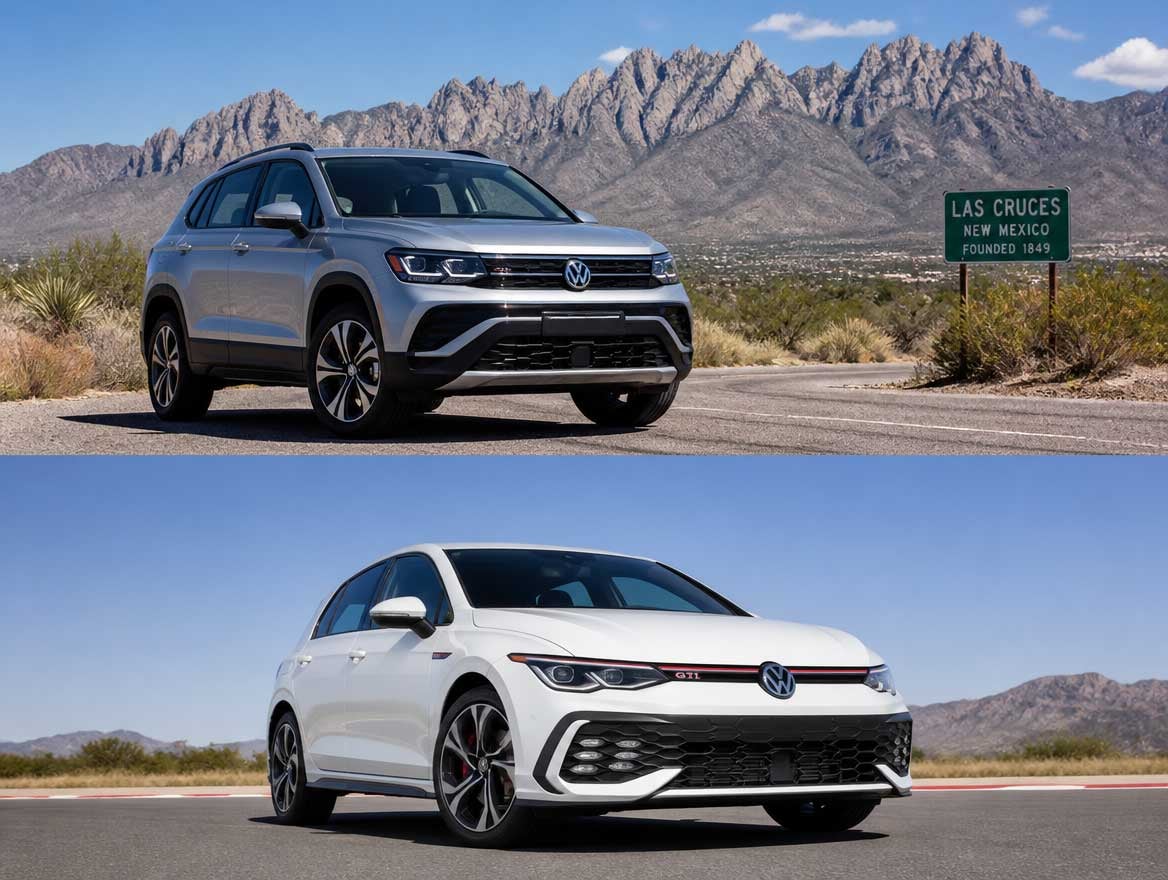
2026 Volkswagen Taos SUV and 2026 Volkswagen Golf GTI side by side on a Las Cruces desert road

Volkswagen Taos vs. Golf GTI: Practical SUV or Hot Hatch for Las Cruces?

For most Las Cruces drivers, the 2026 Volkswagen Taos is the right call. It seats five, carries up to 27.9 cubic feet of cargo behind the rear seats, runs 31 combined mpg on the EPA cycle, and offers available 4MOTION AWD for monsoon-season roads and the occasional dirt detour. The 2026 Golf GTI is the right call if driving feel is your actual purchase reason, not a bonus. Browse the 2026 Volkswagen Taos at Sisbarro Volkswagen How Do These Two Cars Actually Compare on the Things That Matter Day-to-Day? Both cars share the same German DNA and the same turbocharged philosophy, but that's where the overlap ends. The Taos is built to carry your life, and the Golf GTI is built to make you feel something every time you pull out of a parking lot. The side-by-side below answers it directly. Decision axis 2026 Volkswagen Taos (FWD) 2026 Volkswagen Golf GTI Engine 1.5L turbo TSI, 174 hp, 184 lb-ft 2.0L turbo TSI EA888, 241 hp, 273 lb-ft 0 to 60 mph 8.2 seconds 6.0 seconds (Volkswagen official) EPA fuel economy 28 city / 36 hwy / 31 combined mpg 24 city / 32 hwy / 27 combined mpg Cargo (seats up) 27.9 cu ft (FWD); 24.9 cu ft (4MOTION) 19.9 cu ft Cargo (seats folded) 65.9 cu ft (FWD) 34.5 cu ft Rear seat legroom 37.9 inches Fits four adults, bolstered sport seats Drivetrain options FWD or 4MOTION AWD Front-wheel drive only Transmission 8-speed automatic (FWD) or 8-speed DSG (4MOTION) 7-speed DSG or 6-speed manual Ground clearance 6.6 inches Lower sport car stance Best fit Families, commuters, errand-runners Driving enthusiasts, solo or co-pilot The numbers tell the obvious story. Volkswagen rates the Taos at 31 combined mpg with front-wheel drive, four full mpg better than the Golf GTI EPA-rated 27 combined. Over 45 miles of I-10 between Las Cruces and El Paso, that gap adds up in a way you'll notice at the pump across a year. And with both rear seats in place, the cargo space of the Taos runs nearly double the cargo space of the Golf GTI. See 2026 Golf GTI inventory at Sisbarro Volkswagen Look at the engine column, though, and the dynamic shifts. The 2.0L EA888 of the Golf GTI makes 241 horsepower and 273 pound-feet of torque, routed through a 7-speed DSG dual-clutch. The Taos does 174 hp and 184 pound-feet. That's not a small gap. Merge onto I-25 from the university side during rush hour and you'll feel it. Need more space and more power? The Tiguan might be the middle ground. For most Mesilla Valley commuters and families, the Taos handles real life better. For the driver who genuinely cares about how the car feels to drive, the Golf GTI is the one worth stretching for. Team perspective: The idea of the Golf GTI is easy to love, but a lot of everyday routines are really a Taos life. One car in the garage, dog in the back, Costco run on Saturday, White Sands day trip on Sunday. The cargo area of the Golf GTI (19.9 cubic feet behind the rear seats) is a real constraint for that routine. That 8.0-cubic-foot difference versus the Taos is roughly one large dog crate. What Does Each Car Give Up, and Will You Actually Miss It? Each car gives up something real, and whether you'll miss it comes down to how you drive. Neither one is a compromise in isolation. Each is a clear winner for a specific buyer and a clear mismatch for another, so the trade only stings if you buy the wrong one for your routine. What the Taos gives up. Driving feel, full stop. The 1.5-liter turbo is smooth and perfectly adequate, but it isn't engaging. Volkswagen tuned it for efficiency and composure, not for the grin you get from 273 pound-feet hitting the front wheels through a DSG. Buy a Taos expecting a Golf GTI that holds more stuff and you'll be mildly disappointed every time you want to pass on a two-lane stretch of US-70 east toward White Sands. It takes 8.2 seconds to reach 60 mph. The Golf GTI gets there in 6.0 flat by the published figures of Volkswagen. What the Golf GTI gives up. Cargo, AWD, and seating versatility. The 19.9 cubic feet behind the rear seats is a real number with real consequences. You can fit two carry-on bags and a backpack, but you can't comfortably fit three adults' luggage for a road trip and a cooler. There's no AWD option, either. None. The Golf GTI is front-wheel drive only, across all three trims. For most of the Chihuahuan Desert calendar that's fine. During monsoon season, when an afternoon storm turns an arroyo crossing to a muddy slick in fifteen minutes, the Taos with 4MOTION AWD and four adjustable drive modes (including an off-road setting) is a meaningfully different machine. Explore Financing Options at Sisbarro Volkswagen Which One Makes More Sense for the Las Cruces Lifestyle? Which one fits Las Cruces depends on your terrain and your calendar, and the town hands you both to weigh. It sits at roughly 3,900 feet in the Chihuahuan Desert, at the junction of I-10 and I-25, which shapes what a car actually needs to do here. Around 320 sunny days a year means neither car gets punished by weather most of the time. But the summer monsoon pattern from July through September delivers brief, intense downpours that can leave standing water on low points of surface roads. And if your life involves Organ Mountains-Desert Peaks National Monument day hikes, the access roads are unpaved. For that driver, the Taos with 4MOTION AWD is the practical answer. Its 4MOTION system includes four selectable drive modes with a dedicated off-road setting, which is unusual for a subcompact SUV. Ground clearance sits at 6.6 inches. It handles gravel and compressed caliche without drama, truck or not. For the NMSU student or the commuter doing solo I-10 miles in a compact car, the smaller footprint of the Golf GTI is genuinely useful. It parks easily, and it's quick in stop-and-go traffic because the DSG shifts are near-instantaneous at low speed. It also carries 27 combined mpg on the EPA cycle for a 241-horsepower engine, which is a fair trade. The hatchback body also gives you 34.5 cubic feet with the rear seats folded, enough for a weekend bag or a flat-pack furniture run. That's not nothing. Browse all available new Volkswagen vehicles at Sisbarro Volkswagen The real tiebreaker for Las Cruces: how many people and how much stuff are in the car most of the time? One person, a laptop bag, and a commute? Golf GTI. A family of four plus the expectation of being the trip car, the errand car, and the weekend car? Taos. Frequently Asked Questions Is the Golf GTI practical enough to use as a daily driver in Las Cruces? Yes, with realistic expectations. The 2026 Golf GTI carries 19.9 cubic feet of cargo behind the rear seats and seats four adults with genuine comfort. For a solo commuter or a two-person household without regular cargo demands, it works well as a daily driver. The EPA rates it at 27 combined mpg. Where it falls short is cargo depth for a family routine and the absence of any AWD option, which matters when monsoon-season road conditions hit the Mesilla Valley. Does the Volkswagen Taos come with all-wheel drive? Yes. The 2026 Taos is available with 4MOTION AWD on all trim levels except the base S, which comes in FWD only. The 4MOTION system includes four selectable drive modes, one of them a dedicated off-road setting. Move up to 4MOTION and the transmission also upgrades to an 8-speed DSG dual-clutch automatic for quicker response. Cargo volume behind the rear seats drops slightly with 4MOTION (24.9 cu ft versus 27.9 cu ft with FWD) because of the AWD hardware under the floor. Which gets better fuel economy, the Taos or the Golf GTI? The Taos. The 2026 Taos earns an EPA estimate of 31 combined mpg with front-wheel drive, compared to 27 combined mpg for the Golf GTI. On the highway the gap narrows to 36 mpg for the Taos (FWD) versus 32 mpg for the Golf GTI. If you add 4MOTION AWD to the Taos, fuel economy comes down to 28 combined mpg, which is still slightly ahead of the GTI. The Taos also accepts regular 87-octane fuel; confirm the fuel requirement of the Golf GTI with our team, as performance engines sometimes specify premium. Get a Trade-In Estimate Before You Decide Sisbarro Volkswagen 1115 S Valley Dr, Las Cruces, NM 88005 (575) 319-9131
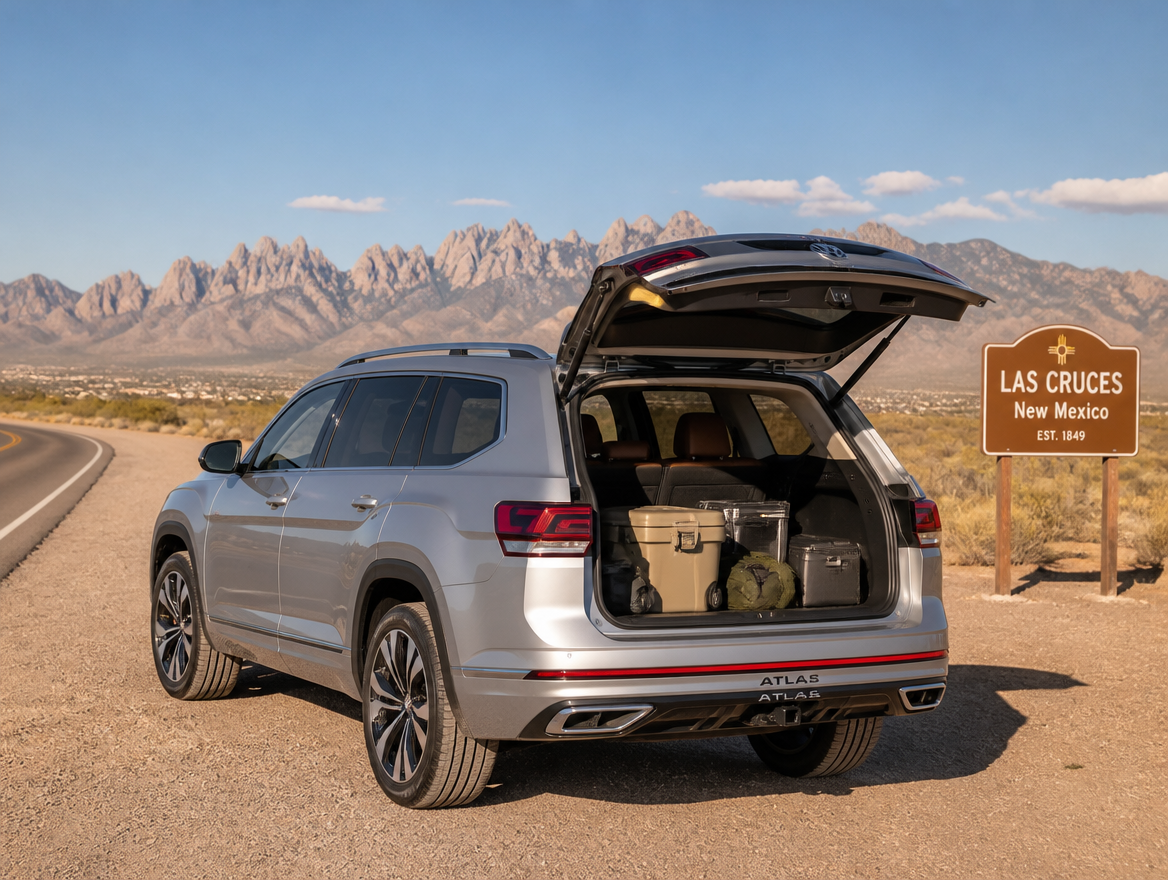
2026 Volkswagen Atlas rear cargo area open on a desert highway near Las Cruces with the Organ Mountains in the background

Volkswagen ID. Buzz vs. Atlas for Large Families

In this article What You Need Before You Start Setting Up Both Vehicles for Seven Passengers Cargo Setup: Which Layout to Use When Your Print-and-Go Family Setup Recap Both Volkswagen vehicles seat seven. That's where the easy part ends. Families walking our lot rarely ask which one is bigger. They ask how to set the thing up so everyone fits and the stroller, the soccer gear, or the trailer still comes along. Your answer shifts depending on which vehicle you're sitting in, and a bad configuration turns a trip to White Sands into a Tetris argument in the parking lot. Row by row, we'll walk you through the seat, cargo, and tow setup for both vehicles, so you leave knowing exactly what to do before the family piles in. The 2026 Volkswagen Atlas The single biggest configuration difference is this. The Atlas gives you a folding second row that stays in the car, while the 2025 ID. Buzz gives you a removable third row that comes out entirely (each seat section weighs around 60 pounds, so plan where you're storing it). What You Need Before You Start Every family setup starts with a quick checklist you can run before you even open a door, and it takes two minutes to confirm the things that decide whether the rest of the process goes smoothly. Run through these first. Item to confirm 2026 Atlas 2025 ID. Buzz Number of passengers Up to 7 Up to 7 Third-row entry method Second row tilts/slides forward Third-row seats remove or second-row captain's chairs tip forward Child-seat LATCH sets, row 2 3 (bench) or 2 (captain's chairs) Available in row 2 Towing hitch included SE: no factory hitch (2,000 lb aftermarket limit); SE w/ Technology+: standard hitch, up to 5,000 lbs RWD: up to 2,600 lbs; AWD 4Motion: up to 3,500 lbs Charging/fuel type 87 octane gasoline Electric, 91-kWh battery EPA efficiency 20 city / 27 hwy (FWD) 234 miles estimated range (RWD) Two rows in this table deserve a closer look before you touch a seat. Atlas trim level changes your towing story a great deal. The base SE tops out at 2,000 pounds with an aftermarket hitch, while any SE with Technology or above comes with a factory hitch and the full 5,000-pound braked rating. Second, the ID. Buzz EPA range of 234 miles (RWD) or 231 miles (AWD 4Motion) is the number to know for any day trip south on US-70. Setting Up Both Vehicles for Seven Passengers Loading all seven seats is the workhorse configuration, the full house with everyone buckled and the trip underway, and it's the setup that rewards a little planning up front. Start here. Step 1: Load the second row first in the Atlas. The Atlas second row is a 60/40 split-folding bench. It tilts and slides forward even with a forward-facing child safety seat attached to the LATCH anchors. Slide both sections forward slightly to open the third-row entry path before anyone tries to climb back there. Step 2: Confirm Atlas third-row legroom before you commit. Volkswagen lists 33.7 inches of third-row legroom and 38.3 inches of headroom. That's genuinely livable for kids and shorter adults on a drive to the Organ Mountains-Desert Peaks National Monument. We'll be straight with you, though. A six-foot adult back there on a two-hour interstate stretch will notice it. Set expectations. Step 3: In the ID. Buzz, verify your trim's row-two setup. The 2025 ID. Buzz sold in the U.S. comes in a 2+2+3 seven-seat layout, and two captain's chairs in the second row is the standard North American configuration. Those captain's chairs tip forward to open third-row access. The aisle between them runs narrower than a traditional minivan sliding door, so load passengers before bags. Step 4: Confirm the ID. Buzz third row is actually installed. The third-row sections of the ID. Buzz are removable, and if someone stored them before your test drive, the car shows up as a five-seater. Each section weighs about 60 pounds. If they're in, check that both sides are locked down with the seat latches before anyone sits there. Step 5: Install child safety seats in row two on either vehicle. Our current inventory includes units on which our team can show you the LATCH anchor positions in person. On the Atlas, the second-row bench offers three complete LATCH sets, though IIHS notes the lower anchors sit deeper in the seat cushion and require more effort to clip. The captain's chairs of the ID. Buzz have exposed lower anchors, and families we talk to consistently find these easier to clip quickly. Step 6: Settle the range or fuel question before departure. The 2026 Atlas runs on regular 87-octane fuel, EPA-estimated at 20 city / 27 highway on FWD trims. For the ID. Buzz, the EPA rates the RWD Pro S at 234 miles of range and the AWD 4Motion at 231 miles. Our high-desert elevation (roughly 3,900 feet) and summer heat can trim both fuel economy and EV range, so plan an ID. Buzz charging stop on any round trip beyond 100 miles. Explore Financing Options Step most families get wrong: Skipping the tow hitch conversation until they're ready to buy. On the Atlas, the standard factory hitch only comes with SE with Technology trim and above. On the ID. Buzz, the AWD 4Motion is your towing option at up to 3,500 pounds when properly equipped. Neither vehicle hitch situation is complicated once you know it. Discovering it after you've already configured the rest of the purchase is a frustrating surprise. For families who tow a small camper or a utility trailer: the 2026 Atlas with SE with Technology trim or above is the straightforward path, rated at up to 5,000 pounds when properly equipped. The 2025 ID. Buzz tops out at 3,500 pounds on the AWD 4Motion, adequate for a lightweight trailer but short of the ceiling of the Atlas. Cargo Setup: Which Layout to Use When The cargo story between these two vehicles runs genuinely counterintuitive, and it's worth mapping out before you decide. The layouts break down this way. Scenario Best Atlas layout Best ID. Buzz layout Load-bearing difference 7 passengers, minimal gear All rows up All rows up, third row locked in Atlas: 20.6 cu ft behind row 3. ID. Buzz: 18.6 cu ft behind row 3 5 passengers + weekend gear Third row folded 50/50 Third row tilted/removed Atlas: 55.5 cu ft behind row 2. ID. Buzz: 75.5 cu ft (third row out) Cargo-only or camping mode Both rear rows folded flat Third row removed, second row folded Atlas: 96.6 cu ft max. ID. Buzz: up to 145.5 cu ft max Bike/large item transport Third row folded flat Third row removed, second row folded ID. Buzz flat load floor is easier; Atlas has a slight step The advantage of the ID. Buzz kicks in once you pull that third row out entirely. At up to 145.5 cubic feet of maximum cargo volume, it out-hauls the 96.6 cubic-foot maximum of the Atlas. There's a real tradeoff, though. Those 60-pound seat sections need to live somewhere when they're not in the vehicle. Browse the 2026 Atlas for families who need the cargo flexibility of folding rows without the extraction logistics. Your Print-and-Go Family Setup Recap Run this in under two minutes before every trip, and you'll catch the small stuff that otherwise strands the stroller in the driveway. Both lists below cover it. Atlas checklist: Second row: tilted forward to confirm row-three entry path is clear Child seats: LATCH clipped, top tether attached to anchor behind seat Towing: hitch confirmed for your trim level (SE with Technology+ for 5,000-lb rating, properly equipped) Fuel: regular 87-octane, EPA-estimated 20 city / 27 highway (FWD) Safety: IIHS named the 2026 Atlas a TOP SAFETY PICK+, its highest honor, and NHTSA awarded it five out of five stars overall ID. Buzz checklist: Third row: both sections locked in or both fully removed and stored (not halfway) Captain's chairs: tipped forward to confirm third-row access before passengers board Child seats: LATCH anchors clipped in row two, tether to anchor on row-three seat frame Charging: EPA-estimated 234 miles (RWD) / 231 miles (AWD); plan charging for runs past 100 miles from Las Cruces Towing: confirm AWD 4Motion for up to 3,500-lb rating, properly equipped Talk to our finance team about which trim puts your preferred configuration within reach. Trim level is the decision that unlocks the tow rating along with the seat-heating and ventilation features on both vehicles, so it's worth a conversation before you finalize anything. Both vehicles carry your family well. The Atlas fits more naturally into a routine that mixes passengers, the occasional trailer, and a gas station on every corner. The 2025 ID. Buzz rewards families who want a larger maximum cargo volume, a genuinely impressive third row, and the flexibility of all-electric driving. It's built for those who can charge at home or along their regular routes. Neither is a compromise. They're just answers to different questions. Frequently Asked Questions Does the Volkswagen ID. Buzz have a 2026 model year? No. Volkswagen confirmed that the ID. Buzz skips the 2026 model year in the U.S. The model currently on sale is the 2025 ID. Buzz. A refreshed 2027 version is planned. If you're shopping now, the 2025 ID. Buzz is the current vehicle our team can help you configure and finance. Which Volkswagen is better for a family that needs to tow a trailer? For heavier towing, the 2026 Atlas with SE with Technology trim or above is the stronger option, rated at up to 5,000 pounds when properly equipped and coming with a factory hitch standard on those trims. The 2025 ID. Buzz AWD 4Motion is rated at up to 3,500 pounds when properly equipped. Both are capable of pulling a smaller utility or camping trailer; the Atlas simply has the higher ceiling and a lower entry point for the factory hitch. Value Your Trade-In Sisbarro Volkswagen 1115 S Valley Dr, Las Cruces, NM 88005 (575) 319-9131
Sisbarro supports the Southern New Mexico State Fair

Sisbarro Volkswagen Proudly Supports the 60th Southern New Mexico State Fair

Southern New Mexico State Fair 2026: Sisbarro Volkswagen Proudly Supports Las Cruces' 60th Annual Fair Some traditions in Doña Ana County don't need an invitation. When October gets close, families from Las Cruces, Mesilla, Anthony and El Paso start clearing a day on the calendar for the fair. This year is a milestone. The 60th Annual Southern New Mexico State Fair & Rodeo runs September 30 through October 4, 2026, and Sisbarro Volkswagen is proud to help make it happen. We're sponsoring alongside our sister stores: Sisbarro GMC, Sisbarro Chrysler Dodge Jeep Ram and the Sisbarro Truck Store. Below you'll find how to pick your best fair day, and how to make sure your ride is ready for the drive out I-10. Which Fair-Goer Are You? Finding Your Best Day at the Southern New Mexico State Fair Think of fair week like a five-course menu. Nobody eats every course. You pick the ones you came for and plan around them. Here's how most families we talk to naturally sort themselves out: The Barn Family. You have a kid showing an animal, or you just love the livestock barns. Shows start early: swine and market rabbits kick off at 8 a.m. on Wednesday, and the Junior Livestock Sale is Friday evening. The Rodeo Crowd. The Ranch Rodeo takes over Thursday night. The PRCA Rodeo follows Friday and Saturday at 7 p.m. and Sunday at 1 p.m., all at the Pete Domenici Rodeo Arena. The Concert Crowd. The Electric Company Concert Pavilion hosts Wade Bowen on Thursday, Oct. 1, Tyce Delk on Friday, Oct. 2, and Restless Road on Saturday, Oct. 3. The Car People. A Model A vintage car display fills the 4-H Building Saturday morning. Sunday brings an all-day car show at The Electric Company Pavilion. The Sisbarro Day Crowd. Wednesday, September 30 is Sisbarro Day. According to the fair's official schedule, admission is discounted all day, and the evening wraps with the opening ceremony and the carnival lights coming on. The takeaway: pick your day around your "must-see," then build the rest of the visit around it. You'll leave happier and less worn out. Southern New Mexico State Fair Trip Planner: Matching Your Plans to Your Ride A fair day in Southern New Mexico is really a road trip, a long day outdoors and a late drive home rolled into one. Your vehicle is part of the plan. Situation Cause / Reason Recommended Action Driving out daily for 4-H or FFA shows Early barn times and repeat trips on I-10 add up fast Check tires and brakes before the week starts. For heavy hauling, our Sisbarro GMC and Truck Store neighbors can help. Bringing the whole family for the carnival and the rodeo Strollers, coolers, jackets for the cooler night air and tired kids Consider three-row space like the Atlas or the ID. Buzz, and test drive one with your real gear in mind. Coming up from El Paso or Anthony for a concert A longer highway drive and a late return in the dark Book a quick pre-trip visit covering lights, wipers, fluids and tires. Showing off your car at Sunday's car show Desert dust and strong sun are hard on paint and interiors Ask about accessories and protection, and give the air filters a look afterward. Most people are surprised how much one fair day asks of their vehicle. A little prep keeps the focus on funnel cakes, not flashing dash lights. Why the Fair Matters in Las Cruces, and Why Sisbarro Shows Up The fairgrounds sit about 12 miles west of town on I-10, out on the open West Mesa. Take Exit 132 (Airport) or Exit 127 (Corralitos Road). On Friday and Saturday, the fair recommends the Corralitos exit for express parking. That drive tells you something about this region. People here cover real distance for the things they care about: ranch rodeos, youth livestock shows, family time and neighbors they only catch up with once a year. The Sisbarro family has been part of that story since 1981. Over more than 45 years, that's meant support for schools, youth athletics, local nonprofits and the Pat & Lou Sisbarro Community Park at New Mexico State University. You can see the full Sisbarro Southern New Mexico State Fair sponsorship page for more. You can also explore the wider list of Sisbarro Volkswagen community involvement across Doña Ana County. This matters for anyone who wants their car dollars to stay close to home. A local dealer that invests in local traditions is one you can hold accountable. Pre-Fair Checkup or Wait Until After? A Straight Answer Truth is, most well-maintained Volkswagen vehicles will handle a fair trip without a second thought. The real question is whether anything has been nagging at you. Here's the tipping point. If a warning light is on, your brakes feel soft or your tires are near the wear bars, don't wait. A dark stretch of I-10 at 11 p.m. with a carload of sleepy kids is the worst time to find out. If everything feels normal, enjoy the fair first. Then book a visit, because dusty lots are tough on air filters and paint. Either way, you can schedule Volkswagen service in Las Cruces online in a few minutes. What if the fair has you realizing you've outgrown your ride? Is a three-row SUV right for everyone? Not necessarily. A Tiguan or Taos covers plenty of families, while bigger crews may want the Atlas. Take your time. Browse new Volkswagen inventory, and if you're thinking about moving on from your current vehicle, start with a trade-in value estimate. No pressure, just information. Common Questions About the Southern New Mexico State Fair in Las Cruces Is there a way to save on admission to the Southern New Mexico State Fair? Yes. According to the fair's official 2026 schedule, Wednesday, September 30 is Sisbarro Day, with discounted admission all day. Thursday and Friday offer discounted admission until 2 p.m., and Saturday includes a discount for military members and first responders with valid ID. Confirm details with the fair before you go. What should I check on my Volkswagen before driving out to the fairgrounds? Focus on tire pressure and tread, brakes, headlights and taillights, and wiper blades. Your cabin and engine air filters take a beating on dusty desert lots. If a warning light is on, get it looked at before fair week, not after. When is the 2026 Southern New Mexico State Fair, and which day should I go? The fair runs September 30 through October 4, 2026. Livestock fans should go early in the week, and rodeo fans have Thursday through Sunday. Car lovers should circle Sunday for the all-day car show. How do I get to the Southern New Mexico State Fairgrounds from Las Cruces? Head west about 12 miles on I-10 and take Exit 132 (Airport) or Exit 127 (Corralitos Road). On Friday and Saturday, use the Corralitos exit for express parking. We'll See You at the Fair Sixty years is a long time for any tradition to last. It lasts because families keep showing up: the kid walking a lamb into the ring, the grandparents in the rodeo stands, the friends splitting a funnel cake under the carnival lights. Sisbarro Volkswagen is proud to be a small part of that. Whether you're headed out for Sisbarro Day or Sunday's car show, we hope you get there comfortably, stay a little late and drive home with a full heart. And when you're ready to talk about your next Volkswagen or your next service visit, our Las Cruces team is right here on South Valley Drive. Explore New Volkswagen Inventory Call Sales: 575-319-9131

2026 Volkswagen Tiguan at White Sands National Park gypsum dunes, Las Cruces NM road trip

Volkswagen Service Checklist Before a Trip to White Sands National Park

White Sands sits about 45 miles east of us on US-70, an easy run on paper. And it stays easy right up until your A/C starts losing ground on a 97-degree afternoon, or US-70 closes for a missile test while you're waiting to head home, or you catch a warning light on the gypsum-packed Dunes Drive with no cell signal and no shoulder. None of those scenarios need bad luck. They just need a skipped pre-trip walk-around. We tell our own customers the same thing before they pull out. Spend twenty minutes on this list, and the trip takes care of itself. Book a pre-trip service visit with our team before you go What Goes on the Checklist? Every item below actually matters for the specific conditions between Las Cruces and White Sands: sustained highway speeds on open desert, a hardpack gypsum road inside the park, September heat that's still regularly hitting the low-to-mid 90s, and afternoon monsoon thunderstorms that can materialize fast on the drive back. Print it, tape it to the dash, and check things off as you go. Volkswagen Pre-Trip Checklist: Las Cruces to White Sands [ ] NHTSA recall status (Atlas and Atlas Cross Sport owners, check this first) (verify your VIN at NHTSA.gov before you load anything) [ ] Tire pressure (check cold, before you leave the driveway; PSI lives on the sticker inside your driver's door, not the sidewall number) [ ] Tire tread depth (4/32" or below is a hard stop before any highway run; gypsum surface on Dunes Drive is packed but unforgiving on worn rubber) [ ] Engine oil level and service interval (The published schedule for the Jetta, Taos, Tiguan, and Atlas calls for every 10,000 miles or 12 months using approved synthetic; if you're within about 1,500 miles, go ahead and change it before you go) [ ] Coolant level (high desert at elevation means your cooling system runs harder; check the reservoir cold) [ ] Brake fluid (brake fluid absorbs moisture over time and degrades; have it inspected if it's been more than two years) [ ] A/C performance (this one matters more than people expect; September temps at White Sands still average in the low 90s, and a weak A/C on the Dunes Drive with the car parked in direct sun is a genuinely uncomfortable situation) [ ] Windshield washer fluid (desert dust and bug splatter happen fast on US-70; keep it full) [ ] All exterior lights functional (headlights, brake lights, reverse lights; a Monday late-afternoon return from White Sands can put you on US-70 at dusk) [ ] Wiper blades (monsoon season runs through late September; afternoon storms on the return drive are real) [ ] Battery (heat accelerates battery degradation; if yours is over three years old, have it load-tested) [ ] Cargo area and roof load secure (the last four miles of Dunes Drive are hard-packed gypsum, not pavement; anything loose in the cargo area will know it) [ ] Emergency kit (water for passengers (at least a gallon per person for a summer-adjacent visit), first aid kit, jumper cables or a jump pack, phone charger, and a physical paper map or downloaded offline navigation for inside the park where signal drops) [ ] US-70 closure plan (US-70 passes through White Sands Missile Range and closes temporarily for testing; check conditions the morning of your trip (NPS.gov or the park's recorded line) and build a buffer into your return time) Why These Items Matter on This Specific Route Desert heat and the Dunes Drive put different demands on a Volkswagen than a typical I-10 commute. So the key items on that list earn more than a quick glance. The A/C and Cooling System: Your Biggest Risk Factor A/C failures rarely announce themselves on your grocery run. They announce themselves at mile 30 on an open highway with no shade. The gypsum dunes at White Sands reflect sunlight in a way that makes the air feel even hotter than the thermometer says, and a parked car can turn into a genuine heat problem in under ten minutes. Heat builds fast. When we run a pre-trip check, our service team looks at refrigerant charge, belt condition, and condenser cleanliness. Three things that stay invisible in daily use get obvious under sustained desert load. The Tiguan and Atlas both run climate-control systems that do real work on a day like this. And that work needs a system that's genuinely in good shape. Tires: The Gypsum Dunes Drive Is Not a Parking Lot The first four miles of Dunes Drive inside the park are paved. The last four are hard-packed gypsum. Not sand, so you won't need a truck or 4WD. But it's an abrasive, fine-particulate surface that stresses tire sidewalls and shows up any existing damage you might've missed on asphalt. A tire with a slow sidewall crack or a bubble rarely blows on I-25. Get that same tire flexing on an uneven surface at low speed, though, and it can let go, which is exactly what those final four miles deliver. Tread below 4/32" on any corner is a reason to reschedule or take a different vehicle. There's no workaround, no exceptions. Note for Atlas and Atlas Cross Sport owners: NHTSA recall 44BW covers certain 2026 Atlas and Atlas Cross Sport vehicles produced between late October and early November 2025 for incorrect wheel bolts installed during manufacturing. Per NHTSA, affected owners were advised not to drive their vehicles until the repair is complete. The fix is free at any Volkswagen dealer. Check your VIN at NHTSA.gov before this trip (it takes two minutes, and we can confirm your status and complete the repair if needed). Oil Interval: The Short-Commute Problem If your day-to-day driving is mostly short trips around Las Cruces (school runs, NMSU campus loops, quick errands), your oil is working harder than the mileage suggests. Short trips that don't fully warm the engine let moisture and combustion byproducts build up in the oil faster than they would on a highway commute. The Volkswagen maintenance guidance accounts for this. If your driving pattern has been mostly short runs, the practical service interval sits closer than the odometer reading implies. A 90-mile round trip to White Sands on US-70 at highway speed is sustained heat load on an engine that may have spent most of the summer in warm-up mode. If you're within 1,500 miles of your interval, change it first. Taos owners should note that Volkswagen lists the 2026 Taos oil service interval as every 10,000 miles or 12 months using approved synthetic. The same cadence applies across the Jetta and Tiguan lineup. Always confirm the spec in your owner's manual for your exact engine. The Jetta and Jetta GLI share that interval. Confirm the spec for your engine in your owner's manual; your service team is the right call when you're not sure. Item Why It Matters on This Route A/C system Sustained desert highway heat; reflected gypsum sunlight inside the park Tire condition Last 4 miles of Dunes Drive are hard-packed gypsum, stresses sidewalls Oil interval Short-trip Las Cruces driving degrades oil faster than mileage suggests Coolant level High-desert elevation adds load on the cooling system at sustained highway speeds Battery health Summer heat accelerates battery degradation; test before a remote destination Wiper blades September monsoon tail-end means real chance of afternoon storms on US-70 Exterior lights Late returns on US-70 at dusk are common; lights need to be verified NHTSA VIN check Recall 44BW affects certain 2026 Atlas and Atlas Cross Sport (wheel bolts) Print-and-Go: Your Pre-Trip Summary You don't need a full service visit for every item on this list. Some of it you can knock out in the driveway in ten minutes. The ones that need a lift (brake fluid, A/C refrigerant, battery load test, recall verification) are worth booking with us a few days before you go. Grab the short version below, snap a photo, and take it with you. Do in the driveway: Tire pressure (cold, driver-door sticker PSI) Coolant reservoir level (engine cold) Washer fluid (top it off) All exterior lights (walk around the car with someone watching) Cargo secure, emergency kit loaded Book with our service team: A/C performance and refrigerant check Battery load test (especially if it's 3+ years old) Oil change if you're within 1,500 miles of your interval Brake fluid inspection NHTSA VIN recall check (Atlas and Atlas Cross Sport owners: do this before anything else) The morning of the trip: Check NPS.gov or call the park for US-70 closure info Download offline maps for the park (cell signal is unreliable inside) Pack water. At least a gallon per person for September visits when temps still reach the low 90s. Schedule Your Pre-Trip Service Check Frequently Asked Questions Do I need 4WD or AWD to drive through White Sands National Park? No. The Dunes Drive is fully passable in a standard front-wheel-drive Volkswagen. The NPS confirms the road is suitable for cars, motorcycles, and recreational vehicles. The last four miles are hard-packed gypsum rather than pavement, so good tire condition matters. Ground clearance and drivetrain are not limiting factors for most visitors. An AWD Tiguan or Atlas Cross Sport gives you a bit more composure on the gypsum surface, but it isn't a requirement. When should I schedule a pre-trip service visit at Sisbarro Volkswagen? Aim for at least three to four days before you plan to leave. That gives us time to complete any work that turns up during the inspection (an oil change, a battery replacement, or a recall repair) without rushing. If you're planning a September trip around the Labor Day window or a weekend, book earlier. A brief pre-trip check covers the items that need a lift (A/C, brake fluid, battery) in one visit. Get Your Volkswagen Ready for the Road Sisbarro Volkswagen 1115 S Valley Dr, Las Cruces, NM 88005 (575) 319-9131

2026 Volkswagen Atlas and 2026 Volkswagen Atlas Cross Sport side by side on a southern New Mexico desert highway with the Organ Mountains behind them

Volkswagen Atlas vs. Atlas Cross Sport for Las Cruces Families

In this article What's the Real Difference Between These Two? Does the Third Row Actually Matter for Your Family? Room for the Drive to White Sands (and Everything You Pack for It) So Which Should You Pick? The short answer runs shorter than you'd expect. Seat more than five people on the regular, and the Atlas is your pick. If you don't, the Atlas Cross Sport hands you a bigger, more adult-friendly rear seat and more usable everyday cargo room, in a package that's a little easier to place in a garage or a Walmart parking lot on a busy Saturday. The nuances still matter, though, and they're not what most comparison articles cover. We'll walk through the breakdown that does. The short version The 2026 Atlas seats up to seven; the 2026 Atlas Cross Sport seats five, full stop. Both share the same 269-horsepower engine, the same 117.3-inch wheelbase, and the same maximum 5,000-lb tow rating when properly equipped. The second-row legroom of the Cross Sport (40.4 inches) actually beats the second row of the Atlas (37.6 inches), because no third-row seat eats into the packaging. Cargo behind the last row: Atlas gives you 20.6 cu ft; Cross Sport gives you 40.3 cu ft. With seats folded: Atlas 96.6 cu ft vs. Cross Sport 77.6 cu ft. Both earned the IIHS TOP SAFETY PICK for 2026 and the NHTSA five-star overall safety rating. Pick the Atlas if you need that third row now or in the foreseeable future. Pick the Cross Sport if five seats are genuinely enough and you want a more practical two-row footprint. Households in the middle (not sure whether that third row will matter at all) should keep reading. That decision is what this guide is for. the 2026 Volkswagen Atlas What's the Real Difference Between These Two? Mechanically these two are nearly identical, so the difference you'll feel every day isn't power or fuel economy but seat count and cargo layout, and the choice really comes down to how many people ride behind you and how much room you keep when everyone's aboard. The rest is body length. Under the hood, both the 2026 Atlas and 2026 Atlas Cross Sport run the same Evo4 2.0-liter turbocharged four-cylinder producing 269 horsepower and 273 lb-ft of torque, paired to the same eight-speed automatic. Volkswagen lists the wheelbase at 117.3 inches on both. That shared foundation means identical powertrain behavior, identical fuel economy ratings (the EPA puts FWD models of both at 20 city / 27 highway), and the same tow rating of up to 5,000 lbs when properly equipped on upper trims. These are genuinely the same vehicle from the firewall forward. Where they split is the body structure behind the B-pillar. The Atlas stretches to 200.7 inches overall length to accommodate that third row. The Cross Sport cuts 5.1 inches off the tail and lowers the roofline, giving it a sleeker profile that also happens to fit more comfortably in a standard garage. Spec 2026 Atlas 2026 Atlas Cross Sport Rows / max seats 3 rows / 7 (or 6 w/ captain's chairs) 2 rows / 5 Cargo behind last row 20.6 cu ft 40.3 cu ft Cargo (all rows folded) 96.6 cu ft 77.6 cu ft Row 2 legroom 37.6 in 40.4 in Overall length 200.7 in 195.6 in Engine 2.0L turbo, 269 hp / 273 lb-ft 2.0L turbo, 269 hp / 273 lb-ft Tow capacity (properly equipped) Up to 5,000 lbs Up to 5,000 lbs EPA mpg (FWD, combined) 23 mpg 23 mpg IIHS rating TOP SAFETY PICK TOP SAFETY PICK NHTSA overall 5 stars Not separately listed at time of publication The single deciding factor: do you currently seat, or expect to regularly seat, more than five people? If yes, buy the Atlas. If no, the rear-seat and cargo layout of the Cross Sport will serve you better in day-to-day use. Does the Third Row Actually Matter for Your Family? Whether the third row earns its keep depends entirely on how often you'll fill it, and the simple audit is less about spec sheets than about being straight with yourself over who rides in the back on a normal week around Las Cruces. Do that honestly and the pick makes itself. The third row of the Atlas really works. In practice, the layout looks like this: With 33.7 inches of legroom back there, it's suited for kids and smaller adults on shorter runs. The sliding second-row bench moves fore and aft 7.7 inches, so you can redistribute space between rows two and three depending on who's riding that day. When the third row is empty, though, you're left with 20.6 cubic feet of trunk space behind it. Call it compact-SUV territory. A full grocery run for a family of five fills it fast. The Cross Sport flips that equation. With the third row removed entirely, the cargo bay behind the second row opens to 40.3 cubic feet (effectively double the usable trunk space of the Atlas when everyone's on board). And because the rear passengers of the Cross Sport aren't sharing packaging with a third row, they get 40.4 inches of legroom, nearly three inches more than Atlas row-two riders. For a family of four, that's a more comfortable daily experience, and you feel it on every trip. See the 2026 Volkswagen Atlas Cross Sport on our lot, alongside the full three-row Atlas, and compare that cargo bay in person. You notice it the moment you load a stroller. Browse our current Volkswagen inventory to see what's available now. The trap to avoid is buying the Atlas "just in case." If carpool duty is a regular fact of life, or you have three kids and a dog, the third row pays for itself in flexibility immediately. If your household is solidly two adults and two kids, you're giving up everyday trunk space for a seat that may ride folded flat most of the year. Room for the Drive to White Sands (and Everything You Pack for It) Both SUVs handle the US-70 run east from Las Cruces to White Sands National Park with room to spare, so the deciding factor isn't capability at all but how much gear you're hauling and how many people are riding along for a full day at the dunes. The drive is an under-an-hour stretch of open highway where real-world comfort matters more than any spec-sheet number. On that drive, both SUVs feel planted and quiet. The 269-horsepower turbo four pulls confidently through the pass with a full load, and the EPA's 27-mpg highway rating for FWD versions of both models means the return trip to town isn't a punishment at the pump. The choice shows itself when you load up. Pack for five people for a full day at the dunes and the 40.3 cubic feet of cargo space for the Cross Sport behind the second row handles boards, coolers, shoes, and bags without a Tetris session. In the Atlas, 20.6 cubic feet behind that third row makes you choose what comes and what stays home. Fold the third row and you've got an Atlas-sized cargo hold and a five-person vehicle anyway. Per IIHS: Both the 2026 Volkswagen Atlas and 2026 Volkswagen Atlas Cross Sport earned the TOP SAFETY PICK designation, achieving Good ratings in the small overlap front, updated moderate overlap front, and updated side tests, with standard LED headlights rated Good across all trims. Families with three kids will load that third row and lean on the Atlas on the return trip when everyone's tired and space-sharing patience is short. Families of four making that same run with gear will appreciate having the trunk they need. So Which Should You Pick? Pick the Atlas if you need seats now or expect to soon, and pick the Cross Sport if five seats cover you and you'd rather have the roomier rear bench and bigger everyday trunk, because the two vehicles drive the same and the decision really is about seat count and how you use the cargo area day to day. We'll be direct from here. Get the 2026 Atlas if: You have three or more kids, or you regularly carpool additional passengers. You need the occasional ability to seat six or seven, even if it's not every day. Extended family visits or road trips with grandparents are part of your routine. A larger footprint doesn't factor into your parking situation. Get the 2026 Atlas Cross Sport if: Your household is consistently four or five people. You want the more useful daily trunk (40.3 cu ft vs. 20.6 cu ft with everyone on board). Your rear passengers are adults who'll notice the extra legroom. Garage clearance or parking-lot maneuverability matters to you. One caveat worth naming: the Atlas is the better hedge if your family is still growing, or if you're buying a vehicle you plan to keep for seven-plus years. The Cross Sport is the better vehicle right now for a household that knows its size. Talk yourself into the third row, and you may keep it folded flat nine months out of twelve. There's nothing wrong with that flexibility, but it does cost you trunk space on every single trip where you're using it. Explore financing options for either model with our team. Both are excellent, and both earned IIHS TOP SAFETY PICK status for 2026. The decision really does come down to seat count and how you use your vehicle day to day, not which one sounds more capable on paper. Come drive both back to back at Sisbarro Volkswagen. You'll know within ten minutes. By the Sisbarro Volkswagen Team | September 2026 Frequently Asked Questions Do the Atlas and Atlas Cross Sport have the same engine? Yes. Both the 2026 Volkswagen Atlas and the 2026 Volkswagen Atlas Cross Sport use the Volkswagen Evo4 2.0-liter turbocharged four-cylinder engine producing 269 horsepower and 273 lb-ft of torque, paired with an eight-speed automatic transmission. Front-wheel drive is standard on base trims; 4Motion all-wheel drive is available on both models and standard on upper trims. The EPA rates FWD versions of both at 20 city and 27 highway miles per gallon. Is the back seat of the Atlas Cross Sport actually bigger than that of the Atlas? For second-row passengers, yes. With no third row eating into the package, the rear seat of the Atlas Cross Sport offers 40.4 inches of legroom. The second row of the Atlas provides 37.6 inches. That nearly three-inch difference is noticeable for adult passengers on longer drives. If the third row of the Atlas is in use, its legroom is 33.7 inches, which works well for children but is a tighter fit for adults on anything beyond a short trip. Value Your Trade-In Toward an Atlas or Atlas Cross Sport Sisbarro Volkswagen 1115 S Valley Dr, Las Cruces, NM 88005 (575) 319-9131
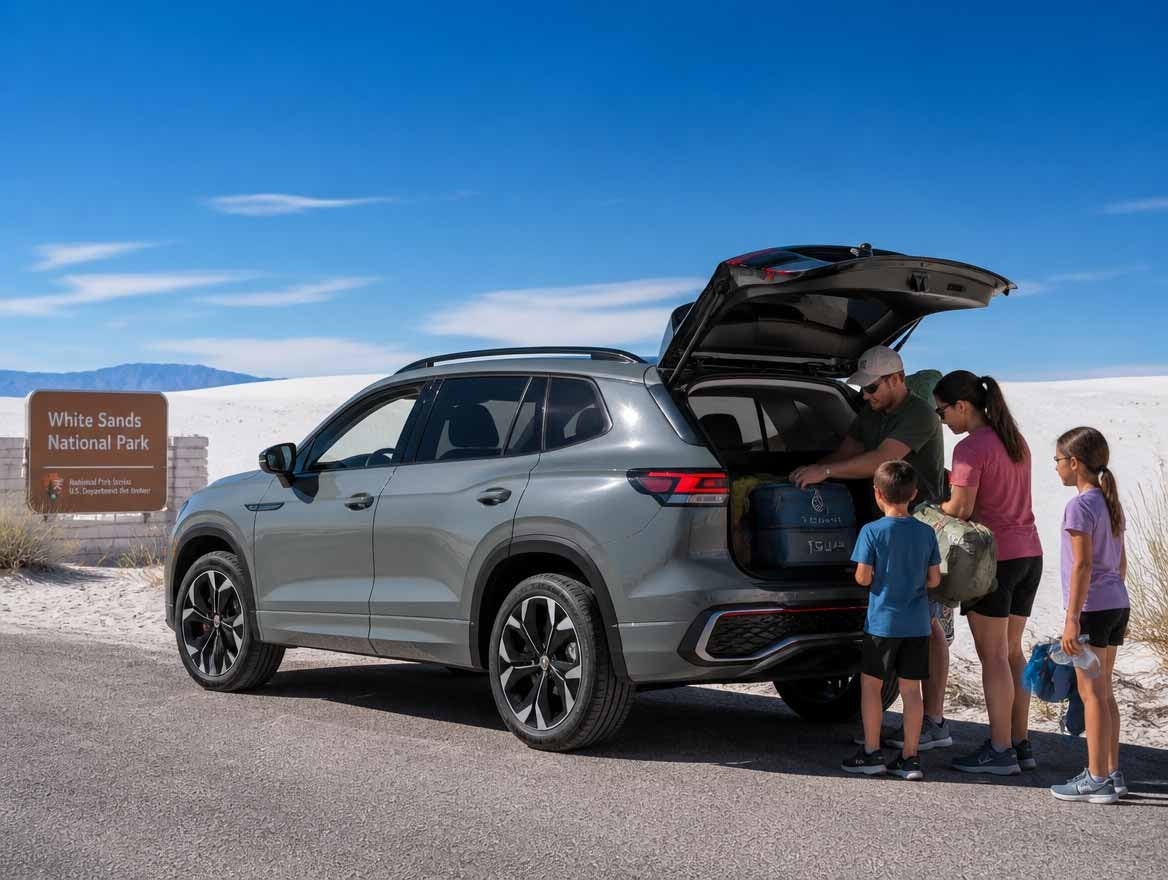
2027 Volkswagen ID. Buzz parked at El Paso International Airport short-term lot

Volkswagen ID. Buzz for El Paso International Airport Runs: Charging, Range, and Parking Questions

The good news is that the Las Cruces-to-ELP round trip sits well inside the EPA-rated range of the Volkswagen ID. Buzz, and you won't need to touch a charger at the airport for most trips. The flip side matters too. Park for more than a day or two and the airport's on-site charging setup won't save you, so you'll want to plan for that before you leave the driveway. That covers the bottom line, and here's the full play. Browse the Volkswagen ID. Buzz at Sisbarro Volkswagen Where Do You Park, and When Do You Need to Arrive? For a quick pickup you'll want the short-term lot right out front, and for a multi-day stay the on-site long-term lots take over, though those long-term lots carry no EV chargers at all, so you'll charge before you arrive rather than at the terminal. El Paso International Airport (ELP) sits at 6701 Convair Road, about 4 miles northeast of downtown El Paso, which puts it roughly 45 to 50 miles from Las Cruces via I-10. The drive itself is dead-simple. The airport runs compact by major-hub standards, but the parking picture has a few layers worth knowing before you pull in. Arrive By Best Lot ID. Buzz Fit Note Key Tip Drop-off only (under 10 min) Short-term lot, front of terminal Sliding doors make loading fast; pull forward to stay clear of traffic First 10 minutes are free 1-2 hours (pickup / waiting) Short-term lot Blink Level 2 chargers in this lot near the exit; 4 stalls available Good for a short top-up while waiting 1-3 days Long-term lots (on-site) No EV chargers in long-term; plan your charge before you arrive Two long-term lots; 5,738 total spaces on property 4+ days Long-term lots or off-site Off-airport shuttles run to the terminal; van-sized vehicles fit easily Leave with a full charge from home Running late (under 30 min to flight) Short-term or Premium Reserved Premium Reserved is covered and closest to the main entrance Don't rely on finding a spot at drop-off in peak periods The short-term lot sits directly in front of the main terminal, and the Premium Reserved area is covered. For a van the size of the ID. Buzz, those sliding rear doors are a genuine advantage in the tighter bays. You won't swing a wide door arc into the neighboring car's side panel. On a packed lot, that pays off. The Maneuvering and Fit Picture The Volkswagen ID. Buzz is a long-wheelbase three-row van, and it's bigger than it looks in photos, which means the size helps you in some airport bays and costs a little patience in others. Knowing where each shows up saves you the hassle. See current ID. Buzz availability In a tight bay, the sliding rear doors let passengers load and unload without drama. The upright greenhouse and large windows give genuinely good outward visibility, which helps when you're inching into a space with traffic behind you. Where the Buzz asks for patience is a covered or low-clearance structure. The Premium Reserved area is covered but surface-level, so clearance isn't a concern there. Multi-story garages at other spots in El Paso are where you'd want to verify height limits before committing. Explore financing options for the Volkswagen ID. Buzz For the I-10 run from Las Cruces, the van is genuinely comfortable. Three rows, climate control, quiet cabin. The person you're picking up from baggage claim will appreciate it more than they would a sedan. Insider note: The boxy shape of the ID. Buzz is aerodynamically honest. Volkswagen rates the EPA range at 234 miles for the rear-wheel-drive model and 231 miles for the 4Motion all-wheel-drive, and those figures hold up well at I-10 highway speeds because Volkswagen tuned the platform for real-world family driving, not wind-tunnel numbers alone. At about 95-100 miles total, a Las Cruces-to-ELP round trip leaves you with substantial range margin, so you're not sweating the return leg. Etiquette note: At ELP's short-term Blink stalls, the 4 charging terminals are shared among all EV drivers. If you're just picking someone up and don't need a charge, leave the stalls free for someone who does. It's a small lot and a short list of chargers. Before You Go: The Print-and-Go Checklist A good airport run in the ID. Buzz isn't complicated, and you won't need a charger at ELP for a short stay, but a little prep before you roll out of Las Cruces is what keeps the day seamless. Charge at home, confirm your lot, and mind the I-10 traffic. The rest takes care of itself. [ ] Charge to at least 80% at home the night before (the round trip runs around 95-100 miles; 80% gives you plenty of buffer) [ ] If you own a 2027 ID. Buzz, verify your NACS adapter is in the vehicle (Volkswagen confirmed standard NACS ports on 2027 models, opening Tesla Supercharger access along the I-10 corridor) [ ] Check the ELP parking map at elpasointernationalairport.com before you leave so you know which lot you're targeting [ ] For stays of 3 days or more, plan to charge at home or a nearby DC fast charger before your return drive, not at the airport (ELP's on-site stalls are Level 2 Blink units at 4 terminals in the short-term lot; they add range slowly, not rapidly) [ ] Use the three-zone Climatronic climate control to pre-condition the cabin while still plugged in at home on hot September days; that protects your range for the highway run [ ] If you're dropping someone off, account for departure-day morning traffic on I-10 through Anthony and the outskirts of El Paso [ ] For multi-day parking, confirm long-term lot availability on the ELP website ahead of peak travel weekends Schedule a pre-trip service check at Sisbarro Volkswagen The Volkswagen ID. Buzz handles this corridor naturally. Las Cruces to ELP is exactly the trip you'll want this vehicle for. A manageable distance, a family to move, and cargo to load without wrestling a hatch. Point the ID. Buzz at ELP and go enjoy the drive. By the Sisbarro Volkswagen Team | September 2026 Schedule a Pre-Trip Service Check Sisbarro Volkswagen 1115 S Valley Dr, Las Cruces, NM 88005 (575) 319-9131
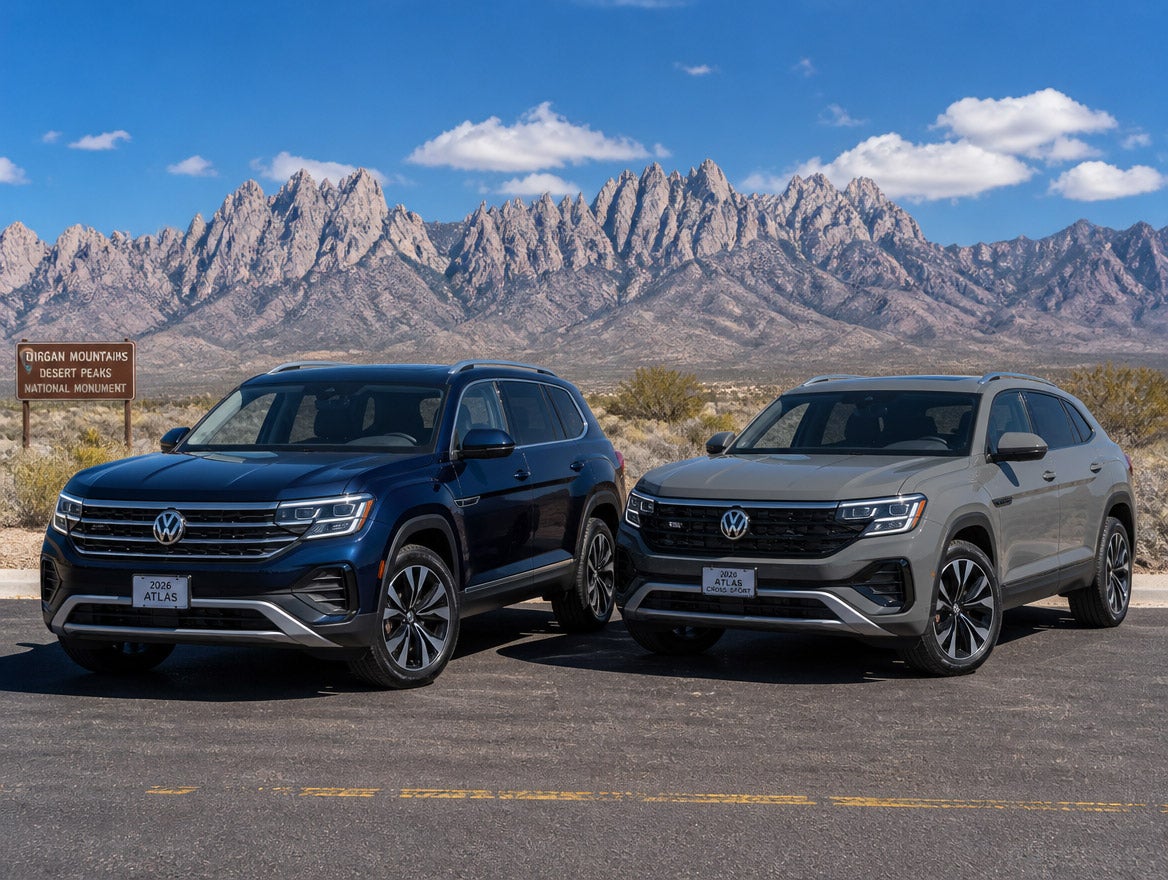
2026 Volkswagen Jetta GLI on I-25 near Las Cruces New Mexico

Volkswagen Jetta vs. Jetta GLI for I-25 Commuting

In this article What Actually Matters When Choosing Between These Two for a Highway Commute? Fuel Economy Is the Strongest Card of the Standard Jetta The GLI Is Built for Exactly This Kind of Road Match the Car to How You Actually Drive If you're running I-25 out of Las Cruces on a regular basis, you've already done the math on a lot of things. Time. Heat. Miles. The part you probably haven't sorted out yet is whether the standard 2026 Volkswagen Jetta or the Jetta GLI fits that specific drive better. They share a nameplate and a body, but the engines, suspensions, and transmissions are genuinely different. Which one's right comes down to three things. How many miles you're putting on per year, whether your commute is almost entirely highway, and how much the act of driving matters to you on a Tuesday morning. The short version Pure highway efficiency: The standard Jetta earns an EPA-estimated 40 mpg highway on its 1.5L turbo, and that's hard to argue with on a long I-25 run. Engaged highway driver: The 228-hp 2.0L TSI and 7-speed DSG of the Jetta GLI make passing and merging effortless at desert freeway speeds. Ride comfort trade-off: The GLI rides 0.6 inches lower with a sport-tuned suspension. On I-25's smoother highway pavement it's composed. On rougher city surface streets, you'll feel the difference. The I-25 advantage of the GLI: Multi-link independent rear suspension (the standard Jetta uses a torsion beam) gives the GLI better composure through crosswind gusts and lane changes at speed. Fuel gap is smaller than it looks: The GLI with the DSG still returns an EPA-estimated 35 mpg highway. You give up 5 mpg, not 15. What Actually Matters When Choosing Between These Two for a Highway Commute? What separates these two on I-25 comes down to engine torque, rear suspension design, and transmission character rather than badge or price, and each of those pushes you a different direction depending on whether your miles are open highway or stop-and-go. Below is how those translate into a decision you'll make at the wheel. 2026 Jetta 2026 Jetta GLI Edge for I-25 if... Engine 1.5L TSI, 158 hp, 184 lb-ft 2.0L TSI, 228 hp, 258 lb-ft GLI for confident passing; Jetta for relaxed cruising Transmission 8-speed automatic 6-speed manual or 7-speed DSG DSG GLI for mixed driving; manual for enthusiasts EPA Highway MPG 40 mpg 35-36 mpg Jetta for maximum range; GLI if 5 mpg gap is acceptable Rear Suspension Torsion beam Multi-link independent GLI for crosswind stability and smoother lane changes Ride Height Standard 0.6 in. lower Jetta for rough surface streets; GLI on open highway Adaptive Damping Not available DCC (Comfort, Normal, Sport) GLI lets you tune the ride each day Limited-Slip Diff Not available VAQ electronic LSD GLI for traction on hard acceleration Front Brake Rotors Standard disc 13.4-in. vented disc GLI for higher-speed stopping confidence Fuel Tank 12.8 gal 13.2 gal Near-identical range; GLI tank slightly larger Put simply, on a long, open, desert highway run, the GLI is a substantially more satisfying car to be in, no question. On a short, stop-heavy urban loop, you'll lean on the softer ride of the standard Jetta and higher fuel economy for the more practical case. Fuel Economy Is the Strongest Card of the Standard Jetta The EPA rates the 2026 Volkswagen Jetta at 29 mpg city and 40 mpg highway, with a 34 mpg combined figure, and that combined efficiency is exactly why the standard car makes the strongest case for a high-mileage I-25 commuter. For open-road cruising north of the city, the 40-mpg highway figure is the one that counts. The 2026 GLI isn't far behind. Its DSG automatic version earns an EPA-estimated 26 mpg city and 35 mpg highway, while the manual returns 26 city and 36 highway. At highway speed the gap runs five mpg with the DSG, which over a genuine long-haul commute adds up to real fuel across a full year. Worth knowing here, both the 2026 Jetta and the 2026 GLI run on regular 87-octane fuel. The extra power of the GLI doesn't come with a premium fuel surcharge, and that narrows the real-world cost gap between them more than the headline mpg numbers suggest. Explore your financing options early. Ownership cost, not just sticker position, is where the full comparison lives. Our team's honest take: The 40-mpg highway figure of the Jetta rivals sedans with much smaller, less satisfying engines. It's a well-sorted compact that happens to be extremely efficient, and there's nothing compromised about it. If those highway miles make up your entire commute, the standard Jetta earns that number reliably. The multi-link independent rear suspension of the 2026 Jetta GLI, versus the torsion beam setup of the standard Jetta, gives it measurably better composure during the crosswind gusts and lane changes that define open high-desert highway driving on I-25. The GLI Is Built for Exactly This Kind of Road I-25 north of Las Cruces runs fast, long, and exposed in ways a spec sheet won't capture, and that open, high-desert character rewards a chassis built to stay planted when the wind and the semis start pushing back. Wind comes across the Chihuahuan Desert with very little to slow it down. Semis generate pressure waves. Passing maneuvers at highway speed demand a car that responds when you ask it to. The multi-link rear suspension of the GLI is the structural reason it handles those moments better than the standard Jetta. The standard car uses a torsion beam rear, a cost-effective and reliable setup for everyday driving. With the GLI, the independent rear wheels track the road surface separately, so mid-corner bumps and crosswind pushes don't unsettle the car the same way. On smooth, straight pavement you'd barely notice the difference. Over I-25's occasional expansion joints and patched surfaces at 75 mph, it's plain to feel. The GLI also sits 0.6 inches lower with a sport-tuned suspension. Pair that with the Volkswagen DCC adaptive damping (Comfort, Normal, and Sport modes on the Autobahn trim) and you get a car that can be firm and precise when you want it or reasonably compliant when you don't. Flexibility like that matters for a commuter who faces both highway miles and Las Cruces surface streets in the same drive. There's one real tradeoff worth stating plainly. On rougher pavement or dipped parking-lot entries, the GLI is noticeably firmer than the standard Jetta. DCC Comfort mode helps, but it doesn't erase the difference. If your commute is mostly urban stop-and-go with only occasional highway stretches, the softer setup of the standard Jetta is the more relaxed daily companion. None of that is a knock on the GLI. The question is simply which road you drive. See What Your Current Car Is Worth Match the Car to How You Actually Drive The Jetta and the GLI answer two genuinely different questions, and knowing which question is yours settles the choice faster than any single spec, because one car optimizes the commute for efficiency and calm while the other optimizes it for the driver behind the wheel. In plain terms, the standard Jetta asks how to make a long commute as efficient and relaxed as possible. The GLI asks how to make that same commute something you'll actually look forward to. For drivers who want high fuel economy, a smooth and quiet ride, and lower running costs, the 40-mpg highway and composed ride of the standard Jetta are the right answers. It's a genuinely capable highway car. Nothing apologetic about that choice. For drivers who spend real time at speed on I-25, want confident passing power from a 228-hp engine with 258 lb-ft of torque, and appreciate a chassis tuned for the kind of open-road driving southern New Mexico actually delivers, the GLI earns its place. The VAQ limited-slip front differential, the 13.4-inch front vented brake rotors, the adaptive damping, and the multi-link rear aren't performance theater. They show up on the road you're driving. Sisbarro Volkswagen is in Las Cruces. Both models are on our lot at Sisbarro Volkswagen, and we can put you in back-to-back drives the same afternoon. A back-to-back drive will tell you more than any table. Including this one. Frequently Asked Questions Is the Jetta GLI too stiff for a daily I-25 commute? Not on I-25's highway surface, no. The 2026 Jetta GLI rides 0.6 inches lower than the standard Jetta and uses a sport-tuned suspension that's firmer than the standard car's setup. On Las Cruces surface streets and rough pavement, you'll feel that firmness. Out on I-25's open highway slab, most drivers find the GLI rides well within a comfortable range, especially with the DCC adaptive damping set to Comfort mode. If your commute is primarily highway miles, the stiffness trade-off is modest. If it's mostly city driving, the softer suspension of the standard Jetta will feel more relaxed every day. Does the 5 mpg highway gap between the Jetta and GLI actually matter for a Las Cruces commuter? The answer depends on your annual mileage. The EPA rates the 2026 Jetta at 40 mpg highway and the 2026 GLI with DSG at 35 mpg highway, and both run on regular 87-octane fuel, so the fuel-grade cost is the same. For occasional I-25 trips, the gap is minor. For someone logging substantial daily highway miles, the difference accumulates over a year. Estimate your annual highway mileage, divide by each car's highway rating, and you've got a concrete answer for your own situation. For many Las Cruces commuters whose I-25 driving is a moderate daily stretch, the added composure of the GLI and passing confidence close the value gap faster than the fuel numbers alone suggest. Get Pre-Approved for Financing Sisbarro Volkswagen 1115 S Valley Dr, Las Cruces, NM 88005 (575) 319-9131
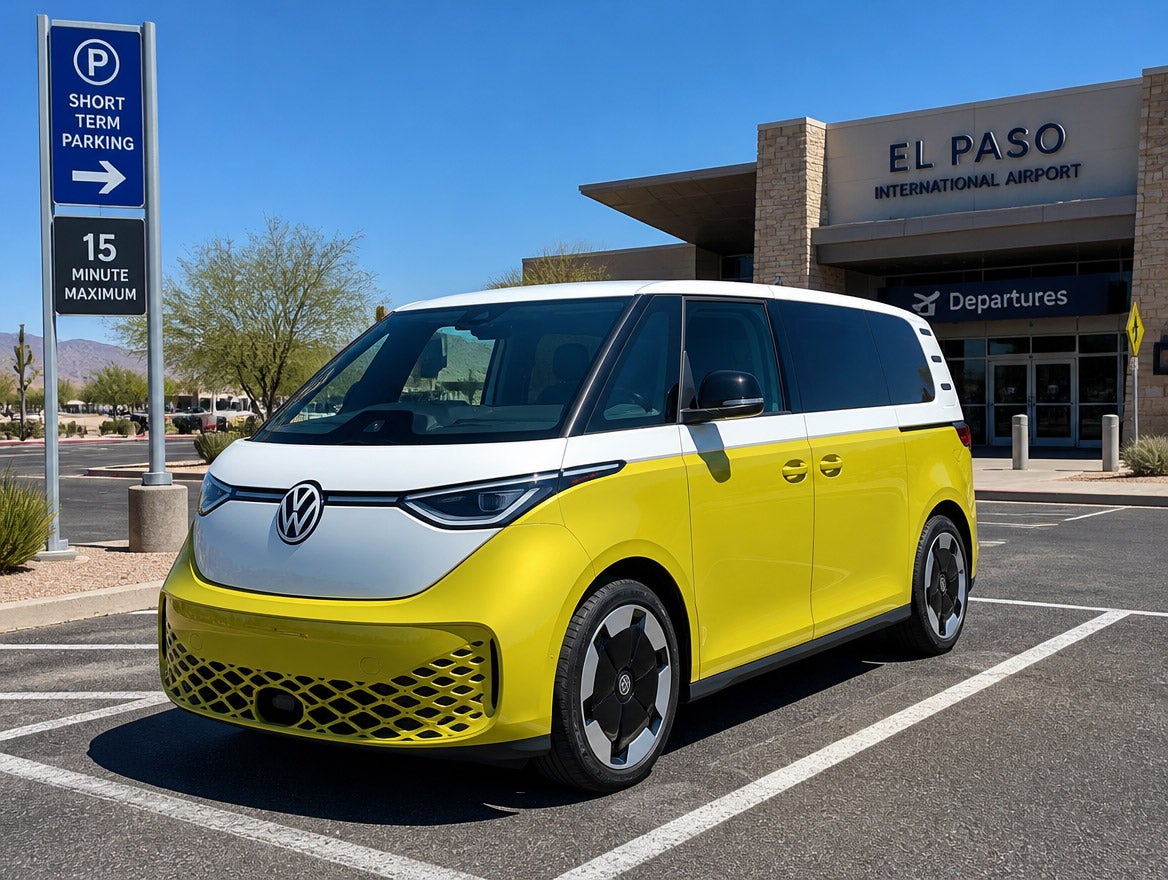
2026 Volkswagen Tiguan on a wet Las Cruces road during monsoon season with dark storm clouds above the Organ Mountains

Do Las Cruces Drivers Need Volkswagen 4MOTION All-Wheel Drive?

For most Las Cruces commuters running I-10 on dry pavement, a front-wheel-drive Tiguan or Atlas does the job well and saves fuel. The honest answer shifts, though, once monsoon season arrives. During Chihuahuan Desert monsoons, when arroyos fill in minutes and the New Mexico Department of Transportation posts standing-water alerts on I-25 through the city, Volkswagen 4MOTION all-wheel drive earns its cost in a way no dry-weather statistic can capture. Does 4MOTION Actually Do Anything in a Desert Climate? Yes, and the reason is water, not the snow this region barely sees. Las Cruces gets almost none. What it does get is violent summer monsoons. The ground bakes hard all spring and early summer, then the rains hit fast and water sheets across the roads before it can soak in. That's the low-grip, sudden-traction-loss scenario 4MOTION was built for. The Volkswagen 4MOTION system runs primarily as front-wheel drive under normal conditions. When the sensors detect wheel slip (or anticipate it from throttle input, steering angle, and vehicle dynamics data), it engages the rear axle proactively through a multi-plate Haldex clutch, catching a slide before it develops. On a rain-slicked I-25 on-ramp in August, that timing difference is everything. The National Weather Service issued a Flood Watch for Southern Dona Ana County and the Mesilla Valley on August 1, 2026. NMDOT has documented standing water on I-25 at the University Avenue exit and on I-10 near the Mesquite area during recent monsoon events. These aren't hypothetical conditions. Our team has watched customers cross a monsoon-soaked parking lot and a wet on-ramp, and the composure gap shows depending on what they're driving. Condition Front-Wheel Drive 4MOTION AWD Dry I-10 daily commute Fully capable No meaningful advantage Wet monsoon pavement Adequate with smooth inputs Proactive rear engagement, more margin Paved arroyo crossings Workable if water is shallow Better traction on slippery exit grade Dirt roads near Organ Mountains Depends on surface Noticeably more confident Sand or loose desert gravel Prone to wheelspin More controlled power delivery The three-row Atlas adds one more variable. It carries more people, so losing traction on a slick exit ramp raises the stakes, which makes 4MOTION a reasonable call even when your route stays entirely paved. More passengers, less room for error. What Does Choosing 4MOTION Actually Cost You? Fuel economy is where you pay for it, and the EPA numbers make that tradeoff concrete rather than abstract. 4MOTION adds mechanical complexity and weight, both of which pull mileage down, so we'll lay the figures out plainly instead of glossing over them. On the 2026 Tiguan with the base 2.0-liter turbo, the EPA rates the front-wheel-drive model at 26 city and 34 highway. The same Tiguan equipped with 4MOTION drops to 22 city and 30 highway. That's a real four-mpg gap on the highway. Run fifty highway miles a day on the El Paso corridor and you'll feel it at the pump over a year. We're not pretending otherwise. The 2026 Atlas tells a tighter story. The EPA rates the Atlas FWD at 20 city and 27 highway combined, while the 4MOTION version gives up just one highway mpg, landing at 20 city and 26 highway. For a three-row SUV that size, the penalty is truly modest. Model Drivetrain EPA City EPA Highway Best For 2026 Tiguan (base engine) FWD 26 mpg 34 mpg Daily I-10 commuters, dry-weather driving 2026 Tiguan (base engine) 4MOTION 22 mpg 30 mpg Monsoon-season drivers, Organ Mountains day trips 2026 Tiguan SEL R-Line Turbo 4MOTION (standard) See Volkswagen.com See Volkswagen.com Performance buyers; 268 hp, 4MOTION included 2026 Atlas SE FWD 20 mpg 27 mpg Families on primarily dry paved routes 2026 Atlas SE 4MOTION 20 mpg 26 mpg Families who want monsoon and road-trip confidence One mechanical detail is worth knowing. The base 2.0-liter turbo of the 2026 Tiguan produces 207 lb-ft of torque in the FWD configuration. Pair that same engine with 4MOTION and the output rises to 221 lb-ft. The drivetrain calibration shifts when the AWD hardware is present. That's a genuine spec difference you can point to. For Las Cruces drivers, 4MOTION isn't a snow feature. It's a monsoon-season and loose-surface feature, and the Tiguan fuel economy tradeoff (about four highway mpg) is the real, concrete cost of that confidence. Monsoon Note: Arroyos throughout the Mesilla Valley can go from bone dry to flowing in under ten minutes during a heavy storm cell. 4MOTION won't replace good judgment about standing water, but it gives you better grip on the wet pavement and mud-slicked asphalt on the far side of a crossing. Which Volkswagen Models in Our Lineup Offer 4MOTION? Not every Volkswagen offers 4MOTION, and on the models that do, it isn't always standard, so the answer depends on which vehicle and trim you're weighing. Here's how it breaks down across our current lineup. On the 2026 Tiguan, 4MOTION is an available option on the S, SE, and SE R-Line Black trims. It comes standard on the SEL R-Line Turbo. That top trim also steps up to 268 horsepower and 258 lb-ft of torque, compared with 201 horsepower in the base configuration. Want the higher-output engine? 4MOTION comes with it automatically. Check the Atlas trim ladder next. FWD is only available on SE and SE with Technology trims. Every higher trim (SEL, SEL Premium R-Line, and Peak Edition) comes standard with 4MOTION. The Jetta and Golf GTI don't offer 4MOTION in the current Volkswagen lineup. Both are capable daily drivers, and both are front-wheel drive only. The Taos is worth a mention. Volkswagen offers 4MOTION on multiple Taos trims, which makes it a compact entry point for buyers who want AWD confidence without stepping into a larger SUV. If a full Tiguan is more vehicle than you need, the Taos with 4MOTION is a real option worth considering. Explore Financing Options By the Sisbarro Volkswagen Team | August 2026 Frequently Asked Questions About Volkswagen 4MOTION in Las Cruces Does Las Cruces get enough rain to make AWD worth it? Las Cruces averages roughly 9.5 inches of annual precipitation, which sounds like almost nothing. The catch is that about half of that falls as concentrated monsoon downpours between July and September, hitting baked hardpan that can't absorb water fast enough. The New Mexico Department of Transportation has documented standing water on both I-25 and I-10 within city limits during these events. That concentrated wet-season intensity, rather than the annual total, is what makes 4MOTION relevant here. How does Volkswagen 4MOTION differ from four-wheel drive? 4MOTION is an all-wheel-drive system engineered for on-road conditions. It runs primarily as front-wheel drive in normal driving and engages the rear axle automatically through a multi-plate clutch when the system detects or anticipates traction loss. There's no low-range transfer case for serious off-road work. Think of it as intelligent, proactive grip on wet pavement and moderate loose surfaces (well short of a trail-rated rock-crawling setup) that operates without any input from the driver. Can I add 4MOTION to any Volkswagen I choose, or is it trim-specific? It depends on the model. On the 2026 Tiguan, 4MOTION is available as an option on most trims below the SEL R-Line Turbo, where it's standard. On the 2026 Atlas, front-wheel drive is only offered on SE-level trims, so higher-trim buyers get 4MOTION automatically. The Jetta, Jetta GLI, and Golf GTI don't offer 4MOTION at any trim level. Our team can walk you through exactly which configurations are available in our current inventory. Value Your Trade Sisbarro Volkswagen 1115 S Valley Dr, Las Cruces, NM 88005 (575) 319-9131
Contact Us

Fill out this form below and we'll contact you shortly
*Required Fields