

Should I Buy or Lease a Car?
When acquiring a new car at Sisbarro Volkswagen, you can opt to purchase or lease. Both choices have their benefits and drawbacks, depending mainly on your priorities as a customer. This guide explains what leasing involves and compares its advantages and disadvantages with the traditional buying process, helping you make an informed decision.
Leasing Basics
Traditionally, “lease” referred to renting property such as a home, apartment, or office, and the term applies similarly to vehicle leasing. You agree to use a new vehicle for a set period, typically two to four years, and to make monthly payments during that period. These payments are based in part on the vehicle’s original cost and its residual value, which is an estimate of the car’s value at the end of the lease term. Interestingly, cars expected to have a higher resale value often come with lower payments.
When a manufacturer is keen to promote a model, it may be optimistic about the residual value, resulting in lower payments for the lessee. Meanwhile, the manufacturer hopes for the best about the car’s actual value at the end of the lease period.
Most leases allow you to make an upfront payment, similar to a down payment, which decreases your monthly payments. Often, the value of a trade-in vehicle is used for this purpose. At the end of the lease, you can choose to buy the car for its specified residual value or return it to the dealer and walk away after minimal paperwork. Leasing a newer model is generally the most popular option.
Purchasing Basics
You likely already know this, as it is similar to any other purchase, with the key difference being the likely need for financing. The seller receives the full payment upfront, and you become the full owner of the item—or, in most cases, your financer does. When financing, the buyer usually makes a 20% down payment, though this can vary, and then repays the remaining balance plus interest over a set period until the vehicle is fully paid off. The buyer can sell the car during the financing period, but must settle any remaining loan balance using the sale proceeds. With long-term loans and small down payments, there's a possibility of being “upside-down," owing more than the car’s current value at some points.
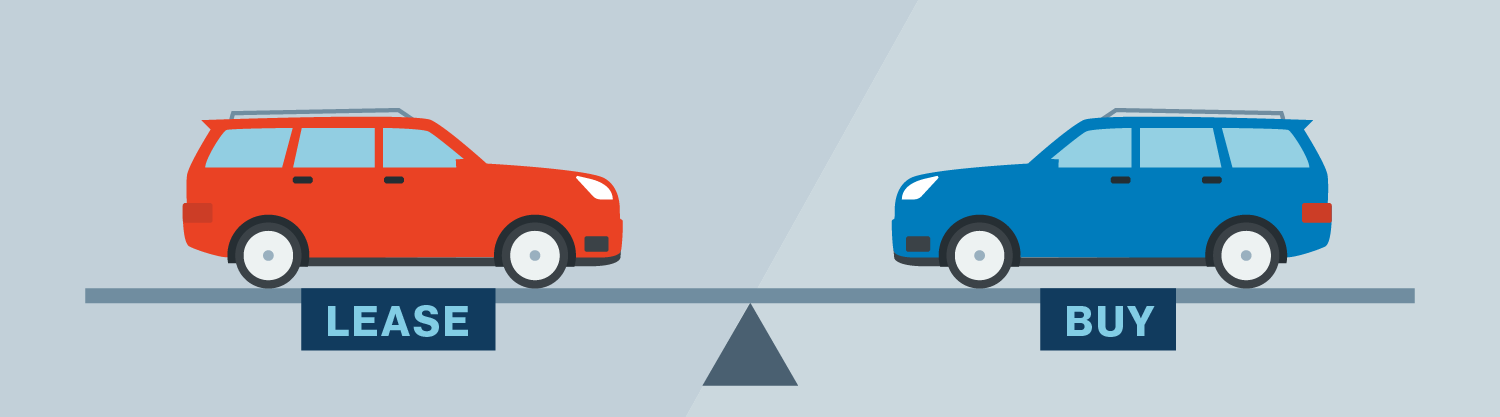
- Lower Monthly Payments: Lease payments are usually less than loan payments for the same vehicle because you're paying only for the vehicle’s depreciation during the lease period, not its full value. In other words, this often allows you to afford a more expensive vehicle for the same monthly cost.
- New Car Every Few Years: If you enjoy driving a relatively new vehicle with all the latest technology, a lease makes this both easy and more cost-effective, as you do not have to take a depreciation hit or go to the trouble of selling and purchasing. This is particularly relevant for EVs, as EV technology is rapidly evolving. Leasing can help you keep up with the latest technology.
- Warranty Coverage: Because leases are often covered under a vehicle’s warranty, you seldom have to worry about out-of-pocket repair costs.
- Tax Benefits: In Kansas and several other states, you only pay sales tax on your monthly payments rather than on the full purchase price of the vehicle. There can also be Section 179 tax benefits to leasing a vehicle for business use.
Leasing Disadvantages:
- Mileage and Condition Policy: Lessors expect the car to be returned in a condition where its value is equal to or greater than the residual value. Therefore, they set mileage limits and maintenance standards, along with guidelines on expected wear. Fees may be charged if the vehicle is returned with excessive wear and tear or exceeds the agreed-upon mileage limit.
- No Period of No Payments – As long as you are leasing, you are making monthly payments. It is easy to regularly upgrade to a new vehicle by leasing, but there will be no period when the vehicle is paid off, and payments end. If you choose to purchase after the lease ends, you will have no trade-in to help with the down payment.
- Timing constraints: The lease term is firm. There may be fees if you turn the car in early, and you must turn it in at lease end or have the funds on hand to purchase it. If a new vehicle you desire comes out, you will have to wait. Conversely, if a new vehicle won’t be available until after your lease term, you can’t keep your car until that time.
- Usage Constraints: You do not own the car, which limits your ability and incentive to customize it as you desire.
- Need Good Credit: Because lenders are taking a risk, leasing often requires a high credit score. Financing can as well, but there are more options and financing sources available to you.
Purchasing Advantages
- Ownership: The vehicle belongs to you, giving you the freedom to keep it for as long as you wish and sell it on your own terms. You can also decide the optimal time to sell—for example, selling a hybrid when fuel prices have increased, which could likely boost its value.
- Long-term Cost-Effectiveness: Owning a car can be more cost-effective over time, especially if you keep it well beyond its being paid off.
- No Mileage Restrictions: Owners of a purchased vehicle can drive unlimited miles without additional charges. This is especially useful if your situation changes and your commute lengthens.
- Customization: To reiterate, the vehicle is yours. You are free to modify or customize it as you wish.
- Longer Payment Options: Leases are usually no longer than four years. Financing options may extend beyond that to reduce your monthly payments, but this can lead to higher interest costs and increase the risk of owing more than the vehicle's value.
Purchase Disadvantages
- Depreciation Impact: All cars lose value over time, but owning means the depreciation cost falls on you instead of your lessor. This can be especially problematic if you trade in for new vehicles often.
- Long-term and Repair Costs: After the warranty period, you will be responsible for repair costs unless you opt for an extended warranty.
- If you finance the purchase:
- Must Secure Financing: Financing can be secured through the dealership or an external source; in either case, it adds an extra step to the vehicle acquisition process.
- Higher Payments: Generally, finance monthly payments will be higher than lease payments for the same vehicle over the same period of time.

There is no single answer to which option is best, as it largely depends on your preferences and circumstances. Here are a few final guidelines to help you choose the option that suits you best.
- New Vehicle Desire - If you value driving a new car with the latest features and designs, leasing can be a more affordable and hassle-free way to stay in a new vehicle. However, for those who want to customize their car, buying is a better option.
- Financial and Transportation Stability – Leasing presumes you have a stable understanding of your driving habits and do not anticipate significant changes to your work, home, or vehicle needs during the lease period.
- Lower Term Costs: Leasing generally entails lower initial and monthly expenses, although you are more committed to those costs for the duration of the lease.
- Financial Risks: Financing involves higher initial costs, and defaulting on a loan can be harmful. However, if your financial situation changes after a purchase, you usually have more options.