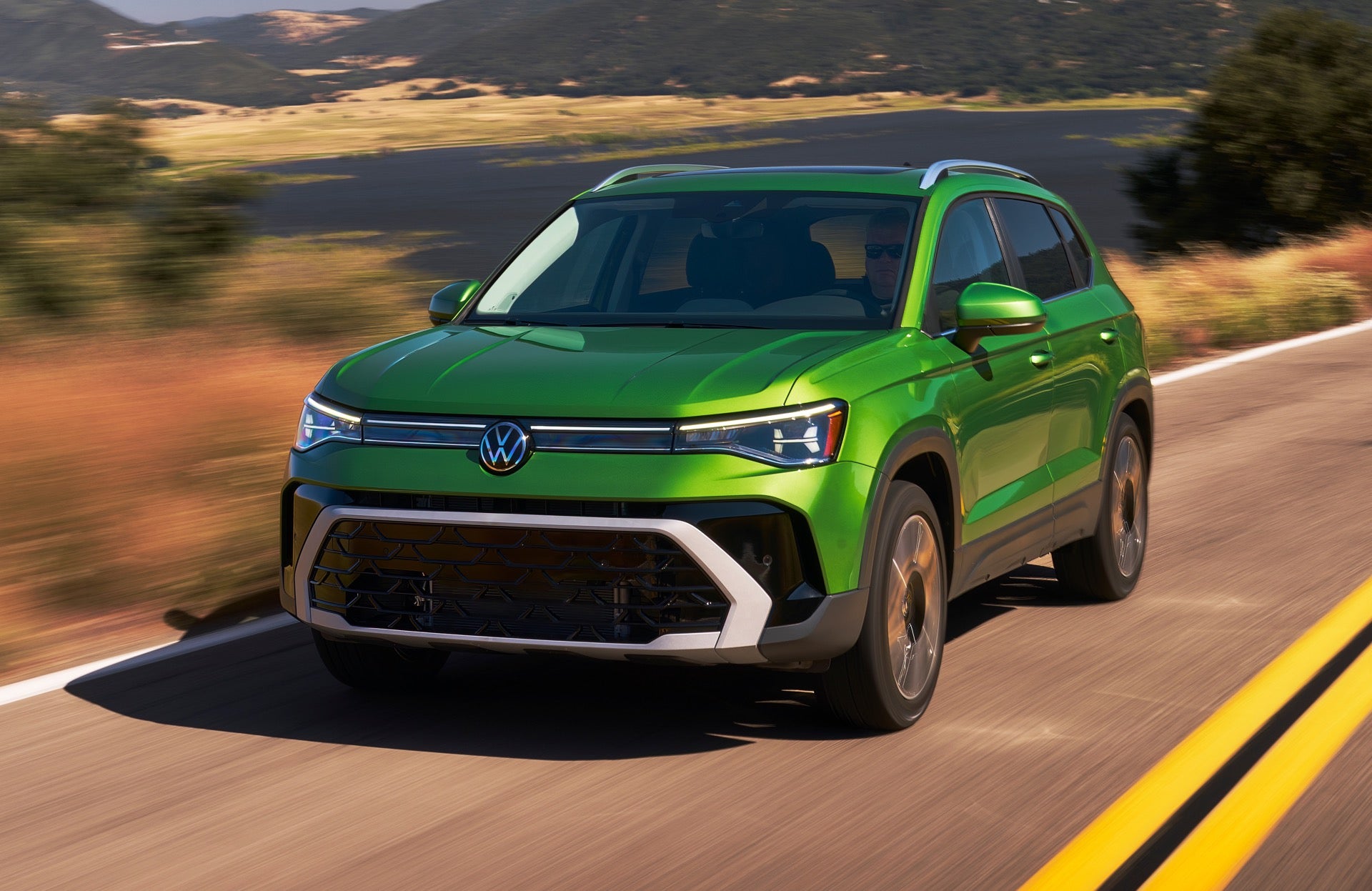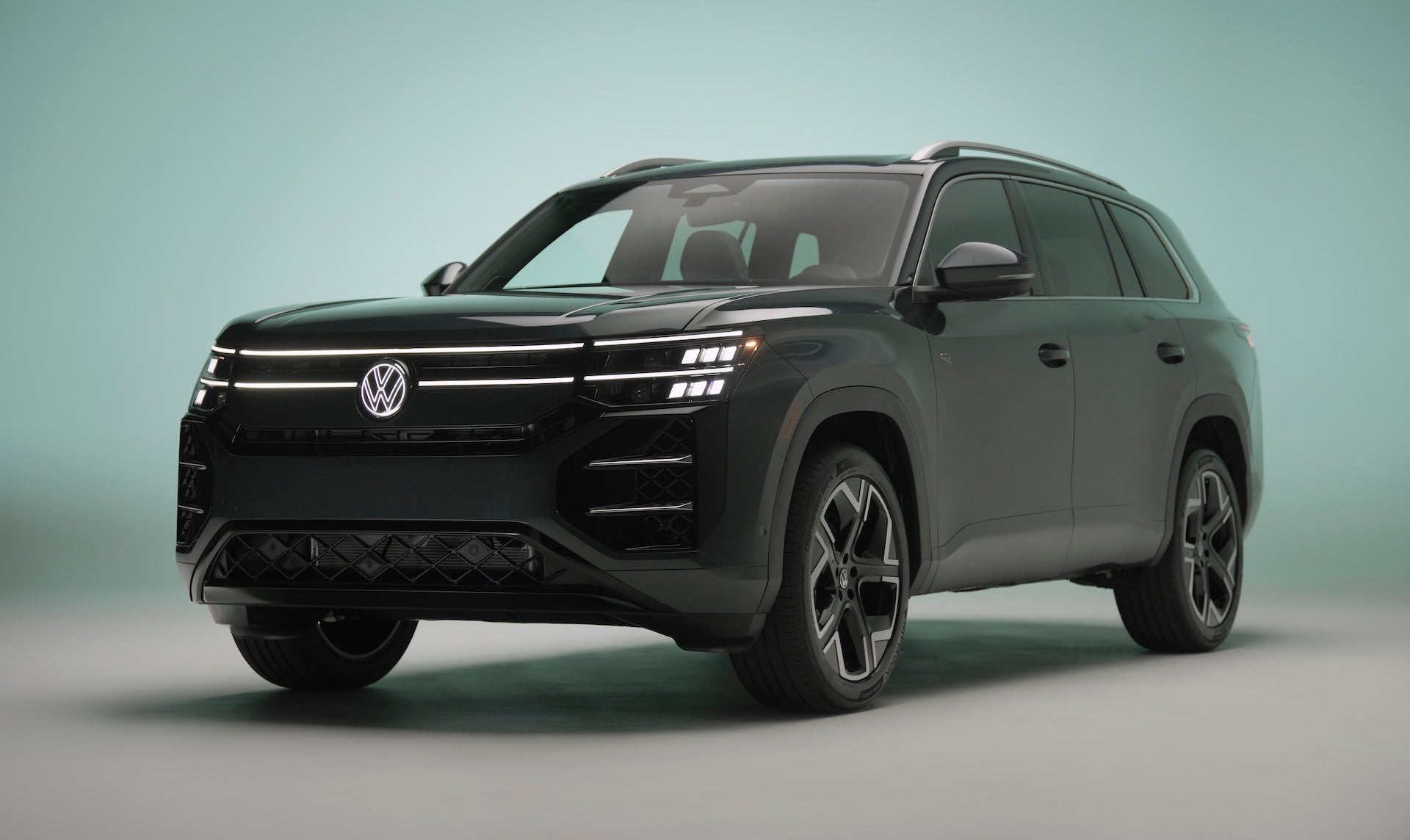

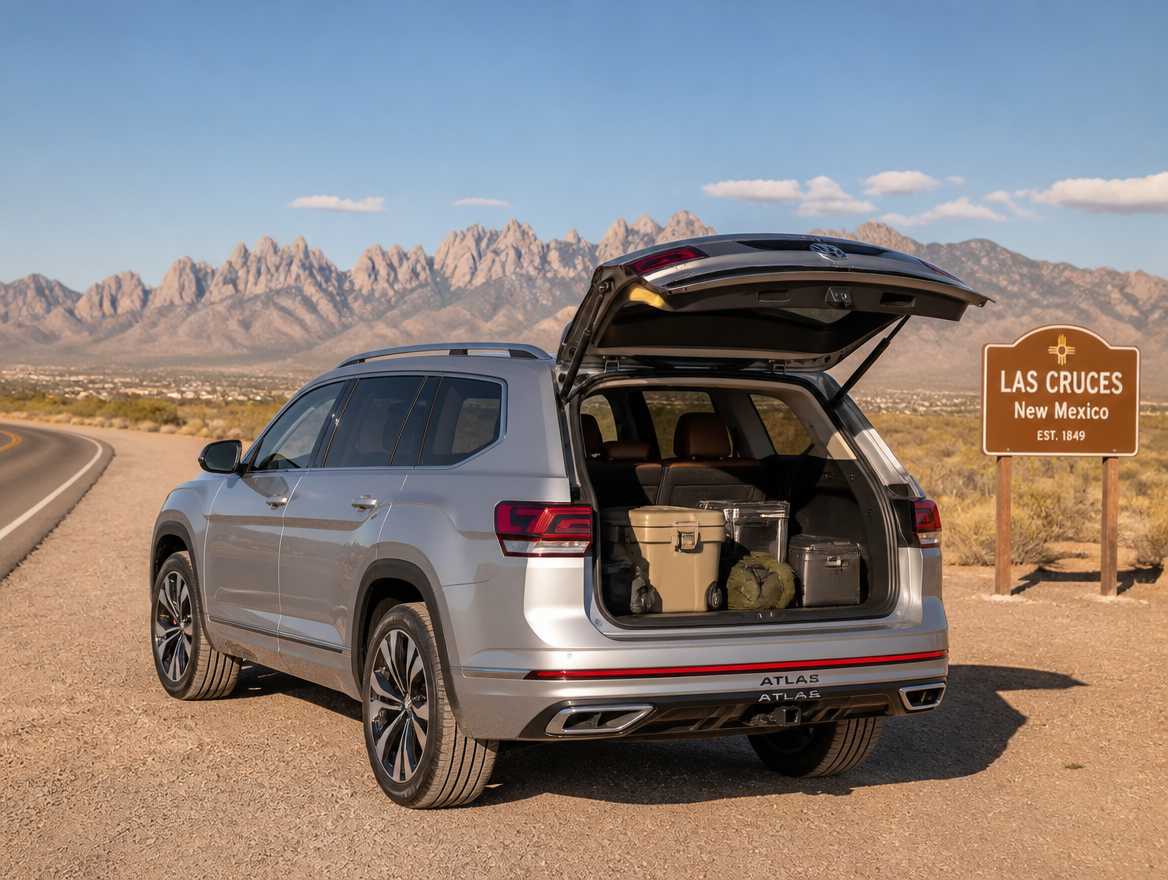
Both Volkswagen vehicles seat seven. That's where the easy part ends.
Families walking our lot rarely ask which one is bigger. They ask how to set the thing up so everyone fits and the stroller, the soccer gear, or the trailer still comes along. Your answer shifts depending on which vehicle you're sitting in, and a bad configuration turns a trip to White Sands into a Tetris argument in the parking lot.
Row by row, we'll walk you through the seat, cargo, and tow setup for both vehicles, so you leave knowing exactly what to do before the family piles in.
What You Need Before You Start
Every family setup starts with a quick checklist you can run before you even open a door, and it takes two minutes to confirm the things that decide whether the rest of the process goes smoothly. Run through these first.
| Item to confirm | 2026 Atlas | 2025 ID. Buzz |
|---|---|---|
| Number of passengers | Up to 7 | Up to 7 |
| Third-row entry method | Second row tilts/slides forward | Third-row seats remove or second-row captain's chairs tip forward |
| Child-seat LATCH sets, row 2 | 3 (bench) or 2 (captain's chairs) | Available in row 2 |
| Towing hitch included | SE: no factory hitch (2,000 lb aftermarket limit); SE w/ Technology+: standard hitch, up to 5,000 lbs | RWD: up to 2,600 lbs; AWD 4Motion: up to 3,500 lbs |
| Charging/fuel type | 87 octane gasoline | Electric, 91-kWh battery |
| EPA efficiency | 20 city / 27 hwy (FWD) | 234 miles estimated range (RWD) |
Two rows in this table deserve a closer look before you touch a seat. Atlas trim level changes your towing story a great deal. The base SE tops out at 2,000 pounds with an aftermarket hitch, while any SE with Technology or above comes with a factory hitch and the full 5,000-pound braked rating. Second, the ID. Buzz EPA range of 234 miles (RWD) or 231 miles (AWD 4Motion) is the number to know for any day trip south on US-70.
Setting Up Both Vehicles for Seven Passengers
Loading all seven seats is the workhorse configuration, the full house with everyone buckled and the trip underway, and it's the setup that rewards a little planning up front. Start here.
Step 1: Load the second row first in the Atlas.
The Atlas second row is a 60/40 split-folding bench. It tilts and slides forward even with a forward-facing child safety seat attached to the LATCH anchors. Slide both sections forward slightly to open the third-row entry path before anyone tries to climb back there.
Step 2: Confirm Atlas third-row legroom before you commit.
Volkswagen lists 33.7 inches of third-row legroom and 38.3 inches of headroom. That's genuinely livable for kids and shorter adults on a drive to the Organ Mountains-Desert Peaks National Monument. We'll be straight with you, though. A six-foot adult back there on a two-hour interstate stretch will notice it. Set expectations.
Step 3: In the ID. Buzz, verify your trim's row-two setup.
The 2025 ID. Buzz sold in the U.S. comes in a 2+2+3 seven-seat layout, and two captain's chairs in the second row is the standard North American configuration. Those captain's chairs tip forward to open third-row access. The aisle between them runs narrower than a traditional minivan sliding door, so load passengers before bags.
Step 4: Confirm the ID. Buzz third row is actually installed.
The third-row sections of the ID. Buzz are removable, and if someone stored them before your test drive, the car shows up as a five-seater. Each section weighs about 60 pounds. If they're in, check that both sides are locked down with the seat latches before anyone sits there.
Step 5: Install child safety seats in row two on either vehicle.
Our current inventory includes units on which our team can show you the LATCH anchor positions in person. On the Atlas, the second-row bench offers three complete LATCH sets, though IIHS notes the lower anchors sit deeper in the seat cushion and require more effort to clip. The captain's chairs of the ID. Buzz have exposed lower anchors, and families we talk to consistently find these easier to clip quickly.
Step 6: Settle the range or fuel question before departure.
The 2026 Atlas runs on regular 87-octane fuel, EPA-estimated at 20 city / 27 highway on FWD trims. For the ID. Buzz, the EPA rates the RWD Pro S at 234 miles of range and the AWD 4Motion at 231 miles. Our high-desert elevation (roughly 3,900 feet) and summer heat can trim both fuel economy and EV range, so plan an ID. Buzz charging stop on any round trip beyond 100 miles.
Cargo Setup: Which Layout to Use When
The cargo story between these two vehicles runs genuinely counterintuitive, and it's worth mapping out before you decide. The layouts break down this way.
| Scenario | Best Atlas layout | Best ID. Buzz layout | Load-bearing difference |
|---|---|---|---|
| 7 passengers, minimal gear | All rows up | All rows up, third row locked in | Atlas: 20.6 cu ft behind row 3. ID. Buzz: 18.6 cu ft behind row 3 |
| 5 passengers + weekend gear | Third row folded 50/50 | Third row tilted/removed | Atlas: 55.5 cu ft behind row 2. ID. Buzz: 75.5 cu ft (third row out) |
| Cargo-only or camping mode | Both rear rows folded flat | Third row removed, second row folded | Atlas: 96.6 cu ft max. ID. Buzz: up to 145.5 cu ft max |
| Bike/large item transport | Third row folded flat | Third row removed, second row folded | ID. Buzz flat load floor is easier; Atlas has a slight step |
The advantage of the ID. Buzz kicks in once you pull that third row out entirely. At up to 145.5 cubic feet of maximum cargo volume, it out-hauls the 96.6 cubic-foot maximum of the Atlas. There's a real tradeoff, though. Those 60-pound seat sections need to live somewhere when they're not in the vehicle.
Browse the 2026 Atlas for families who need the cargo flexibility of folding rows without the extraction logistics.
Your Print-and-Go Family Setup Recap
Run this in under two minutes before every trip, and you'll catch the small stuff that otherwise strands the stroller in the driveway. Both lists below cover it.
Atlas checklist:
- Second row: tilted forward to confirm row-three entry path is clear
- Child seats: LATCH clipped, top tether attached to anchor behind seat
- Towing: hitch confirmed for your trim level (SE with Technology+ for 5,000-lb rating, properly equipped)
- Fuel: regular 87-octane, EPA-estimated 20 city / 27 highway (FWD)
- Safety: IIHS named the 2026 Atlas a TOP SAFETY PICK+, its highest honor, and NHTSA awarded it five out of five stars overall
ID. Buzz checklist:
- Third row: both sections locked in or both fully removed and stored (not halfway)
- Captain's chairs: tipped forward to confirm third-row access before passengers board
- Child seats: LATCH anchors clipped in row two, tether to anchor on row-three seat frame
- Charging: EPA-estimated 234 miles (RWD) / 231 miles (AWD); plan charging for runs past 100 miles from Las Cruces
- Towing: confirm AWD 4Motion for up to 3,500-lb rating, properly equipped
Talk to our finance team about which trim puts your preferred configuration within reach. Trim level is the decision that unlocks the tow rating along with the seat-heating and ventilation features on both vehicles, so it's worth a conversation before you finalize anything.
Both vehicles carry your family well. The Atlas fits more naturally into a routine that mixes passengers, the occasional trailer, and a gas station on every corner. The 2025 ID. Buzz rewards families who want a larger maximum cargo volume, a genuinely impressive third row, and the flexibility of all-electric driving. It's built for those who can charge at home or along their regular routes. Neither is a compromise. They're just answers to different questions.
Frequently Asked Questions
Does the Volkswagen ID. Buzz have a 2026 model year?
No. Volkswagen confirmed that the ID. Buzz skips the 2026 model year in the U.S. The model currently on sale is the 2025 ID. Buzz. A refreshed 2027 version is planned. If you're shopping now, the 2025 ID. Buzz is the current vehicle our team can help you configure and finance.
Which Volkswagen is better for a family that needs to tow a trailer?
For heavier towing, the 2026 Atlas with SE with Technology trim or above is the stronger option, rated at up to 5,000 pounds when properly equipped and coming with a factory hitch standard on those trims. The 2025 ID. Buzz AWD 4Motion is rated at up to 3,500 pounds when properly equipped. Both are capable of pulling a smaller utility or camping trailer; the Atlas simply has the higher ceiling and a lower entry point for the factory hitch.