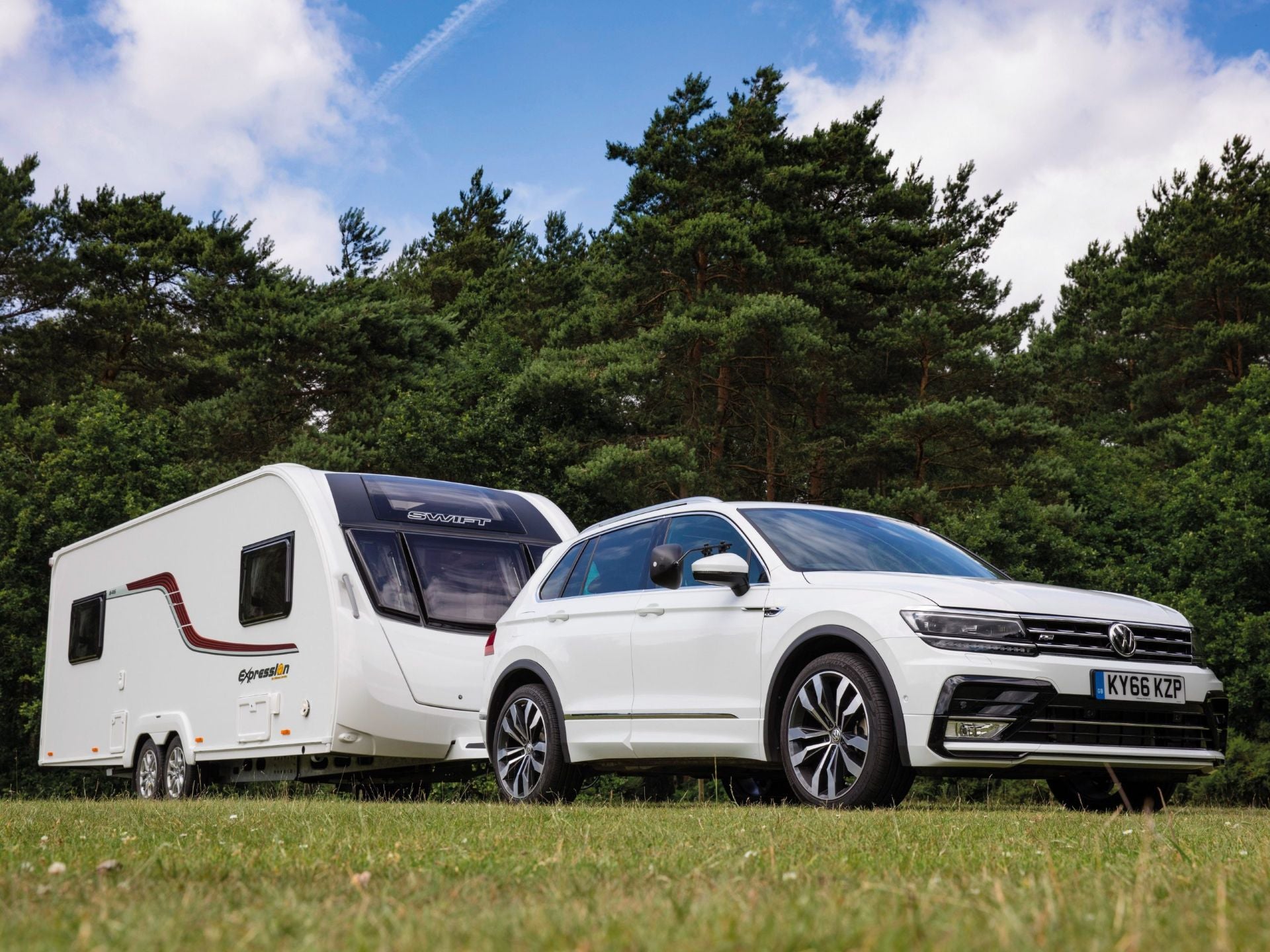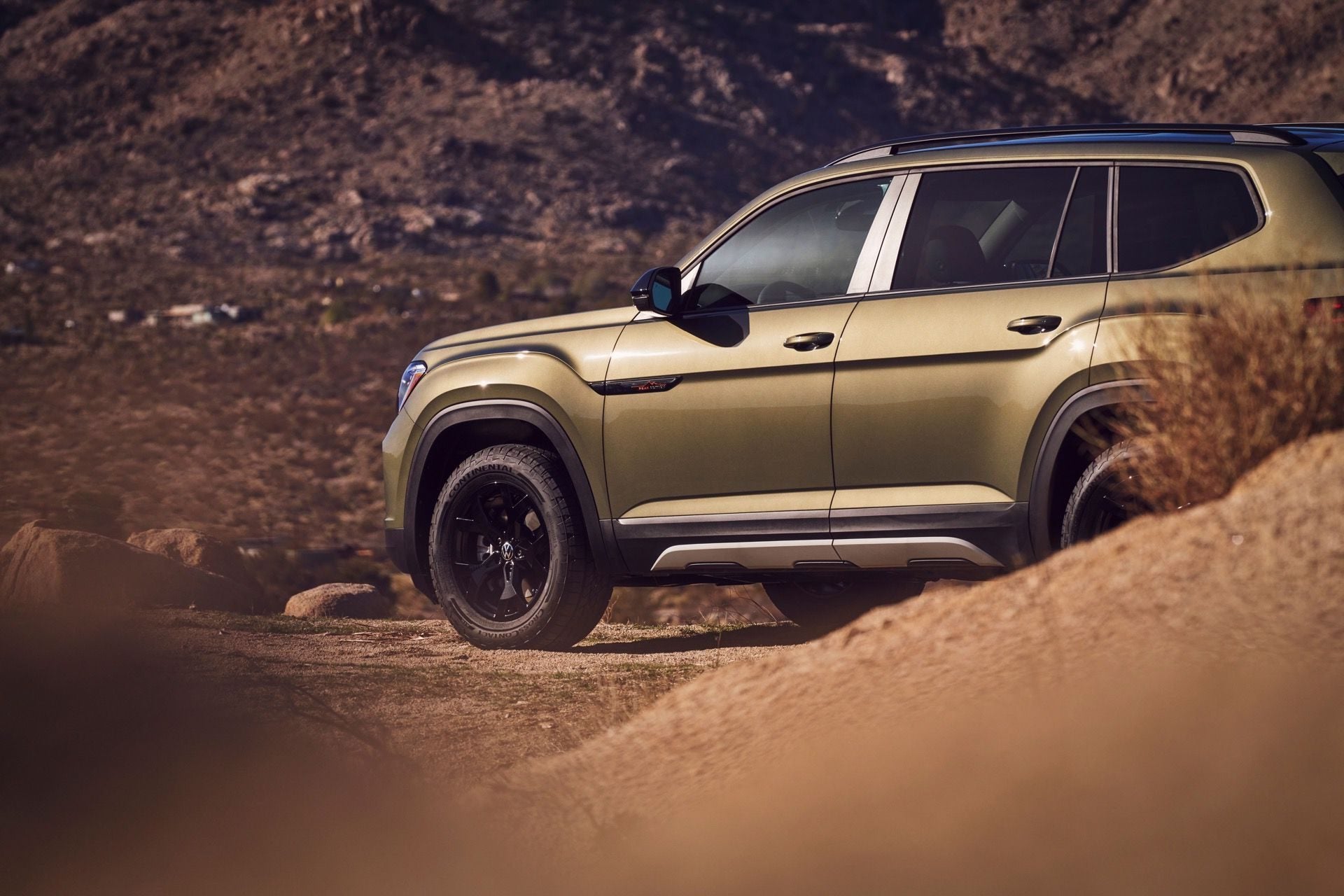

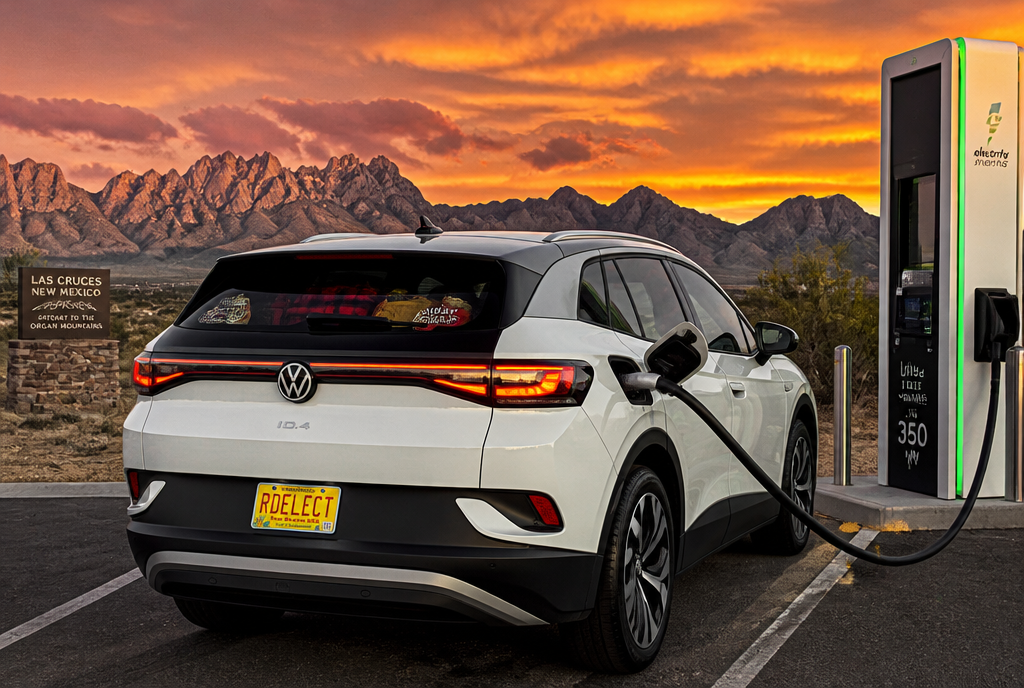
The 2026 Volkswagen ID.4 gives you up to 291 miles of EPA-estimated range on the RWD Pro, and it now ships with a standard NACS adapter that opens the Tesla Supercharger network. Put those two together and holiday road-tripping from Las Cruces is genuinely workable. It won't do your planning for you.
Before a long holiday run, we tell every ID.4 owner the same three things. Know the number your trim actually delivers, know where the gaps sit on your corridor, and account for cold nights. We'll walk through all three.
How Far Will the ID.4 Really Go Here?
Expect the RWD Pro to cover close to its 291-mile EPA figure in mild daytime driving, but treat that EPA number as a starting point and nothing firmer, because a cold night at elevation will pull it down well before you notice. The table below lays out what the 2026 lineup delivers under the EPA test cycle, alongside the practical corridor reality for a Las Cruces departure.
| Trim | Drive | EPA Range | I-10 to El Paso (~45 mi) | I-25 to Albuquerque (~225 mi) | Cold-Night Estimate (25 degrees F with heat) |
|---|---|---|---|---|---|
| ID.4 Pro | RWD | 291 mi | Easy, one-way with charge to spare | Reachable in one leg if you leave full | ~190-200 mi |
| ID.4 Pro S | RWD | 291 mi | Easy, one-way with charge to spare | Reachable in one leg if you leave full | ~190-200 mi |
| ID.4 AWD Pro | AWD | 263 mi | Easy, one-way with charge to spare | Needs a stop without a full charge | ~170-180 mi |
| ID.4 AWD Pro S | AWD | 263 mi | Easy, one-way with charge to spare | Needs a stop without a full charge | ~170-180 mi |
| ID.4 AWD Pro S Plus | AWD | 263 mi | Easy, one-way with charge to spare | Needs a stop without a full charge | ~170-180 mi |
The EPA rates the RWD Pro at 291 miles and the AWD trims at 263 miles. The cold-night column is where the surprise lives. AAA's May 2026 study found that at 20 degrees Fahrenheit with the cabin heater running, EVs lose approximately 39 percent of their rated range. Las Cruces winters run mild by northern standards, but November nights at 3,900 feet regularly drop into the mid-20s to low 30s Fahrenheit. Plan conservatively. A 291-mile car on a December Thanksgiving run to Santa Fe or Albuquerque at night, in 28-degree air, is realistically a 185-mile car until it warms up.
Pre-condition the cabin while the car's still plugged in at home. The fix is simple, and it costs you nothing. The ID.4 lets you handle this through the myVolkswagen app, so you warm the interior and the battery from grid power instead of your stored range. It beats most generic EV tips.
Where Do You Charge Locally and Along the Corridor?
Las Cruces sits at the crossroads of I-10 and I-25, so you've got dependable fast-charging in town and along both I-10 legs before you leave, but the northbound I-25 run toward Truth or Consequences and Albuquerque is thinner and asks for more deliberate planning. West toward Deming and east toward El Paso, the I-10 coverage holds up. The I-25 northbound run is a different story. Plan it deliberately.
Browse our current ID.4 inventory to confirm your trim before mapping your route.
For in-town and departure charging, the standard NACS adapter on the 2026 ID.4 pays off. The Tesla Supercharger on W. Amador Ave. in Las Cruces, right off I-10, makes a fast, convenient top-off before you head out. Electrify America runs an established location in El Paso on Gateway Blvd. W. Between them, Supercharger and Electrify America cover the main I-10 spokes out of Las Cruces well.
A simplified stop-by-stop framework for the most common holiday runs from Las Cruces looks like this.
| Route Leg | Recommended Charging Stop | Connector | Approx. Dwell (10-80%) | Range Notes |
|---|---|---|---|---|
| Las Cruces departure | Tesla Supercharger, W. Amador Ave (I-10 access) | NACS | 30 min | Leave at 90-100% for northern routes |
| I-10 east to El Paso | Electrify America, Gateway Blvd W, El Paso | CCS or NACS | ~30 min | Useful for AWD trims before long I-10 east legs |
| I-25 north toward T or C | Plan 1 stop (charger density is thin midpoint) | CCS/NACS | ~30 min | Confirm station status before departure |
| I-25 north to Albuquerque | ABQ has strong network coverage | CCS/NACS | 20-30 min | AWD trims plan on 1 corridor stop |
| US-70 east to White Sands area | Limited fast-charging; use Las Cruces as base | Leave full | Day-trip with full charge is the right call |
The Electrify America Plug&Charge feature of the ID.4 earns its keep here. You plug in, the car authenticates on its own, and billing runs in the background (no app to fish out of your pocket at the charger). For a family juggling kids and holiday luggage at a rest stop, that convenience counts. The standard 2-year Electrify America Pass+ membership comes with new 2026 ID.4 purchases, so your first two years of Electrify America sessions are covered under that plan.
Ask our finance team about ID.4 ownership programs if you've got questions about what comes included.
A Pre-Trip Checklist for Holiday Runs
A little prep the night before keeps a holiday departure calm, so walk this list before you back out of the driveway, and treat it as a starting point, since your corridor and the forecast can each add a line of their own. Run through the items below before you leave.
- [ ] Charge to 90-100% the night before, since a holiday trip is the right time for a full charge
- [ ] Set pre-conditioning in the myVolkswagen app 20-30 minutes before departure so the cabin and battery warm on grid power
- [ ] Confirm charging stops in PlugShare or A Better Routeplanner, known as ABRP, with real-time availability
- [ ] Identify a backup charger for each planned stop, especially on I-25 north
- [ ] Set tire pressure, because cold mornings drop it and a correctly inflated tire rolls more efficiently to extend your real range
- [ ] Download or update the Electrify America and Volkswagen apps and confirm Plug&Charge is activated
- [ ] Pack the standard 2-in-1 mobile EV charging cable the 2026 ID.4 ships with, handy at a hotel with a standard outlet as a last resort
- [ ] Check weather along your corridor the morning of, because wind on I-10 and I-25 is a real range variable and a headwind at 70 mph costs range
The Chihuahuan Desert stays reliably sunny, and in a modern EV that sunshine works in your favor. Solar gain through the glass takes some load off the heater on a bright cold day. That gain won't show up as a dramatic number, yet it's real, and it's the kind of detail that sets a Las Cruces departure apart from a Minneapolis one.
Plan Your Route This Way
A well-planned ID.4 holiday trip from Las Cruces really comes down to three decisions you make before turning the key, namely your departure state of charge, your first stop, and your backup stop, and everything else follows from those three. Get them right and the rest of the drive sorts itself out.
For families heading north to see relatives in Albuquerque or Santa Fe, the RWD Pro's 291-mile EPA rating makes a one-stop run realistic in mild weather. Leave at or near 100 percent, pre-condition the battery, and build your charging stop around a meal or a coffee break so the car tops up over your lunch. That framing changes the whole experience. You're stopping because you want to, not because you have to.
For AWD owners, with their 263-mile EPA range, the same logic holds, just with one more stop built in on the Albuquerque corridor. That stop runs about 30 minutes at a 175 kW DC fast charger to climb from 10 to 80 percent, according to the published charging specifications of Volkswagen. At most I-10 and Supercharger locations that sit next to restaurants, the math works out. You charge while you eat.
The tradeoff is worth stating plainly. The ID.4 shines for this market's daily driving and regional trips. It isn't a coast-to-coast marathon machine in the same class as vehicles with 400-plus miles of range, and you shouldn't plan a 600-mile Thanksgiving run as if it were. None of that is a failing. Setting the right expectation up front is all it takes. For the Las Cruces-to-Albuquerque, Las Cruces-to-El Paso, and day-trip-to-White Sands routines our customers actually drive, the range is more than adequate, and the charging network has matured enough to make it work.
If you want to look at what we've got on the lot right now, our team is happy to walk you through which trim fits your corridor. Schedule a service check if your existing ID.4 is due for a pre-trip inspection before the holiday season kicks in.
Schedule a Pre-Trip Service Check
Planning to get into an ID.4 before the holidays? Come see us on South Valley Drive.
By the Sisbarro Volkswagen Team | November 2026
Frequently Asked Questions
Does the 2026 Volkswagen ID.4 lose range in cold weather?
Yes, and it's worth planning around. Cold battery chemistry and cabin heating both pull from the same pack. AAA's May 2026 testing found that at 20 degrees Fahrenheit with the heater running, EVs lose approximately 39 percent of their EPA-rated range. For Las Cruces, where winter nights regularly reach the mid-20s to low 30s Fahrenheit, that means a RWD Pro's 291-mile EPA rating could effectively run closer to 185-200 miles on a cold morning before the battery and cabin warm up. The practical fix is pre-conditioning through the myVolkswagen app while the car's still plugged in, so you warm everything on grid power and preserve your stored range for the road.
How fast does the 2026 ID.4 charge at a DC fast charger?
The 2026 Volkswagen ID.4 supports up to 175 kW DC fast charging, and the published specification of Volkswagen puts the 10-to-80-percent charge time at approximately 30 minutes at a compatible charger. It also ships with a standard NACS adapter, so it can use the Tesla Supercharger network's 25,000-plus compatible DC fast chargers in addition to Electrify America and other CCS-compatible networks. At home, the 11 kW onboard charger takes the battery to full in approximately 8 hours on a Level 2 connection.
Where can I charge a Volkswagen ID.4 near Las Cruces before a road trip?
The most convenient local fast-charging options are the Tesla Supercharger on W. Amador Ave. in Las Cruces (accessible from I-10) and the Electrify America station on Gateway Blvd. W. in El Paso, roughly 45 miles east. Both accept the standard NACS adapter that comes on every 2026 ID.4. For the I-25 northbound corridor toward Truth or Consequences and Albuquerque, DC fast-charging infrastructure is thinner midpoint, so we recommend confirming station availability in PlugShare or the built-in route planner before departing on a long run.