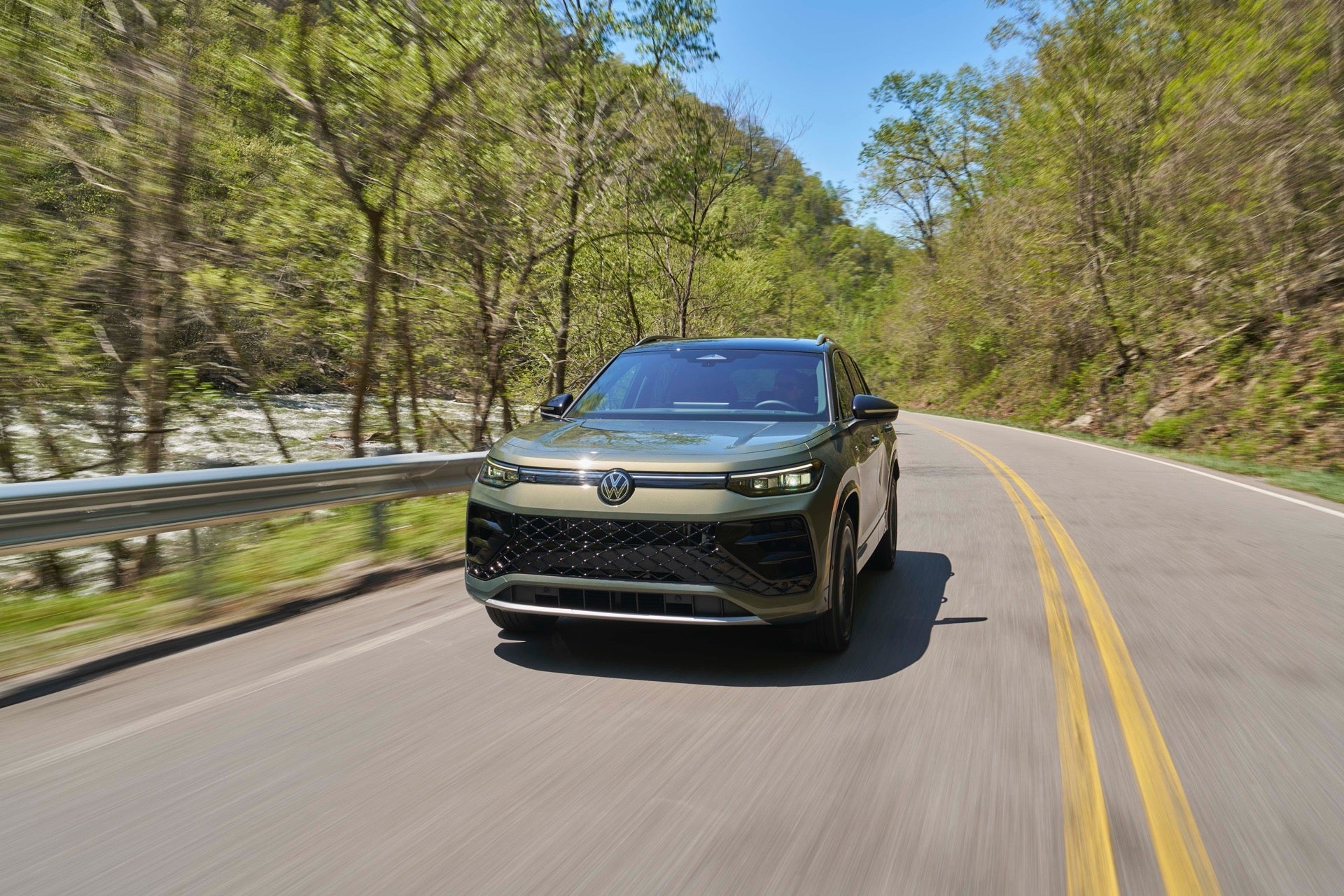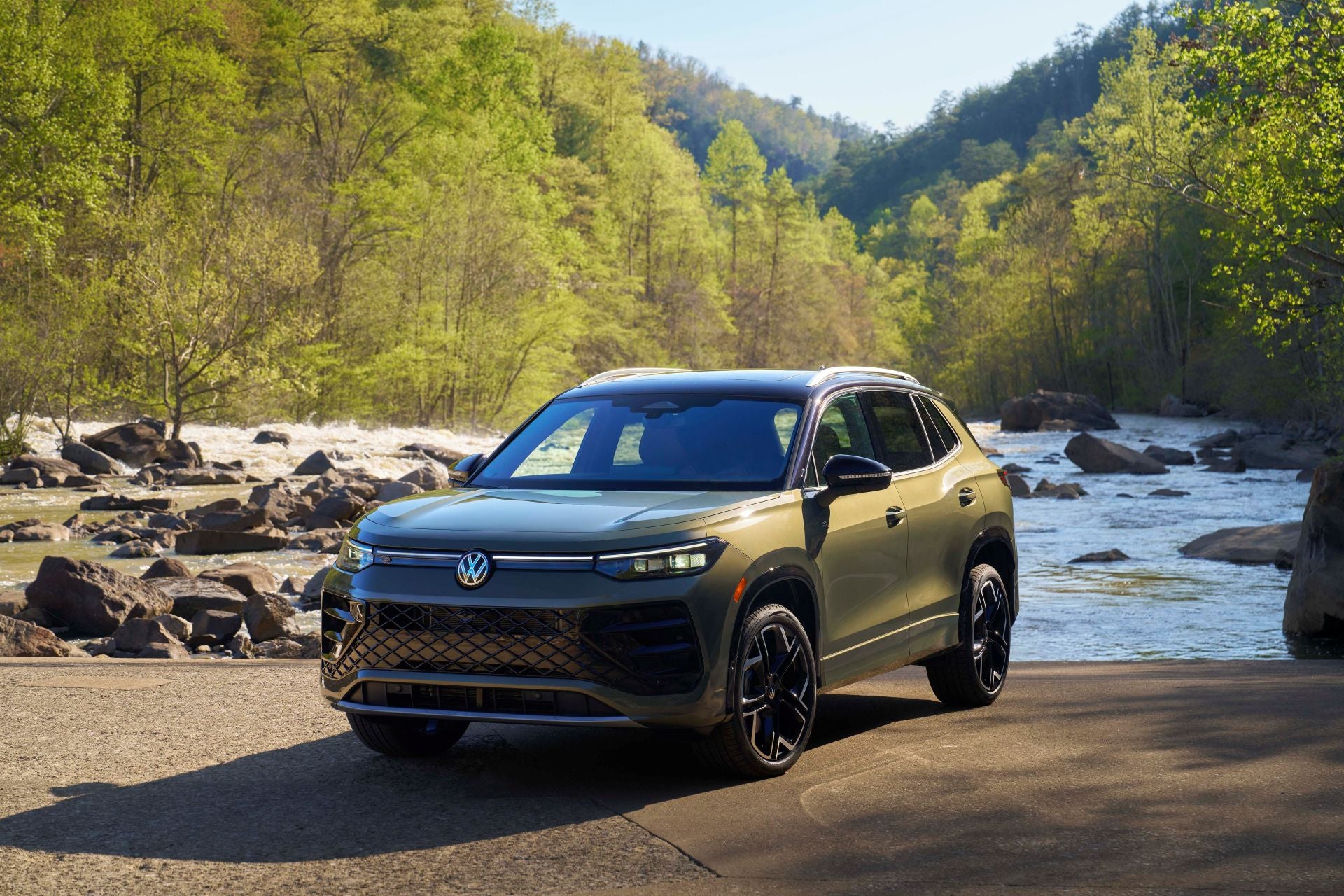

Yes. For the Las Cruces-to-Cloudcroft run via US-70 and US-82, the 2026 Volkswagen Tiguan lines up nicely with what the drive actually asks for. You get a sustained 4,300-foot elevation gain on US-82's switchbacks, cargo room for fall weekend gear, and a cabin comfortable enough that the hour-and-a-half each way doesn't feel like a commute. The fair caveat is that the Taos gets better fuel economy. If the mountain climb is a regular thing and cargo space matters, the Tiguan earns the nod.
Which Trim and Drivetrain Should You Choose for the Cloudcroft Drive?
For most families making this climb, 4MOTION on the SE R-Line is the balanced pick, though a dry-season day trip runs fine on front-wheel drive. US-82 climbs from roughly 4,300 feet in Alamogordo to 8,676 feet in Cloudcroft, with switchbacks that load the drivetrain in ways a flat I-10 commute simply doesn't. That framing sits behind every spec decision below.
| Decision Axis | Tiguan FWD (S / SE) | Tiguan 4MOTION AWD | Why It Matters on US-82 |
|---|---|---|---|
| Engine output | 201 hp / 221 lb-ft torque | 201 hp (S/SE/SE R-Line) or 268 hp / 258 lb-ft (SEL R-Line Turbo) | More torque means less gear-hunting on sustained grades |
| Fuel economy (EPA est.) | 26 city / 34 hwy / 29 combined | 22 city / 30 hwy / 25 combined | FWD saves fuel on the flat desert run; AWD trades some efficiency for grip |
| Ground clearance | 6.6 inches | 7.0 inches | The extra 0.4 inch matters if you pull into a forest-road pullout |
| Tow capacity (properly equipped) | 1,800 lbs | 1,800 lbs | Enough for a small trailer or roof box loaded with bikes |
| Cargo (seats up / folded) | 33.8 / 69.8 cu ft | 33.8 / 69.8 cu ft | Identical either way; fits a weekend's worth of gear without folding seats |
| Best fit | Day trip, dry-season fall run, solo or couple | Overnight cabin trip, family with gear, early-season or late-October run | Fall weather in the Sacramentos can shift fast above 8,000 feet |
The EPA rates the FWD Tiguan S at 26 city / 34 highway / 29 combined. Move up to 4MOTION on any trim and those numbers shift to 22 city / 30 highway / 25 combined. For an 80-mile round trip that's a real difference, though not a dramatic one. Where 4MOTION earns its keep is on the switchback section of US-82 itself, especially on a wet or shaded October morning when road temperatures at elevation drop well before Las Cruces feels cold.
We see this pattern with fall drives. Customers heading to Cloudcroft in September often start in the valley at around 90 degrees and arrive in conditions 20 to 25 degrees cooler. That temperature swing is a useful cue to check tire pressure before you leave (cold pressure reads change in big elevation shifts), and it's a real reason to prefer the extra drivetrain security if you're traveling with kids or staying overnight.
The Volkswagen Taos is worth a quick mention here. Its 1.5-liter turbocharged engine produces 174 horsepower and 184 lb-ft of torque, and the EPA rates the FWD version at 28 city / 36 highway / 31 combined. That's a clearly better fuel economy number. The tradeoff comes in cargo, since the Taos carries less (65.9 cubic feet maximum with seats folded versus the 69.8 of the Tiguan), and for a family loading a roof box and weekend bags the extra room of the Tiguan adds up. If you're making this run light and solo, the Taos is worth a look. If the trip involves gear, the Tiguan is the practical call.
What Does the US-82 Mountain Climb Actually Demand From the Tiguan?
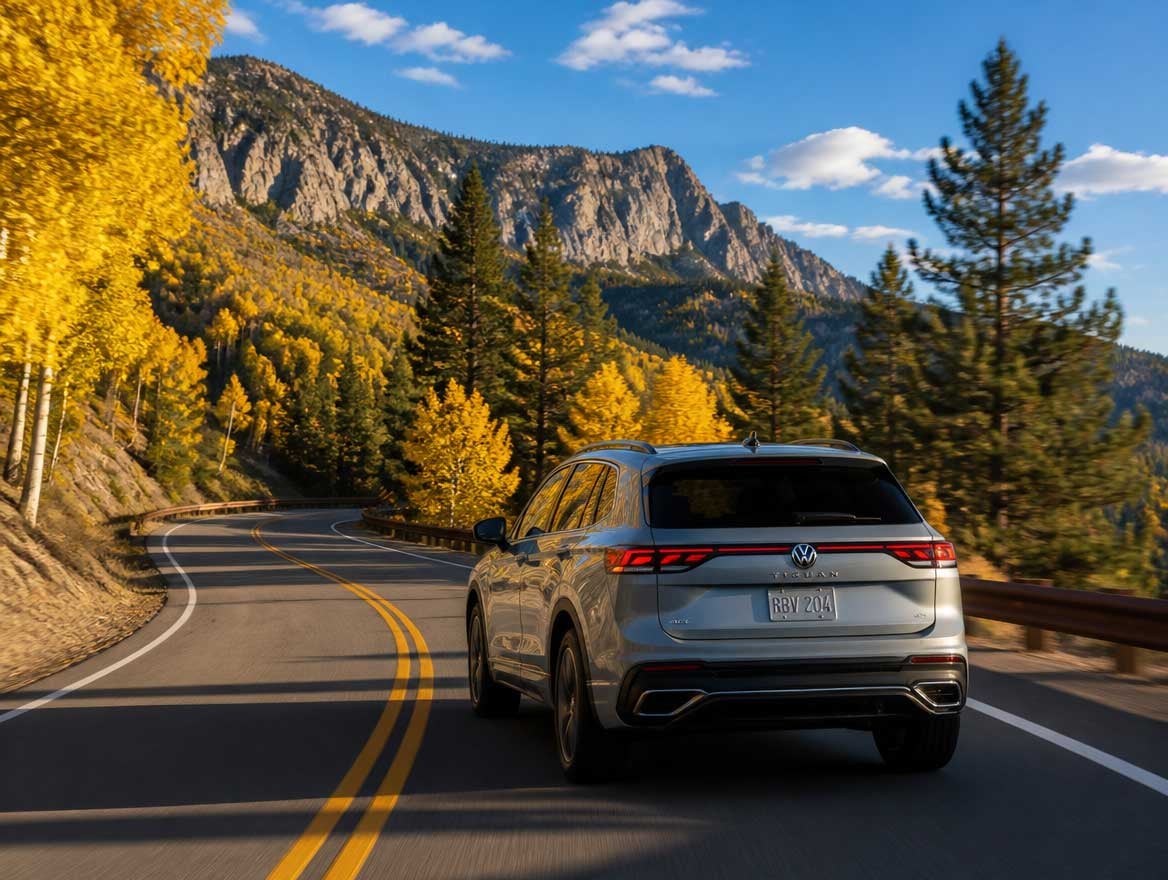
It demands sustained uphill torque more than outright horsepower, and the Tiguan turbo four delivers that early enough to climb comfortably, though the top engine makes it easier still, and you'll feel that on the grade. The stretch of US-82 between Alamogordo and Cloudcroft is the portion of the drive that separates a capable road-trip SUV from one that just looks the part. The road gains more than 4,300 feet of elevation in roughly 16 miles, which means steady uphill pull the whole way up.
Volkswagen rates the standard 2.0-liter turbocharged four-cylinder at 201 horsepower and 221 lb-ft of torque, paired with an 8-speed automatic. Turbocharged torque arrives early in the rev range (Volkswagen lists peak torque from 1,500 rpm), which is exactly what a loaded SUV needs on a long grade, power you can use without revving the engine into a frenzy. The top-trim SEL R-Line Turbo steps the engine up to 268 horsepower and 258 lb-ft, and that version comes standard with 4MOTION. Truth be told, the base 201-hp engine handles US-82 without distress. The 268-hp version makes the climb feel effortless. Neither is a wrong choice here.
The Volkswagen Atlas is the right answer if you're regularly hauling three rows and substantially more cargo room. But for a Cloudcroft overnight, the 33.8 cubic feet behind the Tiguan second row (or 69.8 with the bench folded) handles sleeping bags, coolers, and hiking boots for four people without asking anyone to pack light.
How Do You Prepare the Tiguan for This Specific Drive?
Preparing the Tiguan for the Cloudcroft run takes only a short checklist, mostly tires, tire pressure, and where you fill up, and the one step you'll want to never skip is the cold tire-pressure check before you pull out of the valley. Get those sorted and the drive is easy.
Start with tires and tire pressure, the two things that matter most on this drive. US-82 is well-maintained, but conditions above 8,000 feet can be wet, shaded, or (in late October) icy in ways that Las Cruces never signals at departure. Tire pressure drops roughly one PSI for every 10-degree temperature drop, and you'll see swings of 20 to 25 degrees between the Mesilla Valley floor and the Cloudcroft village. Check pressure cold before leaving, not after parking in Alamogordo's heat.
Fuel is the other point. Alamogordo is where you fill up. The tank range of the Tiguan on the highway is generous (the EPA's 34-highway figure on FWD trims means a full tank covers the round trip comfortably), but Cloudcroft's village services are limited, so top off before you climb. You'll want the return on your terms.
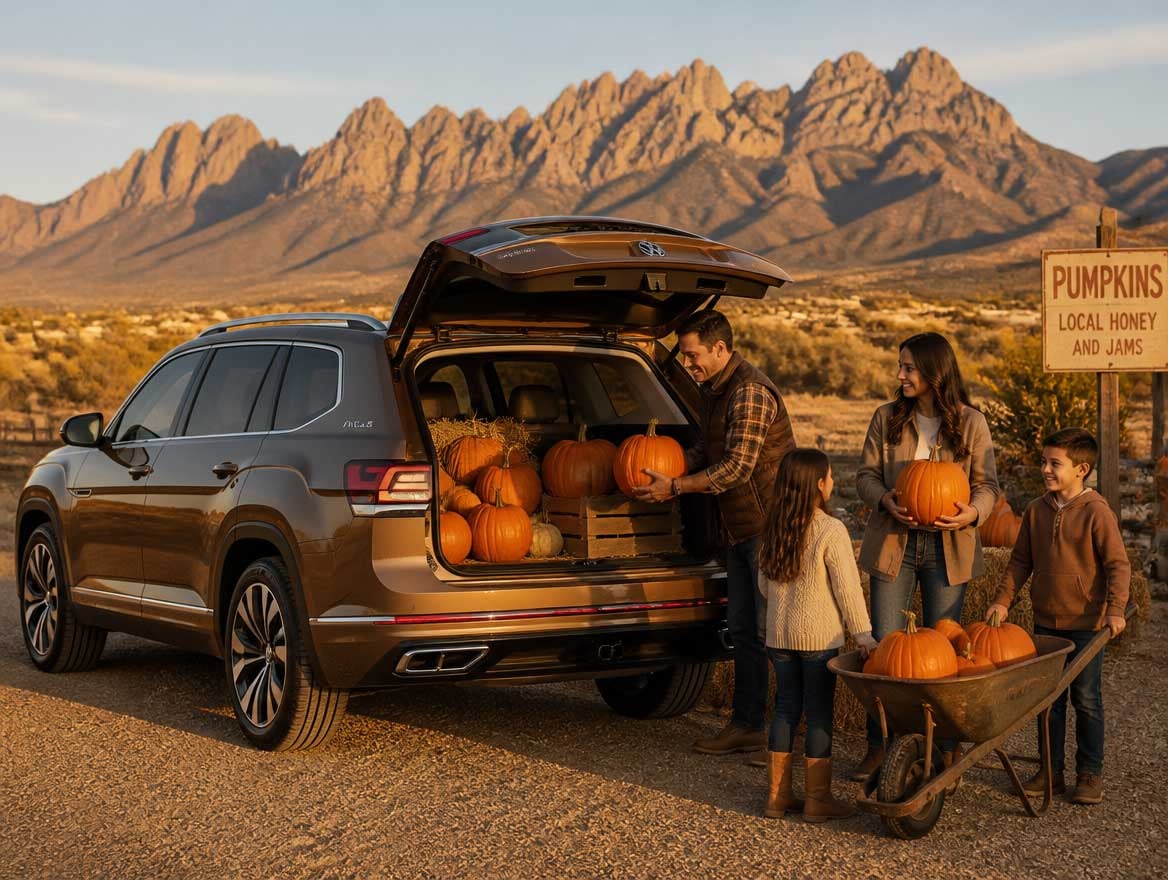
The cargo setup of the Tiguan makes packing straightforward. A 60/40 split-fold rear bench gives you a flat load floor when you need it. A weekend bag for two, a small cooler, hiking daypack, and a layer of jackets fit behind the second row without folding anything. Family of four with more gear? Drop the bench and you'll load 69.8 cubic feet of nearly flat space. That dimension is worth knowing before you start the Tetris.
Service before a longer mountain run is worth doing, particularly if you're overdue on tire rotation or approaching a fluid check interval. Our service team is here when you're ready.
Schedule a Pre-Trip Service Check
How Does the Tiguan Compare to the Taos for This Trip?
For this specific trip, the elevation change and cargo reality tilt the pick toward the Tiguan for most Mesilla Valley families, though the Taos stays the better call for a light, fuel-minded day trip. We carry both, and they're both solid, for what it's worth.
| 2026 Volkswagen Tiguan | 2026 Volkswagen Taos | |
|---|---|---|
| Engine | 2.0T, 201 hp / 221 lb-ft | 1.5T, 174 hp / 184 lb-ft |
| Best MPG (EPA combined) | 29 mpg (FWD) | 31 mpg (FWD) |
| AWD option | 4MOTION, available on S/SE/SE R-Line; standard on SEL R-Line Turbo | 4MOTION available on S/SE/SE R-Line Black; standard on SEL |
| Max cargo (seats folded) | 69.8 cu ft | 65.9 cu ft |
| Tow rating | 1,800 lbs (properly equipped) | No official rating |
| Ground clearance (AWD) | 7.0 inches | Not officially published |
| Best fit for Cloudcroft | Overnight, family, gear-heavy, early or late season | Day trip, light packer, fuel economy priority |
For a quick day trip, traveling light and wanting the fuel economy advantage back on the I-10 commute the rest of the week, the Taos is the smarter choice. The Tiguan is the smarter choice if you're staying overnight, bringing gear for four, or heading up after mid-October when weather at 8,676 feet behaves less predictably.
Neither vehicle is a compromise. They're just calibrated for different versions of this trip.
Browse our current Volkswagen inventory to see which trims are available, and reach out if you'd like to talk through which configuration fits your road trip routine before you commit.
Frequently Asked Questions
Is the 2026 Volkswagen Tiguan good on mountain roads?
Yes. The turbocharged 2.0-liter engine of the 2026 Volkswagen Tiguan delivers 221 lb-ft of torque from low in the rev range, which handles sustained grades like the US-82 climb to Cloudcroft without strain. Its 4MOTION AWD option (standard on the SEL R-Line Turbo) adds traction security on shaded or damp switchbacks. For paved mountain drives, the Tiguan is well-suited.
Do I need AWD to drive to Cloudcroft in the fall?
For a dry October day trip, FWD is adequate. The road is paved and well-maintained. By mid-October, morning temperatures above 8,000 feet can produce wet or icy patches on US-82, particularly on shaded sections. If you're planning overnight stays or traveling in late October, the Tiguan 4MOTION all-wheel drive is worth choosing for the added security on those switchbacks.
How much cargo space does the 2026 Volkswagen Tiguan have for a road trip?
The 2026 Volkswagen Tiguan offers 33.8 cubic feet of cargo space behind the second row with all seats up, expanding to 69.8 cubic feet when the 60/40 split-fold rear bench is folded flat. For a Cloudcroft overnight with two to four people, that's enough for duffels, a cooler, hiking gear, and cold-weather layers without needing a cargo carrier.