

Comparing the Volkswagen Atlas to the Competition
2026 Volkswagen Atlas at Sisbarro VW
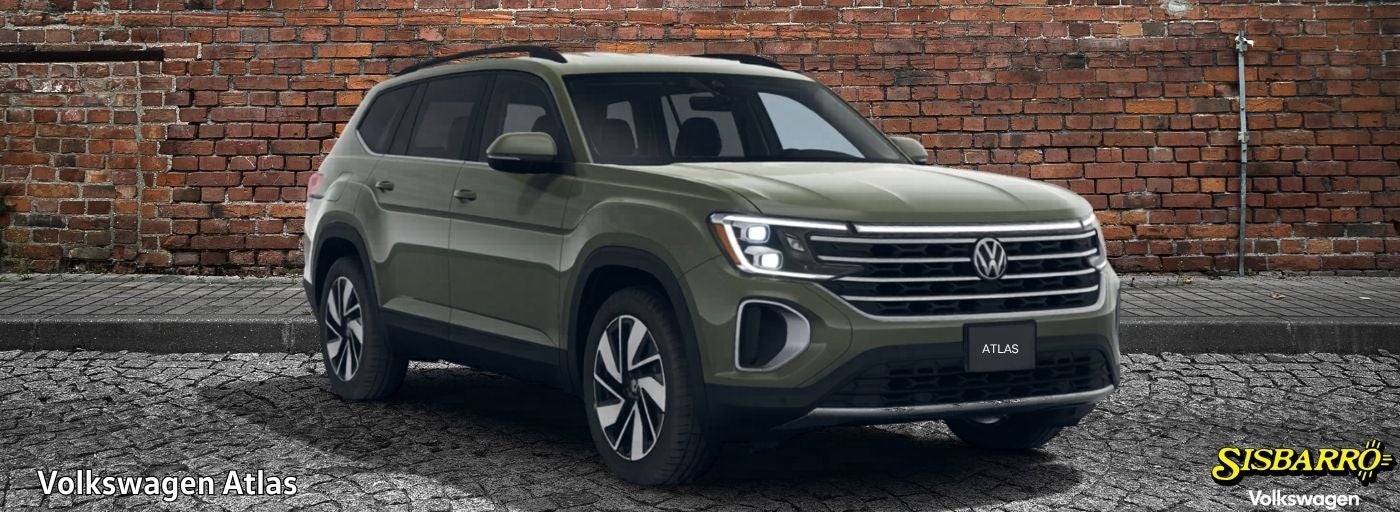
The 2026 Volkswagen Atlas carries over from the 2025 model, which itself largely carried over from 2024, when the Atlas had a significant update. That redesign brought a host of new features, including a newer, more powerful 2.0-liter turbocharged four-cylinder engine that produces 269 horsepower and 273 lb-ft of torque and pairs very well with an eight-speed automatic transmission. Thanks to this, the Atlas can easily tow up to 5,000 pounds when properly equipped. It also has even more cargo capacity than before, plus the ability to easily carry adults in the third row—something numerous competitors can’t do.
The Atlas starts at $39,310, and buyers can choose between standard front-wheel drive and the well-respected 4MOTION all-wheel-drive system. There are five trim levels: SE, SE with Technology, Peak Edition, SEL, and SEL Premium R-Line.
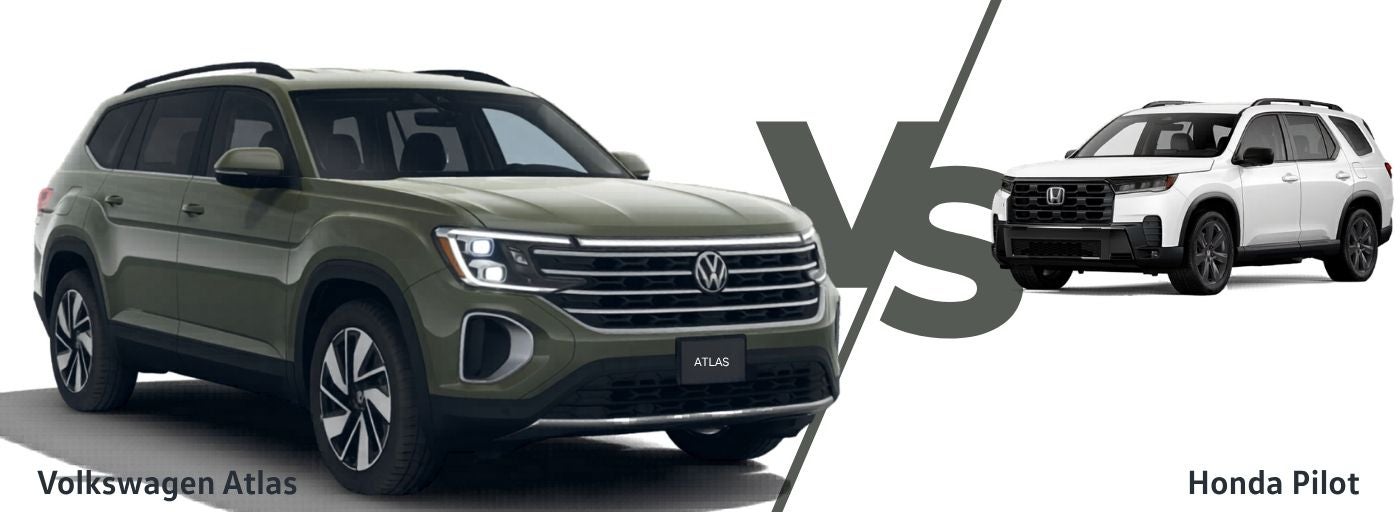
Atlas vs. Honda Pilot
Honda fully updated the Pilot for the 2023 model year, so it carries over largely unchanged. The Pilot has been a popular choice (competing with vehicles like the Toyota Highlander) since 2003. That said, there are more competitive SUVs than ever, such as the VW Atlas; Honda looks to keep its grip on a loyal customer base. The Pilot is available in Sport, EX-L, TrailSport, Touring, Elite, and Black Edition trim levels.
- Buyers looking at the 2025 Honda Pilot will find a starting price of $42,395 for the base Sport trim, while the 2025 VW Atlas starts from $39,310, a significant $3,085 difference. Even on the SE model, cost-conscious options such as pearlescent paint or different interior colors come at no additional cost. The Pilot, on the other hand, charges $455 for three of its six optional exterior colors.
- When it comes to getting your vehicle off the line at a traffic light, torque is going to be your best friend. The Atlas packs 273 lb-ft of torque compared to the Pilot’s 262 lb-ft. While 11 lb-ft of torque doesn’t seem like a big number, it’s how the vehicles use it. The Pilot’s peak torque happens way up in the rev range at 5,000 rpm. The Atlas, meanwhile, develops full torque at just 1,600 rpm. So basically, when you press the gas pedal, you will have instant torque.
- The Honda Pilot offers 18.6 cubic feet of cargo space behind the third row, 48.5 cubic feet with those seats folded, and 87.0 cubic feet with all rear seats folded. That is a relatively small cabin compared to the Atlas, which offers 20.6 cubic feet behind the third-row seats, 55.5 cubic feet with those seats folded, and a total of 96.6 cubic feet behind the front seats with both passenger rows laid flat.
- The driver and passenger, along with third-row occupants, will appreciate the extra legroom in the Atlas versus the Pilot, where they will have an extra 0.7 inch in the front seats and 1.2 inches in the rear-most seats.
- If you are going to put a car seat in the third row, you will be delighted to know that the Atlas has 45.1 inches of hip room in those seats compared to 44.6 inches in the Pilot. Just that little bit of extra room can make the difference when putting a child’s seat in the back to accommodate larger riders in the luxurious second-row captain’s chairs.
- The Honda Pilot can tow up to 3,500 pounds when equipped with front-wheel drive or 5,000 pounds with all-wheel drive. The Atlas Peak Edition and up, however, can tow up to 5,000 pounds, no matter if you have a front-wheel-drive model or the advanced 4MOTION all-wheel-drive system.
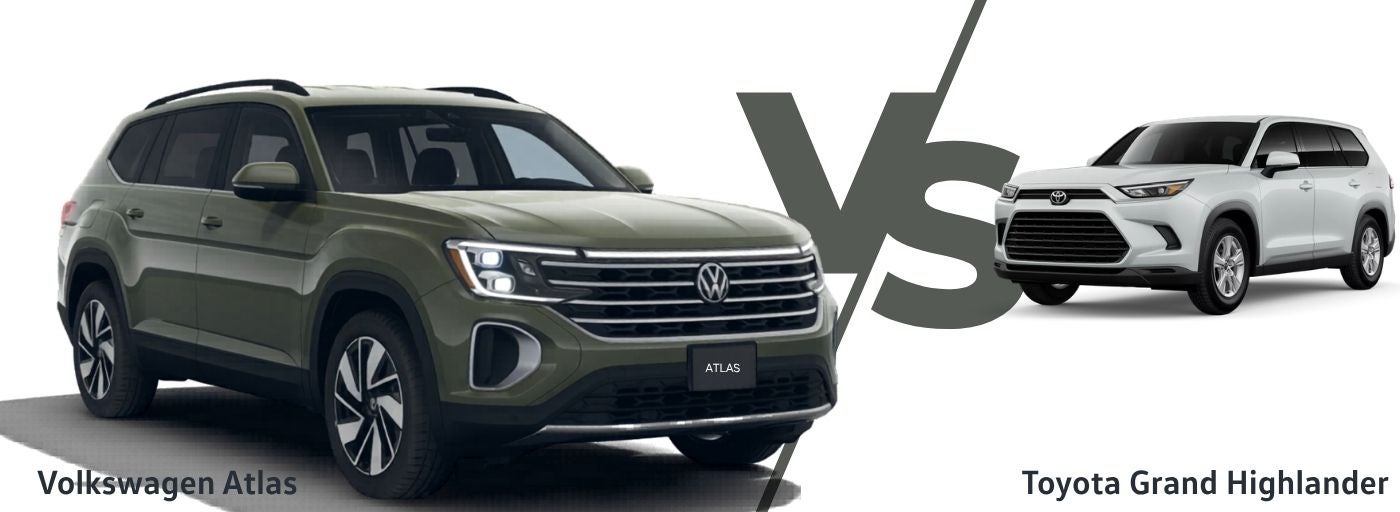
Atlas vs. Toyota Grand Highlander
The latest three-row SUV to enter the ring is the Toyota Grand Highlander. Toyota positioned it as a model above its popular Highlander. It’s Toyota’s answer to vehicles like the Volkswagen Atlas that not only have sales success but also have built a loyal customer base. A new entry-level trim has the Grand Highlander start at $41,860 with a mix of gas and hybrid powertrains. It is available in LE, XLE, Limited, Nightshade, and Platinum trim levels with an available hybrid version of each.
- The 2025 Toyota Grand Highlander starts from $41,860, a notable $2,550 more than the Volkswagen Atlas. And that doesn’t get you anything extra, either. It still features standard front-wheel drive like the VW, a turbocharged engine, and the like.
- If you want special, vibrant pearlescent paint, you will sadly have to pony up an additional $475 when buying a Grand Highlander. The Atlas, however, features Deep Black Pearl at no additional cost to customers.
- Both the gasoline and hybrid engines in the Grand Highlander produce less horsepower than the Atlas, with 265 and 245, respectively, at 6,000 rpm. The Atlas has 269 horsepower. When you are merging onto the highway or driving around town, that extra horsepower available sooner can be a game-changer.
- The Grand Highlander has a 17.83-gallon fuel tank, which is smaller than the 18.6-gallon tank in the Atlas. On a combined driving cycle, the Toyota will struggle to get 390 miles on a full tank, whereas the Atlas will get well over 400 miles to a tank.
- With 60.2 and 58.8 inches of front- and second-row shoulder room, respectively, the Grand Highlander has a tougher time for drivers and passengers than the Atlas, with 61.5 and 60.8 inches.
- The story is much the same with hip room. The Toyota has 56.5 and 57.0 inches in the front and second rows, respectively, but the Atlas is more accommodating with 58.2 and 58.0 inches.
- The Atlas and Grand Highlander have nearly the same cargo space. They are both rated identically at 20.6 cubic feet behind the third row. The Highlander has an edge, but only a very slight one, in space behind the 2nd row (55.5 vs. 57.9 cubic feet) and behind the first row (96.6 vs. 67.5 cubic feet).
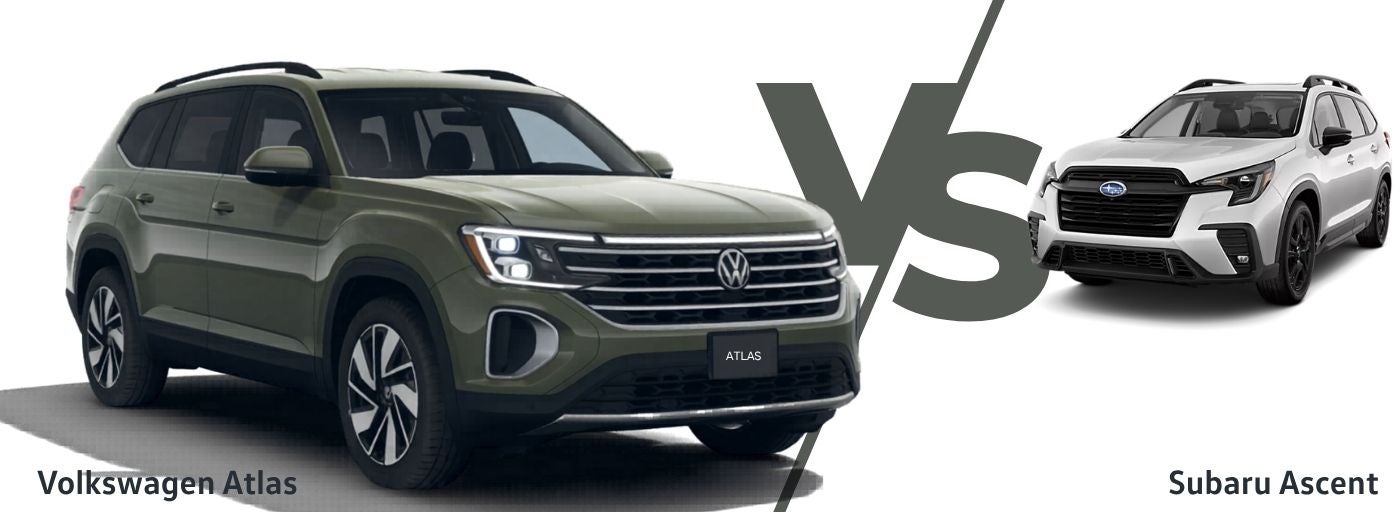
Atlas vs. Subaru Ascent
Hoping to build on the success of its smaller SUVs like the Forester and Outback, the Subaru Ascent debuted in the same 2018 model year launch as the Atlas. The Ascent starts at $40,795, and, like most Subaru models, all-wheel drive is standard across the lineup. That model line consists of Premium, Onyx Edition, Limited, Bronze Edition, Touring, and Onyx Edition Touring.
- The 2025 Subaru Ascent starts at $40,330, which is a bit more than the $39,625 starting MSRP of the Atlas.
- With 260 horsepower, the Ascent is down nine horsepower compared to the Atlas, which has 269. While that may not seem like a big number, it makes a difference when you are hauling people and luggage. You will start to feel sluggish when trying to pass other vehicles on the road.
- The VW Atlas has 273 lb-ft of torque available at 1,600 rpm. The Subaru, however, develops its peak torque at a higher 2,000 rpm, which means the engine needs to be spinning a bit higher to give drivers enough torque to pass other vehicles on the road or get up to speed when merging onto the highway.
- The Subaru Ascent comes with a continuously variable transmission (CVT), while the Atlas features an eight-speed automatic that shifts smoothly and provides greater control when driving. Many people dislike CVTs because they make the engine sound like it’s about to blow up, since the transmission does not shift like a traditional automatic. Instead, it uses a variable gear to control gear ratios, creating more engine drone at higher speeds. CVTs are also much less reliable by comparison.
- The Atlas features a whole two inches more legroom in the third row than the Ascent, which means it will be much easier to transport your older kids and their friends from school or sports practices, or when on trips.
- The third row for the Atlas also has 2.1 inches of extra headroom over the Subaru. Again, this is great for adults or larger kids as they grow; it allows them to fit easily and comfortably in the third row. This is especially helpful if you have children who are still in car seats or boosters sitting in the second-row captain’s chairs.
- The Atlas is much more suited for carrying large amounts of cargo, such as luggage, plants, groceries, and the like, than the Subaru. The Ascent has 17.8 cubic feet of space when the third-row seats are up, 42.1 when they are folded, and 72.8 cubic feet when both rear rows are folded. The Atlas, though, has 20.6 cubic feet for owners’ cargo behind the third row, 55.5 when they are folded, and a grand total of 96.6 cubic feet behind the front seats when the rears are folded flat.
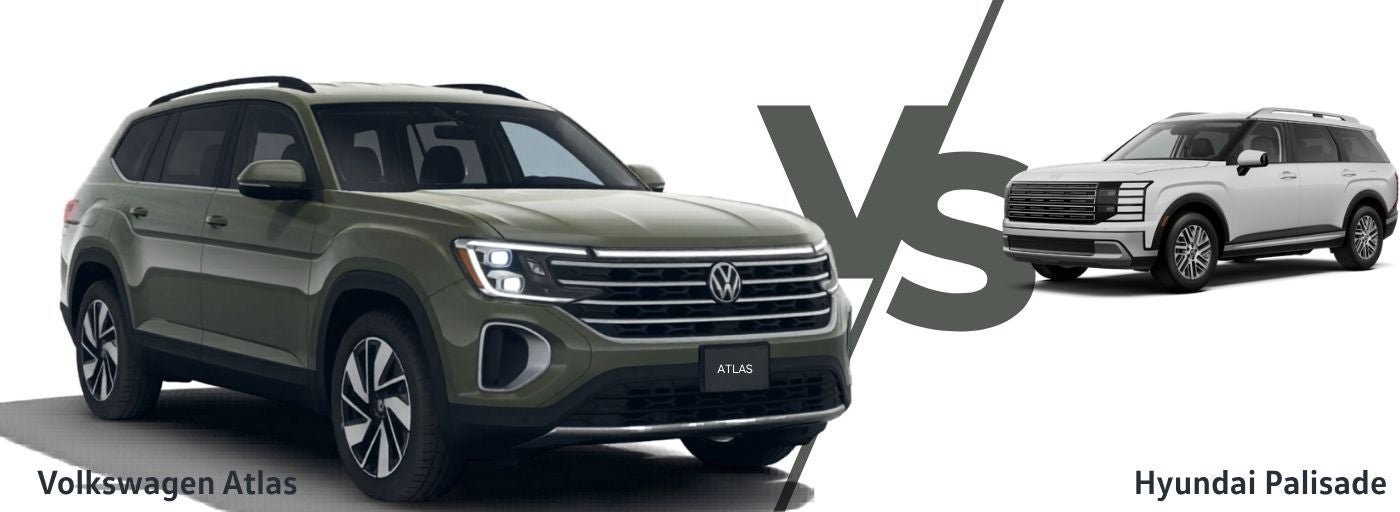
Atlas vs. Hyundai Palisade
The Hyundai Palisade is a popular SUV with buyers. It has been around since 2020 and is starting to get a little old compared to other vehicles in its class, like the VW Atlas. With its decently powerful V6 and modest starting price of $39,435, buyers like its overall size and interior features. The Palisade is available in SE, SEL, SEL Convenience, SEL Premium, Limited, XRT Pro, and Calligraphy.
- Like the Honda Pilot, the Hyundai Palisade features 262 lb-ft of torque at 5,200 rpm. The Volkswagen again delivers 273 lb-ft of torque to the road from just 1,600 rpm. Torque is what gives your vehicle that extra oomph when you mash the throttle pedal to move ahead of traffic, and having more of it low down in the rev range gives you quicker optimal performance.
- The Palisade has rather limited interior cargo space compared to the Volkswagen Atlas. The Palisade has 19.1 cubic feet behind the third row, 46.3 cubic feet behind the second row, and 86.7 cubic feet with all rear seats folded down. The Atlas gives owners 20.6 cubic feet with the third row up, 55.5 cubic feet with the third row folded, and 96.6 cubic feet with all rear seats folded flat.
- The Hyundai Palisade offers only 32.1 inches of legroom in the third row, making it difficult for adults, or even tall teenagers, to fit comfortably. The Atlas, however, has an extra 1.6 inches of legroom for third-row occupants, giving everyone enough space on nearly any drive.
- When you do have to put adults or larger teens all the way in the back, you will feel better knowing they can sit up straight and don’t have to hunch down, thanks to more headroom in the Atlas than in the Palisade (38.3 inches compared to 37.7).
- The Hyundai Palisade has very truck-like ground clearance with 7.9 inches. While this is great if you are driving through the woods, it’s not so great for a family vehicle where you need your younger children to be able to easily and safely get in and out of your SUV. The VW Atlas has a rather modest 6.3 inches of ground clearance—enough to still take the vehicle off-road for camping or when towing, but low enough that your children won’t hurt themselves trying to climb up or drop down from their seats.
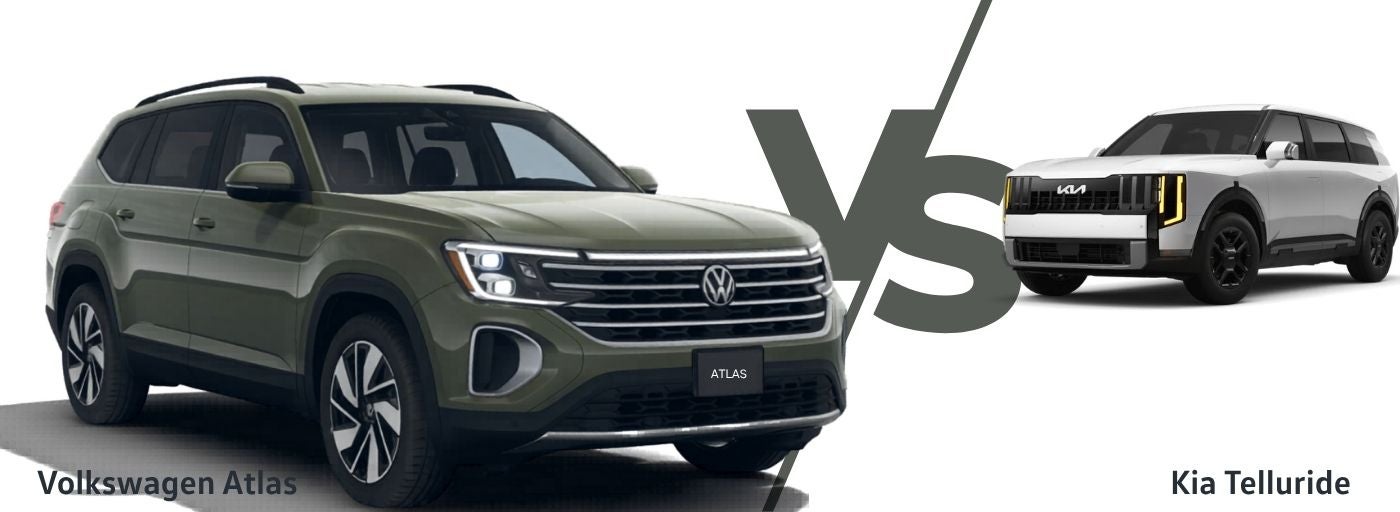
Atlas vs. Kia Telluride
There is no 2026 Kia Telluride, but the 2027 model is already available. The 2027 model marks the debut of the second-generation Telluride. Exterior and interior styling are all new, as is the drivetrain. Gone is the old 3.8-liter V6, replaced by a 2.5-liter turbocharged inline-4. Power is down a bit from the previous model, but fuel efficiency is up, and the smaller engine is a better match for the available hybrid model. The Telluride’s bold yet squared-off front-end styling is a love-it-or-hate-it proposition. The Telluride is available in LX, S, EX, SX, and SX Prestige trim levels, with an additional off-road-focused X-Pro package available on SX and SX Prestige models.
- The Atlas and Telluride’s turbocharged 4-cylinder engines exchange power advantages, with the Atlas having more horsepower (287 vs. 274) while the Telluride has more torque (311 vs. 260 lb-ft).
- The Atlas has a 3.1-inch longer wheelbase for a more relaxed highway ride.
- At the time of writing, there are no EPA estimates for the Telluride. There are also no NHTSA ratings for the Telluride yet, while the Atlas has a 5-star overall rating.
- The Atlas has superior cargo space when the third-row seats are folded (55.5 vs. 48.7 cu.ft) and when all seats are folded (96.6 vs. 89.3 cu. ft.).
- For the front seats, both models are nearly identical in head, leg, hip, and shoulder metrics.
- The Telluride has a bit more space for second-row passengers, but for the third row, adults or larger kids will have more space to enjoy in the Atlas, with more headroom (38.3 vs. 37.7 inches) and more legroom (33.7 vs. 32.1 inches).
Compare 2026 Volkswagen Atlas to the Competition
 This page is best experienced in Landscape Mode.
| Midsize Crossover SUV | Volkswagen Atlas | Honda Pilot | Toyota Grand Highlander | Subaru Ascent | Hyundai Palisade | Kia Telluride |
|---|---|---|---|---|---|---|
| Trims | 5 | 6 | 10 | 6 | 7 | 12 |
| Colors | 8 | 7 | 7 | 8 | 7 | 9 |
| Engine | 2.0-liter Turbo | 3.5-liter |
2.4-liter Turbo
2.5-liter Hybrid
2.4-liter Turbo Hybrid MAX
|
2.4-liter Turbo | 3.5-liter | 2.5-liter Turbo |
| Horsepower | 269 | 285 |
Gas - 265
Hybrid - 245
Hybrid MAX - 362
|
260 | 287 | 274 |
| Torque | 273 | 262 |
Gas - 310
Hybrid MAX - 400
|
277 | 260 | 311 |
| Transmission | 8-spd auto | 10-spd auto |
Gas - 8-spd auto
Hybrid - ECVT
Hybrid MAX - 6-spd auto
|
CVT | 8-spd auto | 8-spd auto |
| DriveTrain |
Standard - FWD
Optional - AWD
|
Standard - FWD
Optional - AWD
|
Standard - FWD
Optional - AWD
|
AWD |
Standard - FWD
Optional - AWD
|
Standard - FWD
Optional - AWD
|
| Towing Capacity | 5,000 lbs | 5,000 lbs |
Gas, Hybrid MAX - 5,000 lbs
Hybrid - 3,500 lbs
|
5,000 lbs | 5,000 lbs |
5,000 lbs
X-Pro Line - 5,500 lbs
|
| Fuel Economy (Hwy/City/Combined) |
FWD - 20 / 27 / 23
AWD - 20 / 26 / 22
|
FWD - 19 / 27 / 22
AWD - 19 / 25 / 21
|
FWD - 20 / 28 / 24
AWD - 21 / 27 / 23
|
20 / 26 / 22 |
FWD - 19 / 25 / 21
AWD - 18 / 24 / 20
XRT Pro - 16 / 22 / 19
|
FWD - 20 / 26 / 22
AWD - 18 / 24 / 20
|
| Infotainment | Standard 12" | 12.3" | Standard - 12.3" | Standard - 11.6" | Standard 12.3" | Standard - 12.3" |
| Front Headroom | 41.3" |
Sport, EX-L - 40.5"
TrailSport, Touring, Elite, Black Edition - 39.1"
|
W/O Panoramic Roof - 41.5"
W/ Panoramic Roof - 40"
|
Without Moonroof - 41.2"
With Moonroof - 40.4"
|
No Sunroof - 41.5"
Sunroof - 40.1"
|
W/O Sunroof - 41.2"
W/ Sunroof - 40"
W/ Dual Sunroof - 40"
|
| Front Legroom | 41.7" | 41" | 41.7" | 42.2" | 44.2" | 41.4" |
| Rear Headroom | 40.4" |
Sport, EX-L - 40.2"
TrailSport, Touring, Elite, Black Edition - 39.2"
|
W/O Panoramic Roof - 40.2"
W/ Panoramic Roof - 38.5"
|
Without Moonroof - 40"
With Moonroof - 38.7"
|
No Sunroof - 40.7"
Sunroof - 40.0"
|
W/O Sunroof - 40.4"
W/ Sunroof - 40.4"
W/ Dual Sunroof - 38.9"
|
| Rear Legroom | 37.6" | 40.8" | 39.5" | 38.6" | 43,0" | 43" |
| Third Row Headroom | 38.3" |
Sport, EX-L - 39.3"
TrailSport, Touring, Elite, Black Edition - 39.3"
|
37.2" | 36.2" |
No Sunroof - 37.8"
Sunroof - 37.2"
|
W/O Sunroof - 37.4"
W/ Sunroof - 37.4"
W/ Dual Sunroof - 37.4"
|
| Third Row Legroom | 33.7" | 32.5" | 33.5" | 31.7" | 32.1" | 32.1" |
| Cargo Space Behind 3rd Row Seats | 20.6 cu.ft. |
Sport, TrailSport - 18.6-21.8 cu.ft.
EX-L, Touring, Elite, Black Edition - 18.6-22.4 cu.ft.
|
20.6 cu.ft. |
Without Moonroof - 17.8 cu.ft.
With Moonroof - 17.6 cu.ft.
|
19.1 cu.ft. | 22.3 cu.ft. |
| Cargo Space Behind 2nd Row Seats | 55.5 cu.ft. |
Sport, TrailSport - 48.5-59.5 cu.ft.
EX-L, Touring, Elite, Black Edition - 48.5-60.1 cu.ft.
|
57.9 cu.ft. |
Without Moonroof - 43.5 cu.ft.
With Moonroof - 42.1 cu.ft.
|
46.3 cu.ft. | 48.7 cu.ft. |
| Cargo Space Behind 1st Row Seats | 96.6 cu.ft. |
Sport - 87 / 111.8 cu.ft.
EX-L - 87 / 112.4 cu.ft.
TrailSport - 87 / 113.7 cu.ft.
Touring - 87 / 112.4 cu.ft.
Elite, Black Edition - 87 / 112.1 cu.ft.
|
97.5 cu.ft. |
Without Moonroof - 75.6 cu.ft.
With Moonroof - 72.8 cu.ft.
|
86.7 cu.ft. | 89.3 cu.ft. |
| Base Price | $39,310 | $42,395 | $42,260 | $40,795 | $39,435 | $39,190 |
Why Buy from Sisbarro Volkswagen?
At Sisbarro Volkswagen, you will have an automotive experience unlike any other. You can find new Volkswagen inventory, including the Tiguan, Taos, GTI, Jetta, ID.Buzz, ID.4, and an unmatched collection of used car, truck, van, SUV, and crossover inventory at our dealership in Las Cruces, NM. Are you interested in leasing or financing your Volkswagen Atlas? The Finance Department at Sisbarro VW can help you find the right lease offer or finance solution that fits your budget. We cultivate relationships with many banks, lenders, and other financial organizations to provide you with great options in purchasing your new vehicle. In addition to the comprehensive factory warranty that comes with your new Atlas, we offer extended warranty and protection programs to safeguard your investment. Get the best deals and specials available to you on the Volkswagen Atlas. Our knowledgeable sales staff wants to help you find the perfect fit in a new Volkswagen or used car. We can’t wait to welcome you to the Sisbarro Volkswagen family and help you find your new car or used vehicle. Your support and customer service doesn’t stop after you sign your deal. The expert Service Department at our Volkswagen dealership in Las Cruces, NM is always ready to help with any repairs or maintenance you might need to keep your vehicle running perfectly. Our Express Service Lane will get you back on the road quickly when you need basic maintenance like an oil change or tire rotation. Would you like to make your new car all your own with personalized upgrades? Our well-stocked Parts Department has all of the Volkswagen genuine parts and accessories you need for the best customization of your vehicle. Make your car, truck, or SUV uniquely yours to fit perfectly in your lifestyle. We are eager to help you on your car buying and vehicle ownership journey. Visit us today at Sisbarro Volkswagen!

We’re sorry, availability of some equipment, options or features may be limited due to global supply issues affecting the auto industry. Please be sure to verify that the vehicle you purchase includes all expected features and equipment.