Blog

6 Tech Features You'll Find on Your VW Vehicle

vw tech features

The vehicles at our VW dealer are on the cutting-edge when it comes to the latest technology. Here are some of the tech features you'll be riding with when you drive home in one of our exceptional vehicles.

1. Volkswagen Digital Cockpit

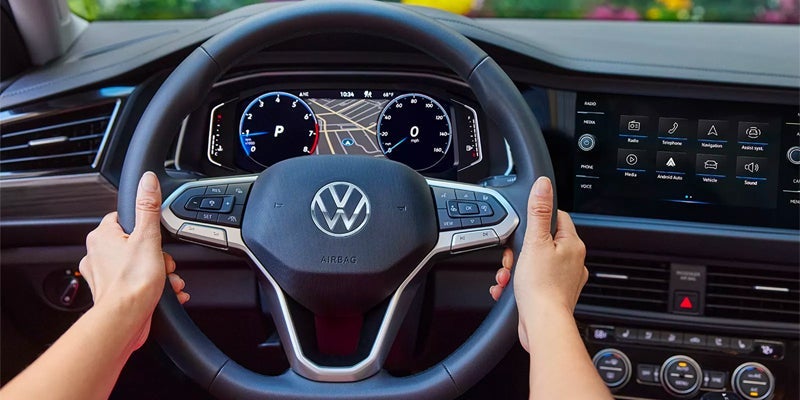
View real-time driving data in an innovative new way using the Volkswagen Digital Cockpit system. Along with essential information such as your current speed and fuel levels, this system also puts a state-of-the-art navigation system easily in your view so you can check the next turn you need to make with minimal distraction. The layout is fully customizable, allowing you to adjust the interface to suit your needs.

2. Travel Assist

Volkswagen takes a high-tech approach to keeping you safe with the IQ.DRIVE suite of safety technologies, and the Travel Assist feature is a perfect example of that. This feature uses automated braking and acceleration as well as steering assistance to help you navigate busy roads with ease, giving you a helping hand in steering clear of obstacles.

3. Active Blind Spot Monitor

You'll have an extra set of eyes watching your back with the helpful Active Blind Spot Monitor feature included in modern Volkswagen vehicles. While you're looking out for obstacles on the road ahead, this feature uses sensors to monitor areas you might not be able to see on your own, alerting you to the presence of objects in your blind spot and assisting your steering if necessary to help you avoid a collision.

4. Keyless Access and Available Remote Engine Start

Tired of getting to your vehicle only to have to stop and search for your keys to get aboard? That hassle is over with Volkswagen's Keyless Access feature, which lets you unlock the doors with just a touch. Add the available Remote Engine Start feature, and you can have your vehicle warmed up and ready prior to your arrival.

5. Rear Traffic Alert

You can't always see what's coming when you're backing out of a driveway or parking space, but the Rear Cross Traffic alert feature can help to mitigate that lapse of awareness. If oncoming traffic is detected crossing your path while you're in reverse, this feature warns you and can even apply the brakes automatically to avert a collision.

6. App-Connect

Plugging in your smartphone or connecting it wirelessly to a Volkswagen vehicle equipped with App-Connect opens up a world of new features to take with you on the road. You can check weather reports, listen to your favorite podcasts, and even play games during downtime when you pull your vehicle over.

Interested in learning more about these tech features and everything else the modern VW lineup has to offer? Come talk to the experts at Sisbarro Autoworld Volkswagen in Las Cruces, NM today!

Recommended Posts

Volkswagen Taos running shot

Volkswagen Taos vs. Jetta for Las Cruces Student Drivers

In this article What's the Real Difference Between These Two? Does Fuel Economy Actually Matter Here, and Which One Wins? Parking, Parking, Parking Do You Actually Need AWD in Las Cruces? So Which One Should You Pick? The honest answer fits in one sentence. If you're parking near NMSU and running the I-10 corridor every week, the 2026 Volkswagen Jetta will almost certainly cost less to fuel and feel more natural in the city. The 2026 Volkswagen Taos earns its higher entry point only when you genuinely need hatch-open cargo flexibility or have a real lifestyle reason to want an SUV silhouette. The short version The 2026 Jetta gets an EPA-estimated 40 mpg highway; the 2026 Taos FWD tops out at 36 mpg highway. That gap adds up across a semester on I-10. Cargo is the strongest card for the Taos: up to 60.2 cubic feet of maximum load space vs. the fixed 14.1-cubic-foot trunk of the Jetta. Neither vehicle needs AWD for typical Las Cruces driving. FWD handles I-10 and I-25 in our climate without compromise. Both come standard with the Volkswagen full IQ.Drive driver-assistance suite, including stop-and-go adaptive cruise and automatic emergency braking. Pick the Jetta for pure commuter efficiency. Pick the Taos if hauling gear or SUV flexibility genuinely changes your daily routine. What's the Real Difference Between These Two? Both cars share a platform, the same 184 lb-ft of torque, and a nearly identical feature checklist, so the difference that actually matters is body shape, and shape carries real-world consequences for how you park, what you haul, and what you spend at the pump. The Jetta is a sedan built to sip fuel, move through traffic, and fit neatly into campus parking. The Taos is a compact SUV built to swallow duffel bags, sit higher off the ground, and offer an optional all-wheel-drive system that Las Cruces conditions rarely call for. Spec 2026 Volkswagen Jetta 2026 Volkswagen Taos FWD Engine 1.5L turbo, 158 hp 1.5L turbo, 174 hp Torque 184 lb-ft 184 lb-ft EPA City / Hwy / Combined 29 / 40 / 34 mpg 28 / 36 / 31 mpg Cargo (behind rear seats) 14.1 cu ft (sealed trunk) 24.9 cu ft Cargo (max, seats folded) 14.1 cu ft 60.2 cu ft Ground clearance N/A (sedan) 6.5 in FWD / 7.6 in AWD Drivetrain options FWD only FWD or 4MOTION AWD Standard driver assists Full IQ.Drive suite Full IQ.Drive suite Fuel tank 13.2 gal 14.5 gal Sources: EPA (fueleconomy.gov); Volkswagen official media (media.vw.com); Volkswagen model specifications. Both vehicles include wireless Apple CarPlay and Android Auto, an 8-inch touchscreen, Volkswagen Digital Cockpit, and the complete IQ.Drive suite across every trim. The suite covers forward collision warning with pedestrian detection, automatic emergency braking, blind-spot monitoring, rear cross-traffic alert, stop-and-go adaptive cruise control, and lane-centering. Adaptive cruise being standard on an entry-level Volkswagen SUV is genuinely uncommon in this segment, and it's a feature that earns its keep on long desert highway runs. The single deciding factor: if your cargo is a laptop bag and a week's worth of groceries, the trunk of the Jetta is more than sufficient and its highway fuel economy pays real dividends across a school year. If your cargo includes bike tires, camping gear, or move-in-day furniture, the fold-flat hatch of the Taos changes the calculation entirely. Does Fuel Economy Actually Matter Here, and Which One Wins? Fuel economy matters on the I-10 corridor more than a single fill-up ever reveals, and on that measure the Jetta wins clearly, though the margin only stacks up over a full semester rather than on any one drive between Las Cruces and El Paso. The EPA rates the 2026 Volkswagen Jetta at 40 mpg highway and 34 mpg combined. The EPA rates the 2026 Taos FWD at 36 mpg highway and 31 mpg combined. Three mpg combined isn't dramatic on any single trip. Across an entire semester of commuting between Las Cruces and El Paso, or logging miles on I-25 toward Albuquerque, you'll notice it at the pump. We'll name the tradeoff plainly. The trunk of the Jetta is sealed and fixed at 14.1 cubic feet, and you can't fold the rear seats flat. It handles luggage, grocery runs, and a reasonable amount of student life without complaint. It won't take a flat-pack bookshelf, a set of mountain bike wheels, or a cooler and two tent bags at the same time. The Taos opens up to 60.2 cubic feet with the rear seats folded and a liftgate that swings wide for awkward shapes. Call it four times the cargo volume. No small difference. Las Cruces sits at the crossroads of I-10 and I-25. Highway miles add up faster here than a new commuter expects. If you have an El Paso internship, a weekend habit of hitting White Sands, or family anywhere north on I-25, the 40 mpg highway figure for the Jetta is working for you constantly. And both engines run on regular 87-octane, per published specs from Volkswagen. No premium fuel premium here. See available 2026 Jetta trims on our lot and compare entry points with the Taos before you decide. Explore Financing Options Parking, Parking, Parking Parking is the axis most comparisons skip, and for an NMSU student or anyone threading the streets around downtown Las Cruces it matters more than raw dimensions suggest, since the two cars are identical in length and separate instead on how they feel to place. The number worth knowing is that both vehicles measure 175.8 inches long. Exactly the same length. The footprint argument doesn't split them. What splits them is body style and the feel of placing the car. The lower sedan profile of the Jetta is easier to navigate in covered structures and closer quarters, and the fixed trunk gives you a clear, intuitive sense of where the rear corners are. Newer drivers tend to build confidence in sedans faster for exactly this reason. The higher seating position of the Taos offers a better sight line over surrounding traffic, which some people find reassuring, especially on I-10 at speed. Neither is hard to park. But if you're a driver who came straight from a Texas or New Mexico high school parking lot and this is your first solo vehicle, the Jetta will feel smaller and easier to place sooner. Do You Actually Need AWD in Las Cruces? For everyday driving around Las Cruces you almost certainly don't need all-wheel drive, and setting aside one real exception, the case against it comes down to simple geography and mild weather rather than any knock on the drivetrain you'd notice here. Las Cruces sits at roughly 3,900 feet in the Chihuahuan Desert, where winters are mild and snow on city streets is rare. Both I-10 and I-25 stay passable through most weather this market sees in a typical year. Front-wheel drive handles the conditions this market actually throws at you without issue. AWD also carries a fuel economy penalty inside the Taos lineup. The EPA rates the 2026 Taos 4MOTION at 25 city / 33 highway / 28 combined, compared to 28/36/31 for the FWD version. Three mpg combined separates the two versions of the same SUV. If you're buying the Taos for Las Cruces daily use, the FWD is both the practical and economical call. The Jetta has no AWD option, which is no disadvantage here. AWD does earn its keep in one case. If you often drive unpaved roads toward the Organ Mountains or make frequent trips to high-elevation mountain routes where conditions are genuinely different, it's worth the fuel tradeoff. For campus-to-apartment-to-I-10 driving, it doesn't. So Which One Should You Pick? The right pick comes down to how you live with the car day to day, and both answers hold up, so the split is clean and easy to make once you're straight about your own cargo, your parking, and how many highway miles you log each week. Both are legitimate calls, and neither leaves you shortchanged on technology or safety gear. Pick the Jetta from our current inventory if you drive meaningful highway mileage, park in tight spots often, and your cargo is people and everyday bags. The EPA's 40 mpg highway figure is real and verifiable, the sedan is simple to place on the road, and every trim comes fully loaded with technology and safety equipment. As a package, the Jetta fits the Las Cruces student commuter profile. Hard to beat for that job. Pick the Taos if you're hauling gear week to week, if the higher seating position clearly matters to you, or if you've always wanted an SUV and you know you'll fill that cargo space. Choose FWD unless you have a specific reason for 4MOTION AWD, and you'll keep fuel economy in a reasonable range for this climate. We'll put it plainly. The Jetta is harder to outgrow over four years of school. The Taos is more rewarding when your life actually fills it up, and genuinely frustrating when it doesn't. Frequently Asked Questions { "@context": "https://schema.org", "@type": "FAQPage", "mainEntity": [ { "@type": "Question", "name": "Is the Volkswagen Jetta or Taos better for an NMSU student?", "acceptedAnswer": { "@type": "Answer", "text": "For most NMSU students, the Jetta is the more practical fit. The EPA rates the 2026 Jetta at 34 mpg combined and 40 mpg highway, which pays off measurably on I-10 commutes between Las Cruces and El Paso. Its 14.1-cubic-foot trunk handles everyday student cargo without issue. The Taos makes more sense if you regularly transport larger items: it offers up to 60.2 cubic feet of cargo space with the rear seats folded and a hatch that opens wide for bulky loads. Both vehicles carry the full Volkswagen IQ.Drive driver-assistance suite as standard equipment across every trim." } }, { "@type": "Question", "name": "Does the Volkswagen Taos need AWD in Las Cruces, NM?", "acceptedAnswer": { "@type": "Answer", "text": "For typical Las Cruces and southern New Mexico driving, no. The Chihuahuan Desert climate at roughly 3,900 feet means mild winters with little to no snow accumulation on city roads or on I-10 and I-25. Front-wheel drive handles the conditions most drivers encounter here. The 2026 Taos FWD also earns better EPA fuel economy (28 city / 36 highway / 31 combined) than the 4MOTION AWD version (25 city / 33 highway / 28 combined), so FWD is the more economical and practical call for this market. If you regularly drive rougher terrain near the Organ Mountains, AWD is worth considering. For daily Las Cruces and El Paso corridor driving, it's rarely necessary." } }, { "@type": "Question", "name": "Which vehicle holds its value better, the Jetta or Taos?", "acceptedAnswer": { "@type": "Answer", "text": "Both Volkswagen models maintain strong residual value in the compact sedan and compact SUV segments respectively. The Taos, as the newer nameplate in the company’s U.S. lineup, has built strong market demand. The long history of the Jetta and proven reliability support stable resale value. Your actual resale outcome will depend more on mileage, condition, and market timing than on which model you choose. We'd recommend testing both at our lot before deciding." } } ] } Is the Volkswagen Jetta or Taos better for an NMSU student? For most NMSU students, the Jetta is the more practical fit. The EPA rates the 2026 Jetta at 34 mpg combined and 40 mpg highway, which pays off measurably on I-10 commutes between Las Cruces and El Paso. Its 14.1-cubic-foot trunk handles everyday student cargo without issue. The Taos makes more sense if you regularly transport larger items: it offers up to 60.2 cubic feet of cargo space with the rear seats folded and a hatch that opens wide for bulky loads. Both vehicles carry the full Volkswagen IQ.Drive driver-assistance suite as standard equipment across every trim. Does the Volkswagen Taos need AWD in Las Cruces, NM? For typical Las Cruces and southern New Mexico driving, no. The Chihuahuan Desert climate at roughly 3,900 feet means mild winters with little to no snow accumulation on city roads or on I-10 and I-25. Front-wheel drive handles the conditions most drivers encounter here. The 2026 Taos FWD also earns better EPA fuel economy (28 city / 36 highway / 31 combined) than the 4MOTION AWD version (25 city / 33 highway / 28 combined), so FWD is the more economical and practical call for this market. If you regularly drive rougher terrain near the Organ Mountains, AWD is worth considering. For daily Las Cruces and El Paso corridor driving, it's rarely necessary. Which vehicle holds its value better, the Jetta or Taos? Both Volkswagen models maintain strong residual value in the compact sedan and compact SUV segments respectively. The Taos, as the newer nameplate in the U.S Volkswagen lineup, has built strong market demand. The long history of the Jetta and proven reliability support stable resale value. Your actual resale outcome will depend more on mileage, condition, and market timing than on which model you choose. We'd recommend testing both at our lot before deciding. Value Your Trade-In Sisbarro Volkswagen 1115 S Valley Dr, Las Cruces, NM 88005 (575) 319-9131

2026 Volkswagen Golf GTI on US 70 approaching San Augustin Pass with the Organ Mountains in the background, southern New Mexico

Driving U.S. 70 between Las Cruces and Alamogordo in a Volkswagen Golf GTI: Traffic, High Winds, Dust, and Route Planning

In this article Why Does the Golf GTI Fit This Route? The San Augustin Pass Climb: Where the Torque Earns Its Keep The Tularosa Basin: Crosswind Is the Real Test The Missile-Range Closure: Build It Into Your Plan Choosing the Right Trim for This Drive Drivers heading east on US 70 between Las Cruces and Alamogordo are usually bound for White Sands National Park, commuting to Holloman AFB, or making a run up to the Sacramento Mountains. We know this route well from our lot. If you've wondered whether a compact hot hatch is the right tool for it, the straight answer is that it's a strong match for this specific corridor, with one real tradeoff you should understand before you go. The 2026 Volkswagen Golf GTI puts 241 horsepower and 273 lb-ft of torque through a seven-speed dual-clutch gearbox, and that powertrain is built around efficiency on sustained highway runs. The EPA rates the 2026 Golf GTI at 32 miles per gallon on the highway. Once you clear the Organ Mountains and drop into the Tularosa Basin, the gas stations thin out. Out here, range counts. The low center of gravity and standard electronic differential lock of the 2026 Golf GTI make it more composed in crosswinds and on grades than its compact footprint suggests, but its 3,188-pound curb weight and tight track mean drivers should reduce speed proactively when gusts cross the basin. Why Does the Golf GTI Fit This Route? The Golf GTI fits this route because a low, torque-rich hatch handles the pass climb, the open-desert crosswind, and the stop-and-go reality of missile-range closures better than its size suggests, though it asks you to accept a firmer ride in exchange. Every US 70 run east of Las Cruces poses the same question about how your vehicle handles those three things. Local Condition Golf GTI Feature Why It Matters Here San Augustin Pass climb (5,710 ft elevation) 241 hp / 273 lb-ft turbocharged torque, 7-speed DSG Strong low-end pull; the dual-clutch holds the right gear on the grade without hunting Tularosa Basin crosswinds and open exposure Low center of gravity; standard XDS electronic differential lock Limits torque-side push under cornering and gust correction Long desert highway stretches EPA-rated 32 mpg highway, 13.2-gallon tank Estimated range well over 400 miles on a full tank Dust and sudden monsoon debris (late summer) Stability control standard on all trims Electronic intervention stays active when traction varies abruptly Missile-range closures (US 70 blocked near milepost 164-200) Hatchback with 34.5 cu ft cargo Room for a book, a cooler, gear for an unplanned wait High-desert glare and uneven road texture Standard LED headlights; performance-tuned suspension Headlights handle dusk runs; suspension absorbs the pavement undulation east of the pass The San Augustin Pass Climb: Where the Torque Earns Its Keep The torque earns its keep on the San Augustin Pass climb because the grade rewards low-end pull, not peak numbers, and the turbo delivers most of its twist early, right where a mountain road needs it and where a lot of bigger engines start to labor. Generic "powerful engine" language doesn't tell you much here. San Augustin Pass sits at roughly 5,710 feet above sea level, and US 70 approaches it from Las Cruces at a sustained grade east of the village of Organ. At altitude, naturally aspirated engines lose measurable power. A turbocharged engine is more tolerant of thinner air because the turbo compensates for reduced atmospheric density. Down low in the rev range, the 2.0-liter turbocharged four-cylinder of the 2026 Golf GTI makes 273 lb-ft of torque, and that delivery profile is what makes a mountain grade feel effortless rather than labored. How the dual-clutch transmission handles the pass: Doesn't over-shift the way a traditional automatic can on a sustained climb Stays in the gear that keeps you in the torque band Pulls cleanly without requiring you to floor it On the pass, the car delivers the power you need without drama. The tradeoff is real, though. The GTI isn't a large sedan. If you're carrying four adults and luggage, the power advantage holds, but the ride over US 70's occasional rough patches east of the pass is firmer than a full-size vehicle would be. Worth knowing before you commit. Schedule a Pre-Trip Service Check The Tularosa Basin: Crosswind Is the Real Test Crosswind is what tests the Golf GTI most in the Tularosa Basin, and once you crest the pass and the basin opens up, you're in exposed terrain where steady desert wind can shove a lighter car around if you're not paying attention. The Chihuahuan Desert floor east of San Augustin Pass can produce steady crosswinds that push taller, lighter vehicles sideways in ways that demand attention. The low roofline and wider-than-you'd-expect track work with the standard stability control to keep corrections small. We notice it with customers who've switched from taller crossovers. The GTI shrugs it off. What the XDS electronic differential lock does in plain terms: Applies light braking to the inside wheel when cornering or reacting to a gust Transfers drive to the outside wheel, keeping the car from pushing wide On a straight desert highway, keeps the car more predictable when a gust hits mid-correction Reduce your speed proactively in heavy wind. Any car on the basin floor benefits from that, a compact especially. No electronic system fully substitutes for appropriate speed in a sustained 30+ mph crosswind. Basin Dust Note. Late summer on the Tularosa Basin floor means monsoon-season buildup. Visibility can drop suddenly in a dust event. NMDOT and the New Mexico State Police can restrict or close US 70 under severe conditions. Check nmroads.com before you leave Las Cruces. Pull off and wait out a dust event rather than driving through it at speed Keep your air recirculation ready to activate if the cabin air turns gritty Monsoon-season departures in the morning, before afternoon convective buildup, give you the most predictable conditions The 13.2-gallon tank and 32 mpg highway rating mean you can top off in Las Cruces and run the full corridor without a fuel stop The Missile-Range Closure: Build It Into Your Plan Build the missile-range closure into your plan, because it's the part of the route most GPS apps miss and it can stop you cold for about an hour no matter what you're driving, so a little prep beats a surprise roadblock. The White Sands Missile Range regularly sets roadblocks on public roads including U.S. Highway 70, with Highway 70 blocks set at various points between White Sands National Monument and San Augustin Pass. A typical block lasts approximately one hour, and when active the Red Block sits at the top of San Augustin Pass near mile marker 164, with a Yellow Block at White Sands National Park near mile marker 200. You won't get around it. The road is genuinely closed. For travelers on US 70 between Alamogordo and Las Cruces, the White Sands Missile Range closure line can be reached at (575) 678-1178 for highway closure updates. Call before you leave, since the recording is updated the afternoon before for the following day. The GTI hatchback format helps here. Its four-door hatchback layout allows 34.5 cubic feet of cargo space, plenty of room for passengers and gear while you're sitting roadside waiting out a closure. Nobody buys the car for that reason, but it beats waiting in a low-slung sports car without an accessible trunk, especially in August. See current Golf GTI inventory at Sisbarro Volkswagen if you're still deciding on trim level before a run like this. Choosing the Right Trim for This Drive All three 2026 Golf GTI trims handle US 70 well enough to get you to Alamogordo comfortably, yet they differ enough in comfort and chassis hardware that a short comparison is worth your time before you decide which one to test drive. The S: 18-inch alloys, standard XDS differential lock, stability control, LED headlights. Everything the route actually requires is right there. You're not leaving anything meaningful on the table for a Las Cruces-to-Alamogordo run in the S. The SE: Adds the panoramic sunroof and ArtVelours sport seats. The sunroof is a nice touch on a high-desert morning run, and the bolstered seats hold you more securely through side-wind correction. The comfort upgrade earns its keep. The Autobahn: Adds the multimode Dynamic Chassis Control and Adaptive Chassis Control. If you run US 70 often and then keep climbing into the Sacramento Mountains past Alamogordo, the adjustable damping on the Autobahn earns its place. Mountain curves and desert highway in one trip ask for different suspension settings. On that combined trip, the Autobahn pays for itself. Explore financing options to compare trims before your test drive. Browse pre-owned Volkswagen inventory if the certified used route makes more sense for your budget. The 2026 Golf GTI is a strong match for US 70. The pass climb suits it, the fuel economy suits the open miles, and the low center of gravity handles the basin crosswinds better than the compact footprint would lead you to expect. The tradeoff is real. It's a firm, tight car on rougher pavement, and it'll feel smaller than a midsize sedan in heavy desert gusts. Know that going in, and you've got a thoroughly capable route car. See Financing Options for the 2026 Golf GTI Sisbarro Volkswagen 1115 S Valley Dr, Las Cruces, NM 88005 (575) 319-9131

2026 Volkswagen Tiguan parked on U.S. 180 desert highway shoulder near Las Cruces, New Mexico

What to Keep in Your Volkswagen for Regular Trips on U.S. 180 between Las Cruces and Deming

That 60-mile run looks simple on the map. The road is signed, it's a freeway, and you've probably driven it a dozen times without a second thought. The honest version reads a little differently. U.S. 180 concurrent with I-10 between Las Cruces and Deming crosses open Chihuahuan Desert with long service gaps, documented dust-storm closures that can drop visibility to near zero, and monsoon flash flooding in late summer that hits without much warning. Keep the right gear in your Volkswagen Tiguan, or whichever Volkswagen you're running, and you've handled the realistic worst-case before it happens. What Goes on the Checklist? Every item below earns its place for this specific corridor, listed in priority order, and none of it is exotic gear you'll struggle to find. Check the kit every six months per the National Safety Council's guidance, and refresh anything you pull out right after a trip so the bag is ready for the next run. Water (at least one gallon per person). The Chihuahuan Desert at roughly 3,900 feet of elevation is dry enough in August that dehydration becomes a real risk if you're stuck roadside for even an hour in midday sun. Pack sealed jugs, not bottles that have been baking in the cargo area for weeks. Jumper cables or a lithium jump starter. Dead batteries rank among the most common roadside problems. A compact lithium jump starter tucks behind the rear seat and works without a second vehicle. Tire repair kit + portable inflator. The 2026 Tiguan comes with all-season tires as standard equipment. A quality portable inflator and a can of tire sealant handle slow leaks and minor punctures fast enough to get you to Deming or back to Las Cruces. First aid kit. Keep one stocked with sterile gauze, bandages, antiseptic wipes, medical tape, and tweezers. The Red Cross recommends supplies sufficient for at least the people in your vehicle. Flashlight with spare batteries (or hand-crank). If a breakdown lands after dark on this stretch, you need to be visible before you need anything else. Reflective warning triangles or flares. Three is the standard recommendation. During a dust-storm closure, they're how other drivers know you're there before they can see you. Reflective safety vest. Step out of the vehicle on the shoulder in a blowing-dust event and you'll want it on. Make wearing it a habit. Rain poncho. Monsoon season in southern New Mexico, roughly July through mid-September, brings fast, heavy downpours. If you climb out to inspect a tire during one, you'll be glad it's there. Windshield sunshade. A parked car on open desert asphalt in August gets dangerously hot inside. The sunshade buys you time and keeps interior surfaces touchable if you have to wait for a tow. Charged battery pack (phone charger). Cell service on the I-10/U.S. 180 corridor thins noticeably in the high-desert sections between exits. A fully charged power bank means your phone's ready to make the call the moment you finally catch a bar. Paper map or downloaded offline map. Phones don't find service on demand out here. Know your exits before you leave. Non-perishable snacks. A granola bar isn't glamorous. It earns its keep when you're waiting with kids. Schedule a Pre-Trip Vehicle Check Why These Items Matter on This Particular Run Scheduling routine service before a regular U.S. 180 run pays off in a way it never does on a quick errand across town, because this corridor asks more of your Volkswagen than the map lets on. The gear matters for three concrete reasons, and each one shows up on this stretch in a way you can plan around. The dust closures are documented and serious. In March 2025, the New Mexico Department of Transportation closed both directions of I-10 from milepost 132 in Las Cruces to milepost 81 near Deming because of blowing dust and severely reduced visibility. That covers nearly the full stretch. Get caught in it without water, warning triangles, and a sunshade, and what felt like a nuisance turns uncomfortable in a hurry and potentially unsafe. Reflective triangles placed behind your vehicle and a vest on your body are the practical answers. Monsoon flooding changes the calculus in late summer. The NWS classifies our region's monsoon season as running from approximately mid-June through mid-September. In July 2025, flooding hit communities along the I-10 corridor south of Las Cruces hard, with NMDOT reporting standing water on the roadway. Ready.gov is direct on this. Six inches of water can cause a vehicle to lose control. Don't drive through a flooded section of roadway. If water is moving across the road ahead of you, stop and wait it out. Services thin out fast west of the metro. Once you're past the Las Cruces exits and into the high desert toward Deming, you're committed. No gas station waits at every exit, no cell signal at every mile marker. You're on your own. Topping off your fuel before you leave town is practical, not paranoid. The EPA rates the front-wheel-drive 2026 Tiguan at 34 miles per gallon on the highway, which means a full tank takes you well beyond Deming in either direction, but you still want to start full. Quick callout. Check that your spare tire, or tire repair kit depending on trim, is properly inflated before any desert highway run. Tire pressure drops roughly one PSI for every 10-degree Fahrenheit drop in temperature (desert mornings versus desert afternoons can swing that math a fair bit). Item / Why It Matters on U.S. 180 Item Why It Matters on This Corridor Water (1 gal/person min.) Chihuahuan Desert heat + potential wait during closures Jump starter Dead batteries are the top breakdown cause; no help nearby Tire inflator + sealant Long service gaps mean you may need to self-rescue First aid kit Response time is longer out here than in town Reflective triangles Dust-storm zero-visibility requires you to mark your position Reflective vest Stepping out on a desert shoulder in any low-visibility event Rain poncho Monsoon downpours arrive fast and soak you before you react Windshield sunshade Interior temps spike quickly parked on open asphalt Phone power bank Cell service is spotty in high-desert sections Offline map Have the route downloaded before you lose signal Atlas owners and Jetta drivers, the kit contents stay the same regardless of which Volkswagen you're running. The Atlas gives you more rear cargo space to lay everything out flat. Smaller sedans do better with a compact, organized bag that won't slide around. The Print-and-Go Recap Browse our current Volkswagen inventory if a more capable setup is on your mind for these runs, but for the vehicle sitting in your driveway right now, use the version below that you can screenshot or print before your next trip west. Before you leave Las Cruces: Fuel tank full. Tire pressure checked (including the spare or repair kit). Phone fully charged, power bank charged. Offline map of the corridor downloaded. Water confirmed in the cargo area. Check NMDOT road conditions for I-10/U.S. 180 (high-wind and dust advisories post quickly during spring and monsoon season). In the cargo area at all times: Compact first aid kit. Reflective warning triangles (three recommended). Reflective safety vest. Tire inflator and sealant. Jumper cables or lithium jump starter. Flashlight with spare batteries. Water (sealed jugs, rotated out often). Windshield sunshade. Rain poncho. Phone power bank. Non-perishable snacks. None of it is exotic, none of it expensive. The kit is what makes a 60-mile desert freeway run feel like what it should be: routine. By the Sisbarro Volkswagen Team | August 2026 Frequently Asked Questions { "@context": "https://schema.org", "@type": "FAQPage", "mainEntity": [ { "@type": "Question", "name": "Is U.S. 180 between Las Cruces and Deming a separate road from I-10?", "acceptedAnswer": { "@type": "Answer", "text": "Not in the practical sense. On this segment, U.S. Route 180 is concurrent with Interstate 10, meaning they share the same pavement. The U.S. 180 designation branches off separately in Deming toward Silver City to the northwest. Between Las Cruces and Deming, you're on the interstate. We flag the U.S. 180 name because locals and regulars still use it, and it's accurate for that leg, though the driving surface and conditions are all I-10." } }, { "@type": "Question", "name": "How often should we refresh the emergency kit in our Volkswagen?", "acceptedAnswer": { "@type": "Answer", "text": "The National Safety Council recommends checking your emergency kit every six months. We'd add a practical layer for this corridor. Check water before every trip, since sealed containers that've sat in a hot trunk for weeks aren't reliable hydration, and replace anything you used right away rather than waiting for the biannual check. A quick look before any trip longer than a local errand costs you two minutes and earns you real peace of mind." } } ] } Is U.S. 180 between Las Cruces and Deming a separate road from I-10? Not in the practical sense. On this segment, U.S. Route 180 is concurrent with Interstate 10, meaning they share the same pavement. The U.S. 180 designation branches off separately in Deming toward Silver City to the northwest. Between Las Cruces and Deming, you're on the interstate. We flag the U.S. 180 name because locals and regulars still use it, and it's accurate for that leg, though the driving surface and conditions are all I-10. How often should we refresh the emergency kit in our Volkswagen? The National Safety Council recommends checking your emergency kit every six months. We'd add a practical layer for this corridor. Check water before every trip, since sealed containers that've sat in a hot trunk for weeks aren't reliable hydration, and replace anything you used right away rather than waiting for the biannual check. A quick look before any trip longer than a local errand costs you two minutes and earns you real peace of mind. Get Your Volkswagen Ready for the Road Sisbarro Volkswagen 1115 S Valley Dr, Las Cruces, NM 88005 (575) 319-9131