Blog

The 2024 Volkswagen Tiguan: Exploring Its Versatile Appeal

2024 VW Tiguan

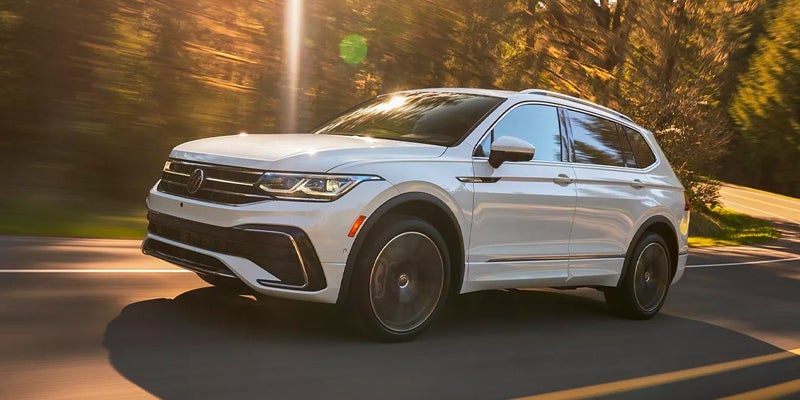
The 2024 Volkswagen Tiguan is a spirited SUV that looks at home on country roads and city streets. The new model is a great choice for drivers who love crisp handling, a spacious interior, and an outstanding package of driver assistance technology. Check out our highlights below for an introduction to what the new 2024 Tiguan has to offer.

The Crisp Handling

Drivers who travel on fast highways and slow country back roads will appreciate the Tiguan's crisp handling, 184 horsepower, and eight-speed automatic transmission. The Tiguan comes standard with front-wheel drive, with optional all-wheel drive to optimize traction and stability with Volkswagen's 4MOTION system.

The Sharp Exterior

Automatic LED headlights and LED daytime running lights brighten up the road ahead. Sleek roof rails add nice, bold Black lines to the top of the Tiguan, and add a useful way to tie additional cargo on top when you need it. The Tiguan's exterior also includes 17-inch alloy wheels with all-season tires, heated side mirrors, and rain-sensing front wipers.

The Seating Options

Seven passengers can fit inside the Tiguan with the third-row seating. The third row can easily be folded down, giving you more cargo space when you need it. Alternatively, the Tiguan can be had as a five-passenger vehicle with only two rows if you'd really prefer to keep your cargo area as large as possible. Up in front, you'll have heated seats, with six-way manual adjustments to help you get comfortable.

The Well-Designed Interior

There are many small touches throughout the Tiguan that help support your daily life, like the 12V power outlets you'll find in the front console, rear console, and cargo area. You'll also have an auto-dimming rearview mirror, cloth seating surfaces that are easy to clean, and manual air-conditioning. We love the feel of the new leatherette-wrapped steering wheel, a feature that was just added for 2024.

The Driver Assist Features

Volkswagen's standard suite of driver assist technology is called IQ.DRIVE. This package includes active blind spot monitor, emergency assist, and travel assist. You'll have rear traffic alert, a feature that monitors the rear of the Tiguan and alerts the driver when it notices a vehicle moving behind the SUV. When this happens, this feature will assist the driver in braking, so that a collision can be avoided in time.

Lane assist uses cameras to monitor the traffic lines whenever your SUV is moving faster than 35 miles per hour. It will send alerts, and even help steer, to help the driver stay within their lane. The Tiguan's standard features also include adaptive cruise control.

If you're looking for an SUV that stands out, you'll love the lively new Tiguan. Visit Sisbarro Autoworld Volkswagen in Las Cruces, NM now to see our wide selection of new vehicles.

Recommended Posts

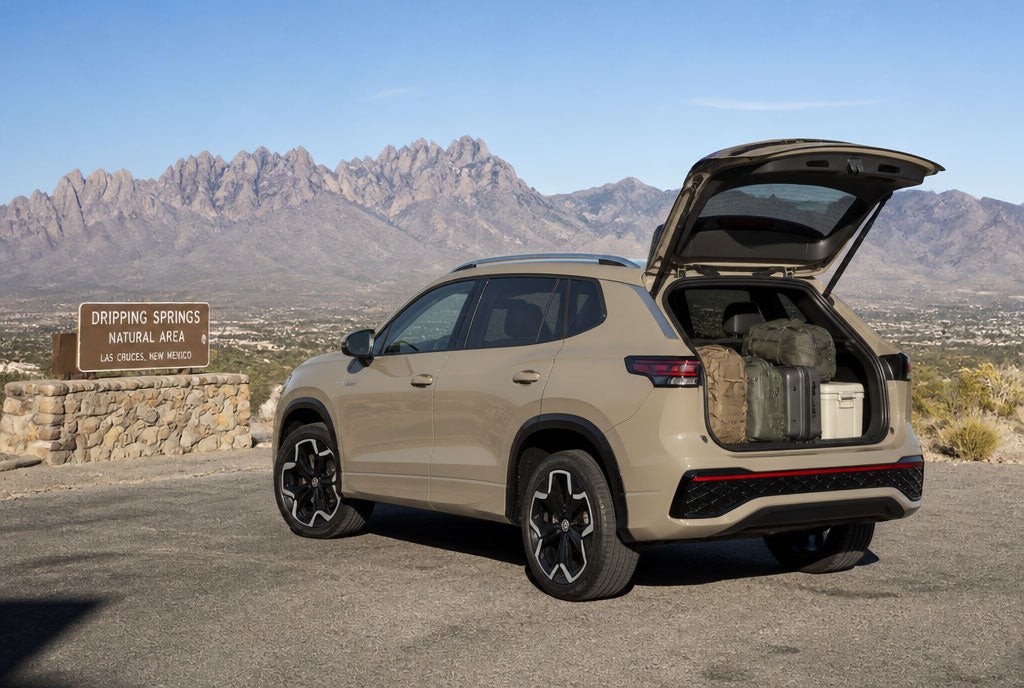
2027 Volkswagen Tiguan packed for a Thanksgiving road trip near Las Cruces, NM, with Organ Mountains in the background

Volkswagen Thanksgiving Road-Trip Checklist for Las Cruces Families

The I-25 run north from Las Cruces to Albuquerque covers 224 miles and climbs more than 1,100 feet in elevation. In November that climb earns your attention, because you leave the Chihuahuan Desert floor in the mid-60s and arrive somewhere noticeably colder, especially if you push through to Santa Fe or beyond. Your Volkswagen SUV is built for this corridor, so the prep work stays simple. Do it now, before the Wednesday crush, and Thanksgiving travels with far less drama. the Volkswagen Atlas What Goes on the Checklist? Everything you need before pulling out of the driveway sits in the four clusters below, and the fair version is that none of it takes long, though skipping it is exactly how a holiday drive goes sideways, so run the whole list the weekend before rather than the night of. Print it, work through it once, and you're done. Vehicle [ ] Tire pressure checked cold (desert mornings read lower than afternoon; Volkswagen lists the correct PSI on the door-jamb sticker, not the tire sidewall) [ ] Tire tread depth confirmed (tires below 2/32 of an inch increase stopping distance sharply in wet or sandy conditions; a penny test takes 30 seconds) [ ] Engine oil level verified [ ] Coolant, brake fluid, and windshield washer fluid topped off [ ] Wiper blades tested (low-angle November sun along I-25 creates strong glare on a dirty windshield) [ ] Headlights, taillights, and brake lights functioning [ ] Fuel tank filled before departure (the stretch between Hatch and Truth or Consequences on I-25 runs roughly 57 miles with limited fuel options) Cargo & Packing [ ] Luggage loaded against the seatback, not stacked loose above seat height [ ] Fragile dishes or casseroles secured in a cooler or a hard-sided bag, not sliding free in the cargo area [ ] One blanket and a light jacket per passenger accessible from the seat (not buried under luggage) [ ] Water bottles per person (the drive can run three hours or more with holiday traffic) [ ] Snacks accessible without the driver digging behind the second row Connectivity & Navigation [ ] Destination entered in navigation before pulling out of the driveway [ ] Phone paired to App-Connect (the Atlas and Tiguan both support wireless Apple CarPlay and Android Auto as standard) [ ] Download any offline maps if you're continuing north past Albuquerque, where cell coverage can thin out [ ] Podcasts, audiobooks, or playlist downloaded for the stretch between Truth or Consequences and Albuquerque, where radio stations drop out Just in Case [ ] Roadside assistance contact saved (Volkswagen Roadside Assistance number in your owner's manual or app) [ ] First-aid kit in the car [ ] Phone charger and a portable battery pack (cold nights can drain a phone faster than expected) [ ] A physical paper map of New Mexico as backup (really) Why These Items Actually Matter on the I-25 Corridor A checklist is easy to ignore when nobody tells you why it exists, so each cluster below ties back to something real about this drive, whether that's the elevation gain, the desert temperature swing, or the thin fuel options north of Hatch. Read the reasons once and the items stick. Tire Pressure Is a Desert-Morning Issue Las Cruces runs about 71 freezing nights per year, according to climate records for the I-25 corridor, and cold air pulls pressure out of a tire overnight. A tire that reads correctly at 2 p.m. on a 65-degree afternoon can read 3 to 4 PSI lower at 6 a.m. on a 28-degree morning. Volkswagen specifies the correct cold inflation pressure on the driver's door-jamb sticker for a solid mechanical reason. Underinflation increases flex in the sidewall, which generates heat, which is the primary mechanical cause of tire failure. Check the tires cold, before you pull out of the driveway. It takes two minutes. Schedule a pre-trip tire and fluids check with our service team and we'll handle the rest. Cargo Packing Changes by Which Volkswagen You Drive Here the Atlas and the Tiguan split apart, and the difference matters the minute a family starts loading up for Thanksgiving. The 2027 Atlas offers 21.2 cubic feet of cargo space behind the third row. Call that enough for a week's worth of luggage for two passengers, though it gets tight once you add the third-row occupants' bags. Fold that row flat and you jump to 55.9 cubic feet, which handles almost any family load. With both rear rows folded, you're at 95.4 cubic feet total, per the specifications of Volkswagen. The practical point for Thanksgiving is blunt. Seven passengers and a full week of luggage will not both fit behind that third row, so pack light or ship the bulky items ahead. The 2027 Tiguan is a five-passenger SUV now, and the third row is simply gone after 2025. It carries 33.8 cubic feet behind the second row. Fold the seats and you get 69.8 cubic feet. For a family of four or five on a two- to three-day trip, that's plenty. The packing advantage of the Tiguan is that it frees you from choosing between a third row and a full cargo area. Browse available Tiguan models Tip: Pack the heaviest bags first, flat against the floor. Coolers and hard-sided bags go in last so they sit on top and don't shift into the back of the third-row seat. The cargo space of the Atlas is 21.2 cubic feet behind the third row; every inch counts. The Hatch-to-Truth-or-Consequences Gap Is Real We're not trying to alarm anyone, but the I-25 stretch between Hatch (exit 41) and Truth or Consequences (exit 79) runs roughly 57 miles with limited services. On a normal Tuesday it's fine. On the Wednesday before Thanksgiving with an extra 40,000 vehicles on New Mexico highways, a fuel stop in Hatch before you get on the interstate is worth the five minutes. The same logic applies to Elephant Butte if you're stopping anyway. Item Why It Matters on This Drive Tire pressure (cold check) Desert morning temps drop fast; low pressure increases sidewall flex and affects handling Tread depth check Wet caliche and sandy shoulders on I-25 exits demand grip Windshield washer fluid Low-angle November sun creates glare; a dirty windshield makes it worse Fuel in Hatch 57-mile gap to Truth or Consequences; holiday volume makes fuel stops slower Cargo under seat height Unsecured items shift on the 1,100-ft elevation-change grade north of Las Cruces App-Connect connected Long radio-dead zones between Hatch and Albuquerque; navigation and audio matter Blanket accessible from seat Temperatures in the car drop after sunset on the return leg; kids get cold faster Schedule a Pre-Trip Service Check Your Print-and-Go Recap Run the whole thing the Saturday before Thanksgiving and the morning-of scramble disappears, though the one piece worth repeating on departure day is the cold tire check, since pressure reads differently after a freezing night. Work the list once and you're set. Saturday before (vehicle): Tire pressure cold. Tread depth. Oil. Coolant. Brake fluid. Washer fluid. Lights and wipers. Full tank. Day before (packing): Bags loaded flat and under seat height. Fragile dishes secured. Blankets and jackets within reach. Water and snacks accessible up front. Navigation entered and phone paired to App-Connect. Morning of: Quick visual on tire sidewalls (any obvious low?). Confirm fuel. Confirm first-aid kit and portable charger are in the car. Book a service visit before you leave town and let our team run through the vehicle side so you can focus on the packing and the people. So that wraps the checklist. Whether it's a short drive or a long one, a Volkswagen Atlas or Tiguan prepped this way handles the I-25 corridor with confidence. Safe travels from the Sisbarro Volkswagen team. We'll see you on the other side of the holiday. Frequently Asked Questions Do I need AWD for a Thanksgiving road trip from Las Cruces to Albuquerque? For most years, no. Las Cruces averages just 2.6 inches of snow per year, and the I-25 corridor between Las Cruces and Albuquerque is well-maintained by the New Mexico Department of Transportation. November conditions in this stretch are typically dry and mild during daylight hours. That said, if you're continuing north past Albuquerque toward Santa Fe or Taos, conditions at higher elevations can change quickly, and available 4MOTION all-wheel drive on the Atlas or Tiguan does add traction on wet or icy grades. For the Las Cruces-to-Albuquerque run specifically, a front-wheel-drive Volkswagen with good tires and correct cold tire pressure is generally sufficient. How much cargo space does the Volkswagen Atlas have for a family Thanksgiving trip? The 2027 Atlas offers 21.2 cubic feet of cargo space behind the third row, which expands to 55.9 cubic feet with the third row folded and 95.4 cubic feet with both rear rows folded flat, per the specifications of Volkswagen. A family of five traveling two to three days with a mix of luggage and a dish or two can usually manage comfortably by folding one third-row seat and keeping the other up. For a full seven-passenger load, plan to pack each person's bag in a soft-sided duffel that fits under or beside the seat rather than stacking above seat height. The Tiguan, now a five-passenger SUV, offers 33.8 cubic feet behind the second row and 69.8 cubic feet with it folded, per the specifications of Volkswagen. Get a Trade-In Estimate While You're Here Sisbarro Volkswagen 1115 S Valley Dr, Las Cruces, NM 88005 (575) 319-9131

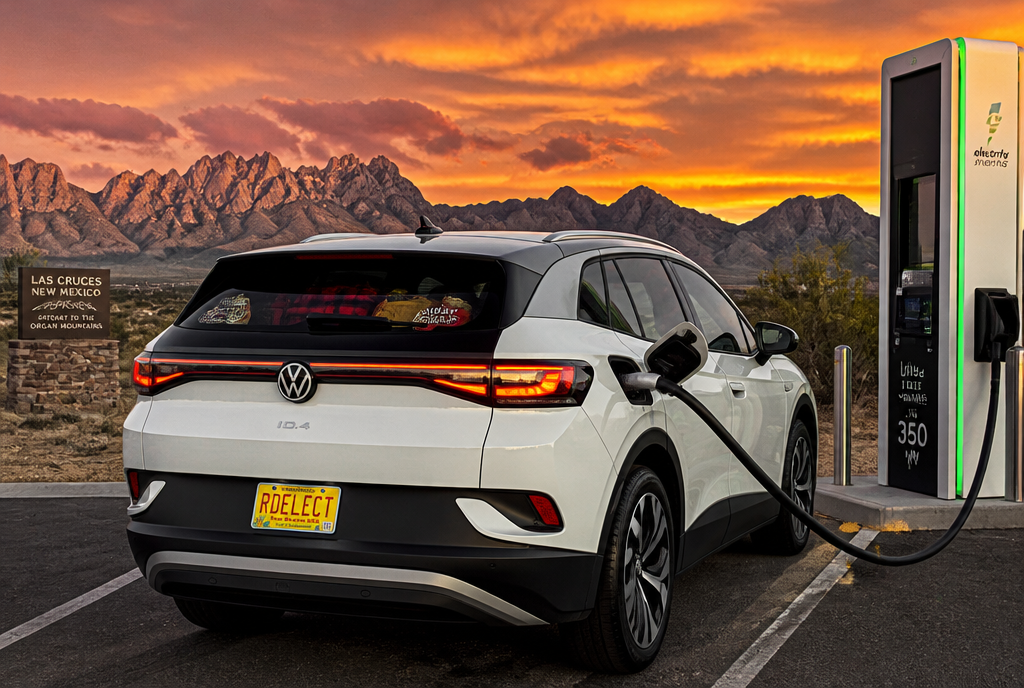
2026 Volkswagen ID.4 at a DC fast-charging station near Las Cruces, New Mexico with the Organ Mountains at sunset

Volkswagen ID.4 Holiday Charging and Trip-Planning Guide

In this article How Far Will the ID.4 Really Go Here? Where Do You Charge Locally and Along the Corridor? A Pre-Trip Checklist for Holiday Runs Plan Your Route This Way The 2026 Volkswagen ID.4 gives you up to 291 miles of EPA-estimated range on the RWD Pro, and it now ships with a standard NACS adapter that opens the Tesla Supercharger network. Put those two together and holiday road-tripping from Las Cruces is genuinely workable. It won't do your planning for you. Before a long holiday run, we tell every ID.4 owner the same three things. Know the number your trim actually delivers, know where the gaps sit on your corridor, and account for cold nights. We'll walk through all three. How Far Will the ID.4 Really Go Here? Expect the RWD Pro to cover close to its 291-mile EPA figure in mild daytime driving, but treat that EPA number as a starting point and nothing firmer, because a cold night at elevation will pull it down well before you notice. The table below lays out what the 2026 lineup delivers under the EPA test cycle, alongside the practical corridor reality for a Las Cruces departure. Trim Drive EPA Range I-10 to El Paso (~45 mi) I-25 to Albuquerque (~225 mi) Cold-Night Estimate (25 degrees F with heat) ID.4 Pro RWD 291 mi Easy, one-way with charge to spare Reachable in one leg if you leave full ~190-200 mi ID.4 Pro S RWD 291 mi Easy, one-way with charge to spare Reachable in one leg if you leave full ~190-200 mi ID.4 AWD Pro AWD 263 mi Easy, one-way with charge to spare Needs a stop without a full charge ~170-180 mi ID.4 AWD Pro S AWD 263 mi Easy, one-way with charge to spare Needs a stop without a full charge ~170-180 mi ID.4 AWD Pro S Plus AWD 263 mi Easy, one-way with charge to spare Needs a stop without a full charge ~170-180 mi The EPA rates the RWD Pro at 291 miles and the AWD trims at 263 miles. The cold-night column is where the surprise lives. AAA's May 2026 study found that at 20 degrees Fahrenheit with the cabin heater running, EVs lose approximately 39 percent of their rated range. Las Cruces winters run mild by northern standards, but November nights at 3,900 feet regularly drop into the mid-20s to low 30s Fahrenheit. Plan conservatively. A 291-mile car on a December Thanksgiving run to Santa Fe or Albuquerque at night, in 28-degree air, is realistically a 185-mile car until it warms up. Pre-condition the cabin while the car's still plugged in at home. The fix is simple, and it costs you nothing. The ID.4 lets you handle this through the myVolkswagen app, so you warm the interior and the battery from grid power instead of your stored range. It beats most generic EV tips. Where Do You Charge Locally and Along the Corridor? Las Cruces sits at the crossroads of I-10 and I-25, so you've got dependable fast-charging in town and along both I-10 legs before you leave, but the northbound I-25 run toward Truth or Consequences and Albuquerque is thinner and asks for more deliberate planning. West toward Deming and east toward El Paso, the I-10 coverage holds up. The I-25 northbound run is a different story. Plan it deliberately. Browse our current ID.4 inventory to confirm your trim before mapping your route. For in-town and departure charging, the standard NACS adapter on the 2026 ID.4 pays off. The Tesla Supercharger on W. Amador Ave. in Las Cruces, right off I-10, makes a fast, convenient top-off before you head out. Electrify America runs an established location in El Paso on Gateway Blvd. W. Between them, Supercharger and Electrify America cover the main I-10 spokes out of Las Cruces well. A simplified stop-by-stop framework for the most common holiday runs from Las Cruces looks like this. Route Leg Recommended Charging Stop Connector Approx. Dwell (10-80%) Range Notes Las Cruces departure Tesla Supercharger, W. Amador Ave (I-10 access) NACS 30 min Leave at 90-100% for northern routes I-10 east to El Paso Electrify America, Gateway Blvd W, El Paso CCS or NACS ~30 min Useful for AWD trims before long I-10 east legs I-25 north toward T or C Plan 1 stop (charger density is thin midpoint) CCS/NACS ~30 min Confirm station status before departure I-25 north to Albuquerque ABQ has strong network coverage CCS/NACS 20-30 min AWD trims plan on 1 corridor stop US-70 east to White Sands area Limited fast-charging; use Las Cruces as base Leave full Day-trip with full charge is the right call Charging caution worth knowing. The I-25 corridor between Las Cruces and Truth or Consequences has historically been thin on DC fast-charging options. Infrastructure is expanding under New Mexico's federal EV corridor funding, but on a holiday weekend you'll want to verify station availability in real time using the PlugShare app or the built-in route planner before you leave. Keeping a backup station identified is good practice on any corridor that is still building out, and this one qualifies. The Electrify America Plug&Charge feature of the ID.4 earns its keep here. You plug in, the car authenticates on its own, and billing runs in the background (no app to fish out of your pocket at the charger). For a family juggling kids and holiday luggage at a rest stop, that convenience counts. The standard 2-year Electrify America Pass+ membership comes with new 2026 ID.4 purchases, so your first two years of Electrify America sessions are covered under that plan. Ask our finance team about ID.4 ownership programs if you've got questions about what comes included. A Pre-Trip Checklist for Holiday Runs A little prep the night before keeps a holiday departure calm, so walk this list before you back out of the driveway, and treat it as a starting point, since your corridor and the forecast can each add a line of their own. Run through the items below before you leave. [ ] Charge to 90-100% the night before, since a holiday trip is the right time for a full charge [ ] Set pre-conditioning in the myVolkswagen app 20-30 minutes before departure so the cabin and battery warm on grid power [ ] Confirm charging stops in PlugShare or A Better Routeplanner, known as ABRP, with real-time availability [ ] Identify a backup charger for each planned stop, especially on I-25 north [ ] Set tire pressure, because cold mornings drop it and a correctly inflated tire rolls more efficiently to extend your real range [ ] Download or update the Electrify America and Volkswagen apps and confirm Plug&Charge is activated [ ] Pack the standard 2-in-1 mobile EV charging cable the 2026 ID.4 ships with, handy at a hotel with a standard outlet as a last resort [ ] Check weather along your corridor the morning of, because wind on I-10 and I-25 is a real range variable and a headwind at 70 mph costs range The Chihuahuan Desert stays reliably sunny, and in a modern EV that sunshine works in your favor. Solar gain through the glass takes some load off the heater on a bright cold day. That gain won't show up as a dramatic number, yet it's real, and it's the kind of detail that sets a Las Cruces departure apart from a Minneapolis one. Plan Your Route This Way A well-planned ID.4 holiday trip from Las Cruces really comes down to three decisions you make before turning the key, namely your departure state of charge, your first stop, and your backup stop, and everything else follows from those three. Get them right and the rest of the drive sorts itself out. For families heading north to see relatives in Albuquerque or Santa Fe, the RWD Pro's 291-mile EPA rating makes a one-stop run realistic in mild weather. Leave at or near 100 percent, pre-condition the battery, and build your charging stop around a meal or a coffee break so the car tops up over your lunch. That framing changes the whole experience. You're stopping because you want to, not because you have to. For AWD owners, with their 263-mile EPA range, the same logic holds, just with one more stop built in on the Albuquerque corridor. That stop runs about 30 minutes at a 175 kW DC fast charger to climb from 10 to 80 percent, according to the published charging specifications of Volkswagen. At most I-10 and Supercharger locations that sit next to restaurants, the math works out. You charge while you eat. The tradeoff is worth stating plainly. The ID.4 shines for this market's daily driving and regional trips. It isn't a coast-to-coast marathon machine in the same class as vehicles with 400-plus miles of range, and you shouldn't plan a 600-mile Thanksgiving run as if it were. None of that is a failing. Setting the right expectation up front is all it takes. For the Las Cruces-to-Albuquerque, Las Cruces-to-El Paso, and day-trip-to-White Sands routines our customers actually drive, the range is more than adequate, and the charging network has matured enough to make it work. If you want to look at what we've got on the lot right now, our team is happy to walk you through which trim fits your corridor. Schedule a service check if your existing ID.4 is due for a pre-trip inspection before the holiday season kicks in. Schedule a Pre-Trip Service Check Planning to get into an ID.4 before the holidays? Come see us on South Valley Drive. By the Sisbarro Volkswagen Team | November 2026 Frequently Asked Questions Does the 2026 Volkswagen ID.4 lose range in cold weather? Yes, and it's worth planning around. Cold battery chemistry and cabin heating both pull from the same pack. AAA's May 2026 testing found that at 20 degrees Fahrenheit with the heater running, EVs lose approximately 39 percent of their EPA-rated range. For Las Cruces, where winter nights regularly reach the mid-20s to low 30s Fahrenheit, that means a RWD Pro's 291-mile EPA rating could effectively run closer to 185-200 miles on a cold morning before the battery and cabin warm up. The practical fix is pre-conditioning through the myVolkswagen app while the car's still plugged in, so you warm everything on grid power and preserve your stored range for the road. How fast does the 2026 ID.4 charge at a DC fast charger? The 2026 Volkswagen ID.4 supports up to 175 kW DC fast charging, and the published specification of Volkswagen puts the 10-to-80-percent charge time at approximately 30 minutes at a compatible charger. It also ships with a standard NACS adapter, so it can use the Tesla Supercharger network's 25,000-plus compatible DC fast chargers in addition to Electrify America and other CCS-compatible networks. At home, the 11 kW onboard charger takes the battery to full in approximately 8 hours on a Level 2 connection. Where can I charge a Volkswagen ID.4 near Las Cruces before a road trip? The most convenient local fast-charging options are the Tesla Supercharger on W. Amador Ave. in Las Cruces (accessible from I-10) and the Electrify America station on Gateway Blvd. W. in El Paso, roughly 45 miles east. Both accept the standard NACS adapter that comes on every 2026 ID.4. For the I-25 northbound corridor toward Truth or Consequences and Albuquerque, DC fast-charging infrastructure is thinner midpoint, so we recommend confirming station availability in PlugShare or the built-in route planner before departing on a long run. Explore Financing Options Sisbarro Volkswagen 1115 S Valley Dr, Las Cruces, NM 88005 (575) 319-9131


2027 Volkswagen Atlas

What's New About the 2027 Volkswagen Atlas

A fair question comes up when folks start shopping the new Atlas. Didn't Volkswagen already redo this thing in 2024? It's reasonable to think so, since the 2024 model year brought a genuine mid-cycle update with a new engine and a restyled face. Assuming Volkswagen is running the same playbook again would be understandable. But it isn't. The 2027 Atlas is a second-generation redesign, not a face-lift, and the difference matters to anyone deciding whether to buy now or wait. The short version runs like this. New platform, new engine, new interior architecture, more standard equipment, and better fuel economy. Every surface you touch and every screen you look at is different. We've been following this launch closely here at Sisbarro Volkswagen, and the changes are substantial enough to clear up a few things that keep getting glossed over online. Let's go spec by spec. The short version The 2027 Atlas is the full second-generation redesign of Volkswagen, not a mid-cycle refresh like 2024 was. The engine is the EA888 evo5, producing 282 horsepower, a genuine 13-hp increase over the 2026 model. Fuel economy improves to an EPA-estimated 25 mpg combined (FWD) and 23 mpg combined (AWD). 2 mpg better than the outgoing model despite the added power. Standard equipment now includes a power liftgate, rear sunshades, dual wireless charging, and a front center airbag (seven airbags total). A hybrid variant is planned but not for this generation. The 2027 Atlas launches as a gasoline-only model. Is the 2027 Atlas Really a New Vehicle, or Just Another Update? The 2027 Atlas really is a new vehicle rather than another update, and answering that head-on changes how you'll shop, which is why the table below lines up the most-discussed claims against the verified reality beside each one. The Claim What's Actually True "It's the same refresh Volkswagen did in 2024" The 2027 is the second-generation Atlas, built on the new MQB evo platform with all-new exterior sheet metal. The 2024 was a mid-cycle update of the first-generation vehicle. Different category of change entirely. (Source: Volkswagen of America press materials) "It uses the same engine they've always had" The 2027 Atlas gets the EA888 evo5, a newer-generation unit producing 282 hp. The 2026 model used the EA888 evo4 at 269 hp. Same displacement, meaningfully different tune and output. (Source: Volkswagen media press kit) "More horsepower means worse fuel economy" The official EPA-estimated ratings of Volkswagen for the 2027 Atlas FWD are 22 city / 29 highway / 25 combined mpg, 2 mpg better than the 2026 model in every cycle. (Source: Volkswagen of America / EPA, media.vw.com) "The third row space is the same so nothing changed inside" The interior is completely rearchitected: new column-mounted shifter (freeing the center console for dual wireless charging), a standard 12.9-inch infotainment screen (15 inches on upper trims), a new Driver Experience Dial, standard ambient lighting, and available real-wood decor. The cabin isn't tweaked. It's rebuilt. (Source: Volkswagen of America press materials) "It's already available as a hybrid" No. The 2027 Atlas launches exclusively with the 2.0L turbocharged gasoline engine. Volkswagen has confirmed a hybrid is planned for a future midcycle refresh. (Source: Volkswagen of America) "The safety tech is basically the same IQ.DRIVE as before" IQ.DRIVE is now updated with a seventh standard airbag (a new front center unit), Travel Assist that supports driver-initiated lane changes, and Emergency Assist capable of guiding the vehicle to the roadside. That's not the same system. (Source: Volkswagen of America press materials) What the Redesign Actually Means for Your Day-to-Day Drive The redesign shows up in daily driving more than a spec sheet lets on, especially for Mesilla Valley families covering serious ground on the I-10 run between Las Cruces and El Paso or the US-70 stretch toward White Sands, where an SUV's highway manners and real-world efficiency turn into something you'll actually feel. The EPA's 29 mpg highway rating on the FWD 2027 Atlas matters on those runs in a way a brochure number sometimes doesn't. You're looking at 2 additional highway miles per gallon compared to the outgoing model, from an engine that also makes 13 more horsepower, and the published press materials of Volkswagen confirm the fuel economy improvement runs across every driving cycle, not just highway. Getting both at once is genuinely uncommon. Typically you trade one for the other. Browse what's available on our lot to see which trims and configurations we've got in stock. On the interior, the column-mounted shifter is one of those changes that sounds minor but reorganizes the whole driving experience. The center console now holds dual wireless charging pads and a rotary Driver Experience Dial that controls audio volume, drive modes, and the new Atmospheres feature (ambient lighting and audio presets in one knob). The Atlas Cross Sport carries these same interior changes in its two-row configuration if the longer three-row isn't what your household needs. You'll find the standard equipment list has moved meaningfully upmarket. Power liftgate, rear sunshades, auto-dimming driver mirror, front and rear Park Distance Control, and dual wireless charging are all standard across the 2027 Atlas lineup. On previous Atlas trims, several of those required a package or a higher trim level. Four trims are available for 2027: SE, SE with Technology, SEL R-Line, and SEL Premium R-Line. AWD is available on the SE and SE with Technology, and standard on the two SEL trims. The 2027 Atlas delivers 282 hp and an EPA-estimated 29 mpg highway (FWD) from the same vehicle, which is a combination the outgoing model couldn't match. Seven standard airbags (the new front center airbag joins the previous six) 12.9-inch infotainment screen standard; 15-inch available on upper trims 10.25-inch Digital Cockpit Pro gauge cluster, standard on all trims Three new exterior colors: Blackberry, Sacramento Green, and Sandstone Towing capacity: up to 5,000 lbs when properly equipped (unchanged from outgoing model) See What Your Current SUV Is Worth So What Should You Actually Do With This Information? What you'll want to weigh first is one honest tradeoff, because the evo5 engine gains 13 hp over the 2026 Atlas but gives up some torque, 258 lb-ft versus 273 lb-ft on the outgoing evo4. The calibration of Volkswagen prioritizes efficiency alongside power, which is why the fuel economy improves even as the output goes up. In everyday driving, the torque difference is unlikely to be noticeable. If you regularly tow at or near the 5,000-lb maximum, it's a question worth asking when you come in, because towing behavior at the upper end of capacity can reflect torque characteristics in ways that flat-road highway driving doesn't. The other honest note concerns the hybrid variant that keeps getting talked up online. It isn't part of the 2027 launch. Volkswagen has confirmed it for a future midcycle refresh. If you're holding out specifically for a hybrid Atlas, you're realistically waiting a few years at minimum. If what you need right now is seven seats, real cargo room, and an SUV that handles a Las Cruces-to-White Sands round trip efficiently, the 2027 Atlas is the vehicle on sale today, and it's a stronger one than the generation it replaces. Our team's read is straightforward. If you've been waiting for a reason to revisit the Atlas, this is it. The 2026 model was good. The 2027 is a genuine step up in every category Mesilla Valley families actually care about, from interior quality and tech to standard features, efficiency, and safety. Our finance team can walk you through the trim options and available configurations to find what works for your situation, and the conversation is always obligation-free. Come look at it in person. Frequently Asked Questions Is the 2027 Volkswagen Atlas a completely new vehicle? Yes. The 2027 Atlas is the full second-generation redesign of Volkswagen, not a mid-cycle refresh. It rides on the updated MQB evo platform, wears all-new exterior sheet metal, features a completely rearchitected interior, and uses a newer-generation EA888 evo5 engine producing 282 horsepower, 13 more than the outgoing model. What is the fuel economy on the 2027 Volkswagen Atlas? According to the official EPA-estimated ratings from Volkswagen of America, the 2027 Atlas is rated at 22 city / 29 highway / 25 combined mpg with front-wheel drive, and 20 city / 27 highway / 23 combined mpg with 4MOTION all-wheel drive. Both figures represent a 2 mpg improvement in every driving cycle over the 2026 model. Explore Financing Options for the 2027 Atlas Sisbarro Volkswagen 1115 S Valley Dr, Las Cruces, NM 88005 (575) 319-9131