
Blog / Sedan

Volkswagen Jetta Fuel-Economy Guide for Long-Distance New Mexico Driving

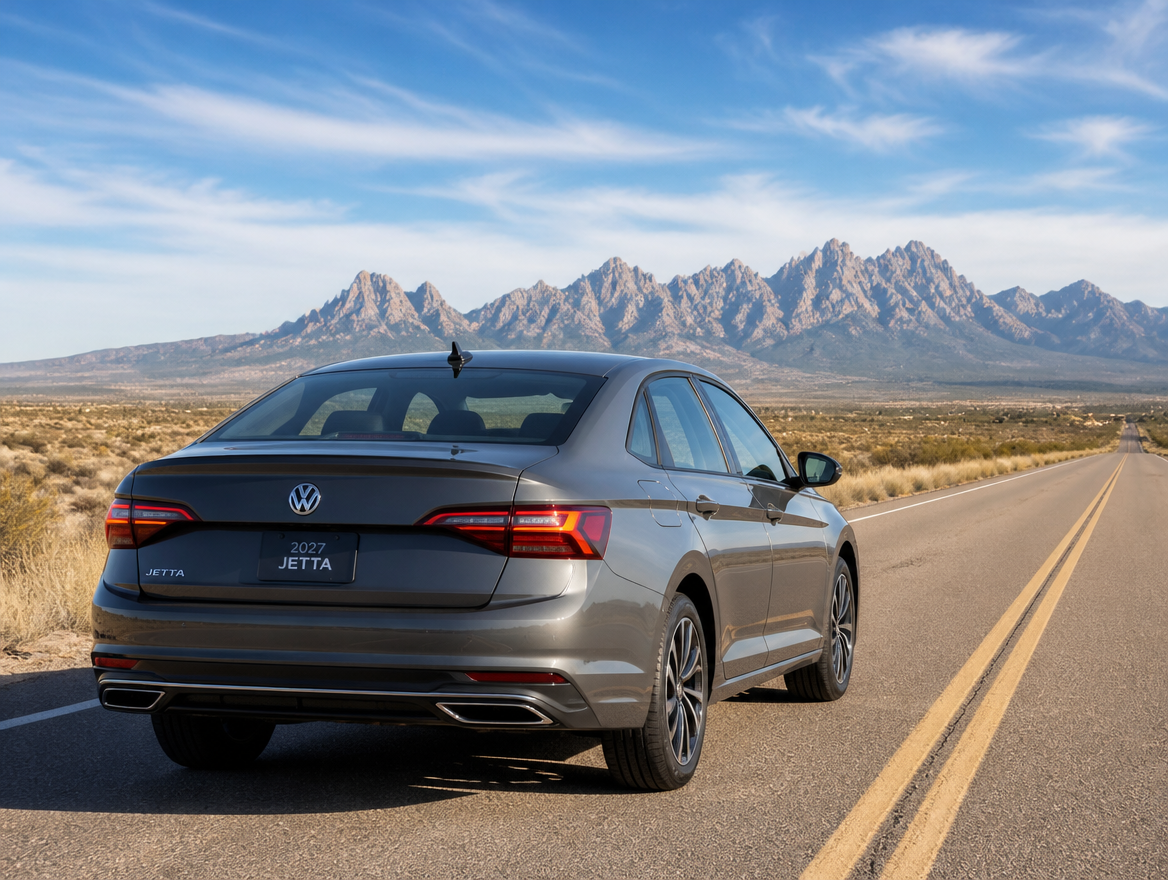
2027 Volkswagen Jetta driving on a New Mexico desert highway with the Organ Mountains in the background

Las Cruces sits at the crossroads of I-10 and I-25. Convenient for plenty of reasons, and costly in one way, because every meaningful destination in New Mexico means you've actually got to drive there. Albuquerque is 225 miles north. Santa Fe pushes 290. White Sands is under an hour east on US-70, but if you're making a day of it, you're already thinking about the next stop after that.

Skip the spreadsheet if you're already sold on a 2027 Volkswagen Jetta. The EPA rates it at 40 mpg on the highway, paired with a 13.2-gallon tank. On paper, that's a theoretical highway range of up to 528 miles before you're running on fumes. In practical New Mexico driving, that means Las Cruces to Albuquerque and back. Roughly 450 miles round-trip. On close to a single tank of regular 87-octane gasoline.

A number worth knowing before you start planning road trips around this car.

Will It Go the Distance?

Yes, it'll go the distance with room to spare on most New Mexico runs out of Las Cruces, though the longest single legs like the Santa Fe push will have you dipping past the halfway mark on the tank before you roll into town. The table below maps the real routes against the EPA figures.

The EPA rates all four standard 2027 Volkswagen Jetta trims (S, Sport, SE, SEL) at 29 mpg city and 40 mpg highway. The S trim earns a 34 mpg combined rating, and the Sport, SE, and SEL each come in at 33 mpg combined. They all run on regular 87-octane fuel.

Route from Las CrucesApprox. Distance (miles)Estimated Fuel Used (at 40 mpg hwy)Fuel Stops Needed
Las Cruces to El Paso, TX (I-10 south)~45 miles one-way~1.1 gallonsNone
Las Cruces to White Sands (US-70 east)~52 miles one-way~1.3 gallonsNone
Las Cruces to Truth or Consequences (I-25 north)~75 miles one-way~1.9 gallonsNone
Las Cruces to Socorro (I-25 north)~148 miles one-way~3.7 gallonsNone
Las Cruces to Albuquerque (I-25 north)~225 miles one-way~5.6 gallonsNone (half tank)
Las Cruces to Santa Fe (I-25 north)~290 miles one-way~7.3 gallonsNone (just over half tank)
Las Cruces to Albuquerque and back (round-trip)~450 miles~11.3 gallons0-1 depending on start

All fuel estimates calculated at the EPA highway figure of 40 mpg (S trim); 13.2-gallon tank capacity per the published specifications of Volkswagen.

One thing the table leaves out is New Mexico's elevation gradient. Las Cruces sits at roughly 3,900 feet above sea level, while Albuquerque climbs to about 5,300 feet. Driving north on I-25, you gain real altitude over those 225 miles, and a turbocharged engine like the 1.5L TSI has to work a little harder on grades that wouldn't register in Kansas. So your real-world highway number heading north will likely sit a touch below 40 mpg on the climb and a touch above on the return. Plan for 37 to 39 mpg on that northbound leg and the math still works out fine.

Browse 2027 Volkswagen Jetta inventory at Sisbarro Volkswagen

How to Maximize Every Gallon on the Long Drive

The EPA figure comes from a controlled test cycle, so treat it as a strong baseline you can plan around, knowing that real speeds, real wind, and real elevation all pull it in both directions out here. A handful of factors move the needle on a New Mexico highway run, and most of them cost nothing to fix.

Speed is the biggest lever. The EPA's highway cycle averages around 48 mph in the test protocol. At sustained 75-plus mph on I-25 (which is legal and very common out here), aerodynamic drag rises sharply and fuel economy drops. Our service team has seen the difference first-hand. A Jetta running 70 mph will consistently return real-world numbers much closer to the EPA highway figure than the same car running 80 mph for a long stretch.

Tire pressure swings with the weather. The Chihuahuan Desert climate in Las Cruces runs wide swings between overnight temperatures and afternoon highs, especially in late fall and winter. Cold mornings can pull a few PSI out of your tires before you've left the neighborhood. Underinflated tires increase rolling resistance, and that'll cost you mpg. Check pressure before a long run, not just at your annual service.

Air conditioning adds load. In the summer heat this factor matters a lot. Running the A/C on a hot day in southern New Mexico puts a real load on the engine, and on a moderate October day like today it barely registers. Know the season you're driving in and plan accordingly.

Cargo and passengers add up. The 2027 Volkswagen Jetta is designed as a five-passenger sedan with 14.1 cubic feet of trunk space. A full car (four passengers plus luggage) versus a solo driver at highway speed is a meaningful curb-weight difference, and the EPA figure is based on a specific test weight. Loading the car fully won't ruin the efficiency story, but it nudges the number down a few mpg.

Chihuahuan Desert tip: High desert air at 3,900 feet is thinner and drier than sea-level air. Modern turbocharged engines like the 1.5L TSI in the Jetta adjust fuel delivery electronically for altitude, so you won't lose dramatic efficiency climbing north. The adjustment's real but measured.

The Volkswagen Taos is the larger alternative for a New Mexico road trip. It rates at 28 mpg highway, and the 40-mpg highway figure of the Jetta gives a real efficiency edge on long open-road runs where the two cars most directly compete.

Before You Leave Las Cruces: A Five-Step Pre-Trip Check

Run through these before an I-25 trip. It takes about ten minutes and pays off every time.

  1. Fill the tank to full at home or nearby. Partial fills make range math harder on the road, and Las Cruces fuel is typically easier to find than the stretches between Socorro and Albuquerque.
  2. Check tire pressure cold (before you've driven more than a mile). The recommended pressure of the Jetta is on the driver's door placard, not the tire sidewall. This matters more in fall, when overnight temperatures drop fast.
  3. Set cruise control early. The adaptive cruise of the Jetta works well on I-25 in light traffic. Consistent speed is the single most reliable fuel-economy tool on a long New Mexico straightaway.
  4. Pre-cool the cabin before departure in summer, not while driving. Running the A/C at its hardest load for ten minutes in a parking lot, then setting a moderate cabin temperature for the road, is more efficient than max-cooling at highway speed.
  5. Check the weather for the pass sections north of Truth or Consequences. Winds through that corridor can be significant in fall and winter, and headwinds at 75 mph cost real mpg on an otherwise flat run.

Road Ready: The Jetta Makes the Case Simply

For the right driver, the Jetta makes its efficiency case easily, though there's a genuine tradeoff worth naming before you decide, because a compact sedan gives you compact-sedan space and no amount of great mileage changes that. The 2027 Volkswagen Jetta offers 37.4 inches of rear legroom and 14.1 cubic feet of trunk. For two adults on an Albuquerque day trip, that's genuinely comfortable. For four adults with luggage, it gets tight. If your New Mexico road trips regularly involve four or five people plus gear, the efficiency argument weakens, because you'll probably be eyeing something with a larger footprint anyway.

But for the commuter making the El Paso or Albuquerque run, or the NMSU student heading home to Albuquerque for a long weekend, the math is hard to argue with. Forty mpg highway on regular fuel. A 13.2-gallon tank. A car that covers the Las Cruces-to-Santa Fe corridor without a planned fuel stop. Interested in the sportier Jetta GLI? It gives you 228 horsepower and a 7-speed DSG, though the EPA highway rating of the Jetta GLI drops to 35 or 36 mpg depending on transmission choice.

The standard Jetta is the efficiency choice, and in a state where the nearest city sits 200 miles away, that counts for plenty.

Schedule a Pre-Trip Service Check

Come see it on our lot. We're here to answer the real questions: which trim fits your routine, how the highway numbers hold up in your actual driving mix, and what it takes to get into one.
Sisbarro Volkswagen

1115 S Valley Dr, Las Cruces, NM 88005

(575) 319-9131

Posted in:

Related Posts

Original-17962-LIPMANJL21670

The 2026 Volkswagen Jetta GLI Is an "Underrated" Sports Sedan

When it comes to sports compacts, Volkswagen wrote the book on them for the past 50 years. The first one that comes to mind is the Golf GTI. It sets the benchmark for all sports compacts to follow, including our own. Did you know that Volkswagen has offered a Jetta GLI for every generation? Today’s 2026 Jetta GLI continues to provide excitement for enthusiasts who are looking for a quick four-door sedan with a trunk. It is also the most affordable, honest sports sedan available in this country. According to the Top Speed website, the Jetta GLI is very “underrated.” What makes the 2026 Jetta GLI special starts with what’s underneath the hood. The EA888 turbocharged 2.0-liter engine offers up 228 horsepower and 258 pound-feet of torque. It is one of the few vehicles left to be equipped with a six-speed manual transmission. You can also opt for a DSG gearbox. To keep things in line, the VAQ Limited-Slip front differential ensures confidence when you put down the accelerator. Keeping the 2026 Jetta GLI planted on the tarmac is a rear multilink suspension set-up. With DCC and Adaptive Chassis Control, you can adjust the firmness of the dampers to fit the kind of driving you want. If tackling the twisty roads in the mountains is on your agenda, put your 2026 Jetta GLI into Sport mode and ride the curves. For boulevard cruising in town, Normal or Comfort will keep things mellow. The dynamic steering system enhances precision, while putting the DCC into Sport mode weighs down the feel for more control at every turn. While it delivers driving excitement, the 2026 Jetta GLI invites you to sit down and take control. With front seats that offer support, an infotainment touchscreen with a performance page, and a comprehensive Digital Cockpit Pro instrument cluster, you will be inspired to take your 2026 Jetta GLI to the next adventure – including rush hour. Still, the 2026 Jetta GLI is a practical sedan at its core. You can seat up to five people and fill the 14.1 cubic foot trunk with luggage for everyone on a weekend trip out of town. Of course, you can’t ignore the 2026 Jetta GLI with its badges and red trim inside and out. Plus, those gloss black finished 18-inch multi-spoke alloy wheels mounted just give it a cool vibe. If you consider all of the good things that make up this sports sedan, why would anyone still call this “underrated”? Top Speed explains that there’s “ nothing inherently wrong” with it, because it “does the sporty bit extremely well” compared to its competitors. After 40-plus years, the Jetta GLI remains an exciting compact sports sedan for enthusiasts who want a pure driving experience. If this is your kind of vehicle, contact us at Sisbarro Volkswagen and let us introduce you to one soon.

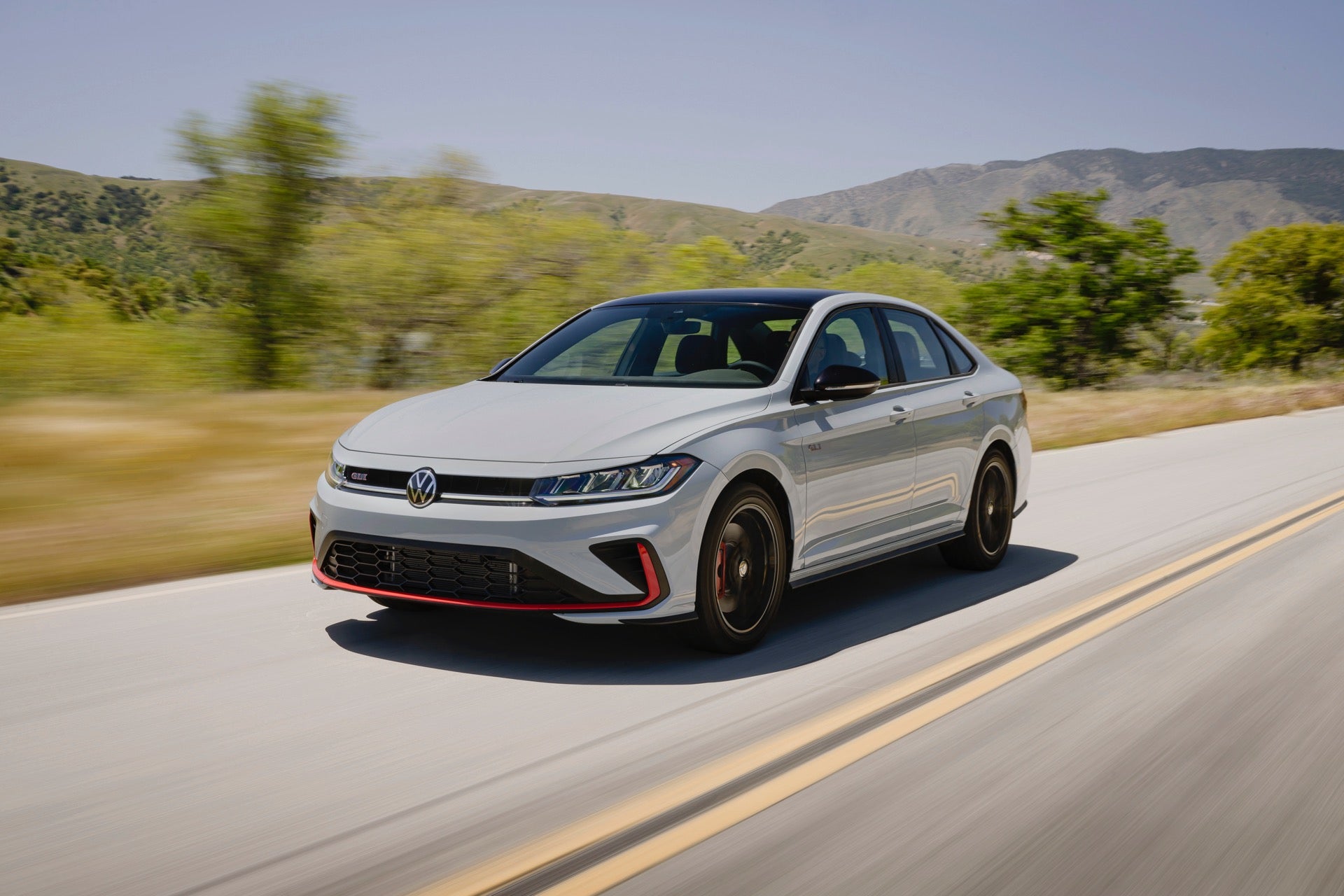
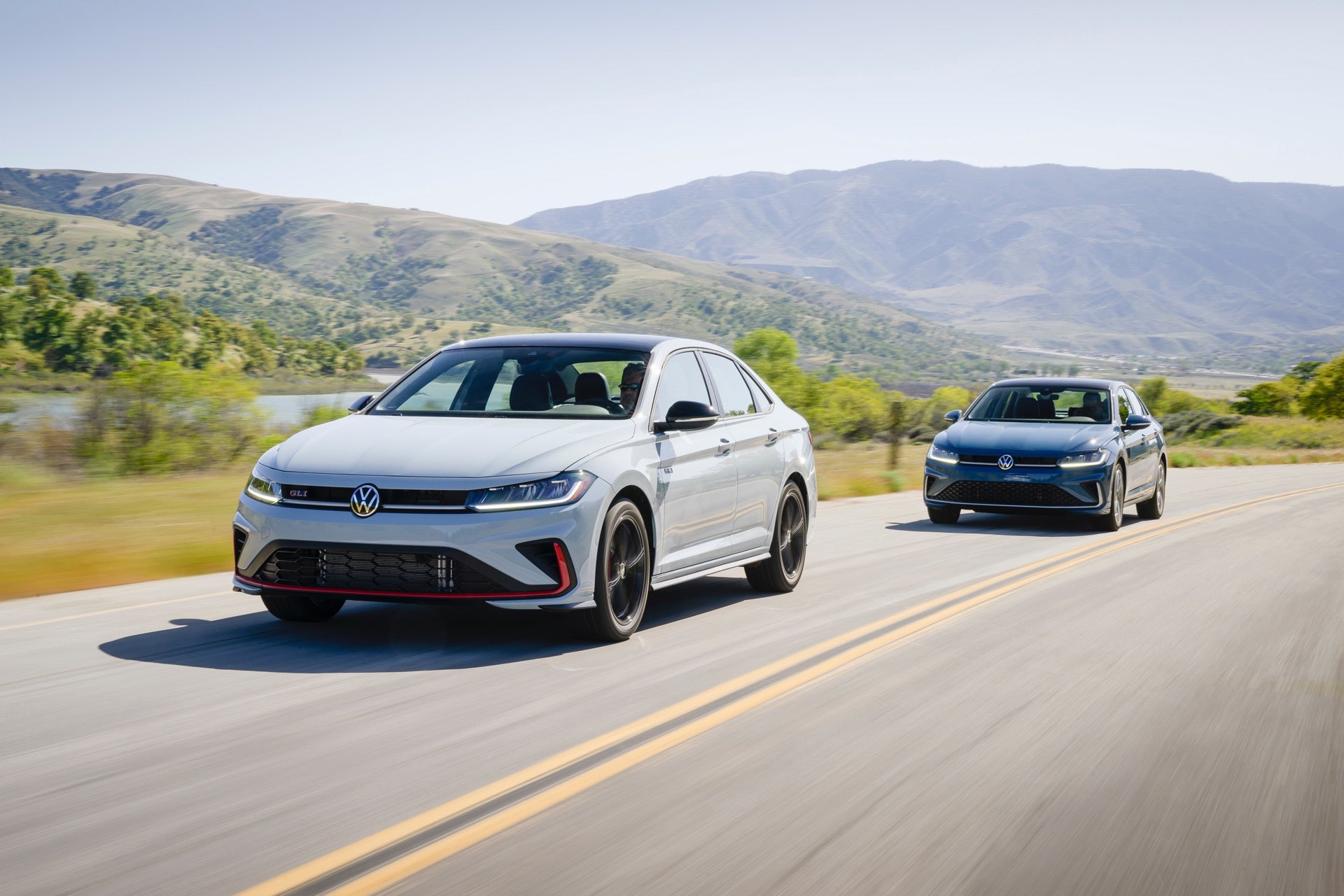
The Efficient and 2026 Volkswagen Jetta GLI and Jetta, Driving In View Of Vast Mountains and Gorgeous Greenery

​​Which One Would You Choose: 2026 Volkswagen Jetta or Jetta GLI?​

Since 1979, the Volkswagen Jetta has been one of your favorite models in our lineup. What used to be a “Rabbit with a trunk” has become one of the best-selling models in this country since its introduction. Seven generations and 46 model years later, the Jetta is still one of our best-sellers. It does so by offering more space, comfort, efficiency, features, and choices than any sedan in its size class. It is also a great sedan for commuting and long road trips. It is also an enthusiast’s favorite. Let us guide you through the big differences between the 2026 Jetta and the 2026 Jetta GLI. The 2026 Jetta offers the most value for the money across all four trim levels. The S model is exactly what consumers on a budget are looking for. With a long list of standard features, you might think you spent less on a vehicle that offers IQ.DRIVE assistance features, along with App-Connect smartphone integration and an eight-inch Digital Cockpit. For affordable fun, the 2026 Jetta Sport adds a few more features that won’t break your wallet. With upgraded 17-inch alloy wheels, stainless steel pedal caps, an XDS Cross Differential System, and black trim, you might be excused for a little personality change after driving one to work, school, or wherever life takes you in one, especially when the integrated light bar is lit across the grille. Balance is what the 2026 Jetta SE is all about. With more features available, this is the definition of money well spent. This model adds wireless App-Connect, remote engine start, a trial subscription to SiriusXM, wireless device charging, and other amenities. You get so much for an affordable MSRP price. For attainable luxury, you have the 2026 Jetta SEL. It’s not just about the upgraded 18-inch wheels, configurable 10.25-inch Digital Cockpit Pro instrument cluster, sunroof, leather seating with heated surfaces, and a steering wheel. It’s about its efficiency and value that will attract you to its charms. All four 2026 Jetta models are powered by a 158-horsepower turbocharged 1.5-liter engine with an eight-speed automatic transmission and front-wheel drive. This driveline can return an EPA-rated 29 MPG in the city and 40 MPG on the highway. If you are a car enthusiast, a step up to the 2026 Jetta GLI is the way to go. It is powered by a 228-horsepower turbocharged 2.0-liter engine with a choice of a six-speed manual transmission or a seven-speed DSG gearbox. The Autobahn trim is the only way to go – and there’s a lot it has to offer. That includes a Multimode DCC and Adaptive Chassis Control, a VAQ front limited-slip differential lock, a multi-link rear axle, and a dynamic steering system. All of these were made to elevate your driving experience. We have so many Jetta models to choose from. Contact us at Sisbarro Volkswagen, and we can point you in the right direction by finding which 2026 Jetta or 2026 Jetta GLI works best for you and your budget.

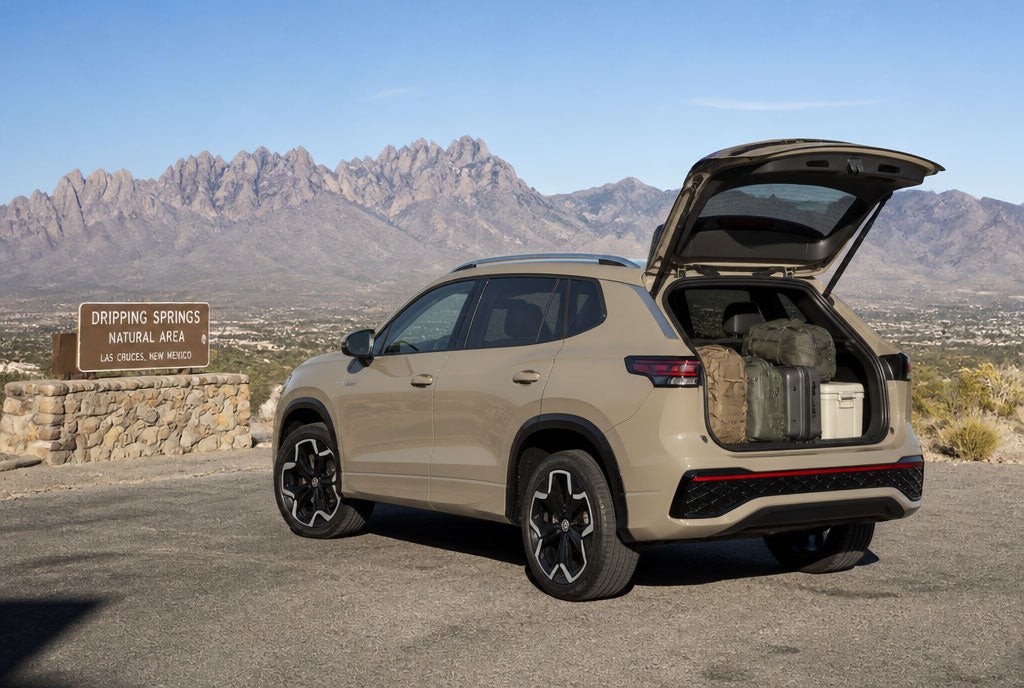
2027 Volkswagen Tiguan packed for a Thanksgiving road trip near Las Cruces, NM, with Organ Mountains in the background

Volkswagen Thanksgiving Road-Trip Checklist for Las Cruces Families

The I-25 run north from Las Cruces to Albuquerque covers 224 miles and climbs more than 1,100 feet in elevation. In November that climb earns your attention, because you leave the Chihuahuan Desert floor in the mid-60s and arrive somewhere noticeably colder, especially if you push through to Santa Fe or beyond. Your Volkswagen SUV is built for this corridor, so the prep work stays simple. Do it now, before the Wednesday crush, and Thanksgiving travels with far less drama. the Volkswagen Atlas What Goes on the Checklist? Everything you need before pulling out of the driveway sits in the four clusters below, and the fair version is that none of it takes long, though skipping it is exactly how a holiday drive goes sideways, so run the whole list the weekend before rather than the night of. Print it, work through it once, and you're done. Vehicle [ ] Tire pressure checked cold (desert mornings read lower than afternoon; Volkswagen lists the correct PSI on the door-jamb sticker, not the tire sidewall) [ ] Tire tread depth confirmed (tires below 2/32 of an inch increase stopping distance sharply in wet or sandy conditions; a penny test takes 30 seconds) [ ] Engine oil level verified [ ] Coolant, brake fluid, and windshield washer fluid topped off [ ] Wiper blades tested (low-angle November sun along I-25 creates strong glare on a dirty windshield) [ ] Headlights, taillights, and brake lights functioning [ ] Fuel tank filled before departure (the stretch between Hatch and Truth or Consequences on I-25 runs roughly 57 miles with limited fuel options) Cargo & Packing [ ] Luggage loaded against the seatback, not stacked loose above seat height [ ] Fragile dishes or casseroles secured in a cooler or a hard-sided bag, not sliding free in the cargo area [ ] One blanket and a light jacket per passenger accessible from the seat (not buried under luggage) [ ] Water bottles per person (the drive can run three hours or more with holiday traffic) [ ] Snacks accessible without the driver digging behind the second row Connectivity & Navigation [ ] Destination entered in navigation before pulling out of the driveway [ ] Phone paired to App-Connect (the Atlas and Tiguan both support wireless Apple CarPlay and Android Auto as standard) [ ] Download any offline maps if you're continuing north past Albuquerque, where cell coverage can thin out [ ] Podcasts, audiobooks, or playlist downloaded for the stretch between Truth or Consequences and Albuquerque, where radio stations drop out Just in Case [ ] Roadside assistance contact saved (Volkswagen Roadside Assistance number in your owner's manual or app) [ ] First-aid kit in the car [ ] Phone charger and a portable battery pack (cold nights can drain a phone faster than expected) [ ] A physical paper map of New Mexico as backup (really) Why These Items Actually Matter on the I-25 Corridor A checklist is easy to ignore when nobody tells you why it exists, so each cluster below ties back to something real about this drive, whether that's the elevation gain, the desert temperature swing, or the thin fuel options north of Hatch. Read the reasons once and the items stick. Tire Pressure Is a Desert-Morning Issue Las Cruces runs about 71 freezing nights per year, according to climate records for the I-25 corridor, and cold air pulls pressure out of a tire overnight. A tire that reads correctly at 2 p.m. on a 65-degree afternoon can read 3 to 4 PSI lower at 6 a.m. on a 28-degree morning. Volkswagen specifies the correct cold inflation pressure on the driver's door-jamb sticker for a solid mechanical reason. Underinflation increases flex in the sidewall, which generates heat, which is the primary mechanical cause of tire failure. Check the tires cold, before you pull out of the driveway. It takes two minutes. Schedule a pre-trip tire and fluids check with our service team and we'll handle the rest. Cargo Packing Changes by Which Volkswagen You Drive Here the Atlas and the Tiguan split apart, and the difference matters the minute a family starts loading up for Thanksgiving. The 2027 Atlas offers 21.2 cubic feet of cargo space behind the third row. Call that enough for a week's worth of luggage for two passengers, though it gets tight once you add the third-row occupants' bags. Fold that row flat and you jump to 55.9 cubic feet, which handles almost any family load. With both rear rows folded, you're at 95.4 cubic feet total, per the specifications of Volkswagen. The practical point for Thanksgiving is blunt. Seven passengers and a full week of luggage will not both fit behind that third row, so pack light or ship the bulky items ahead. The 2027 Tiguan is a five-passenger SUV now, and the third row is simply gone after 2025. It carries 33.8 cubic feet behind the second row. Fold the seats and you get 69.8 cubic feet. For a family of four or five on a two- to three-day trip, that's plenty. The packing advantage of the Tiguan is that it frees you from choosing between a third row and a full cargo area. Browse available Tiguan models Tip: Pack the heaviest bags first, flat against the floor. Coolers and hard-sided bags go in last so they sit on top and don't shift into the back of the third-row seat. The cargo space of the Atlas is 21.2 cubic feet behind the third row; every inch counts. The Hatch-to-Truth-or-Consequences Gap Is Real We're not trying to alarm anyone, but the I-25 stretch between Hatch (exit 41) and Truth or Consequences (exit 79) runs roughly 57 miles with limited services. On a normal Tuesday it's fine. On the Wednesday before Thanksgiving with an extra 40,000 vehicles on New Mexico highways, a fuel stop in Hatch before you get on the interstate is worth the five minutes. The same logic applies to Elephant Butte if you're stopping anyway. Item Why It Matters on This Drive Tire pressure (cold check) Desert morning temps drop fast; low pressure increases sidewall flex and affects handling Tread depth check Wet caliche and sandy shoulders on I-25 exits demand grip Windshield washer fluid Low-angle November sun creates glare; a dirty windshield makes it worse Fuel in Hatch 57-mile gap to Truth or Consequences; holiday volume makes fuel stops slower Cargo under seat height Unsecured items shift on the 1,100-ft elevation-change grade north of Las Cruces App-Connect connected Long radio-dead zones between Hatch and Albuquerque; navigation and audio matter Blanket accessible from seat Temperatures in the car drop after sunset on the return leg; kids get cold faster Schedule a Pre-Trip Service Check Your Print-and-Go Recap Run the whole thing the Saturday before Thanksgiving and the morning-of scramble disappears, though the one piece worth repeating on departure day is the cold tire check, since pressure reads differently after a freezing night. Work the list once and you're set. Saturday before (vehicle): Tire pressure cold. Tread depth. Oil. Coolant. Brake fluid. Washer fluid. Lights and wipers. Full tank. Day before (packing): Bags loaded flat and under seat height. Fragile dishes secured. Blankets and jackets within reach. Water and snacks accessible up front. Navigation entered and phone paired to App-Connect. Morning of: Quick visual on tire sidewalls (any obvious low?). Confirm fuel. Confirm first-aid kit and portable charger are in the car. Book a service visit before you leave town and let our team run through the vehicle side so you can focus on the packing and the people. So that wraps the checklist. Whether it's a short drive or a long one, a Volkswagen Atlas or Tiguan prepped this way handles the I-25 corridor with confidence. Safe travels from the Sisbarro Volkswagen team. We'll see you on the other side of the holiday. Frequently Asked Questions Do I need AWD for a Thanksgiving road trip from Las Cruces to Albuquerque? For most years, no. Las Cruces averages just 2.6 inches of snow per year, and the I-25 corridor between Las Cruces and Albuquerque is well-maintained by the New Mexico Department of Transportation. November conditions in this stretch are typically dry and mild during daylight hours. That said, if you're continuing north past Albuquerque toward Santa Fe or Taos, conditions at higher elevations can change quickly, and available 4MOTION all-wheel drive on the Atlas or Tiguan does add traction on wet or icy grades. For the Las Cruces-to-Albuquerque run specifically, a front-wheel-drive Volkswagen with good tires and correct cold tire pressure is generally sufficient. How much cargo space does the Volkswagen Atlas have for a family Thanksgiving trip? The 2027 Atlas offers 21.2 cubic feet of cargo space behind the third row, which expands to 55.9 cubic feet with the third row folded and 95.4 cubic feet with both rear rows folded flat, per the specifications of Volkswagen. A family of five traveling two to three days with a mix of luggage and a dish or two can usually manage comfortably by folding one third-row seat and keeping the other up. For a full seven-passenger load, plan to pack each person's bag in a soft-sided duffel that fits under or beside the seat rather than stacking above seat height. The Tiguan, now a five-passenger SUV, offers 33.8 cubic feet behind the second row and 69.8 cubic feet with it folded, per the specifications of Volkswagen. Get a Trade-In Estimate While You're Here Sisbarro Volkswagen 1115 S Valley Dr, Las Cruces, NM 88005 (575) 319-9131