
Blog / Informative

Volkswagen ID. Buzz for El Paso International Airport Runs: Charging, Range, and Parking Questions

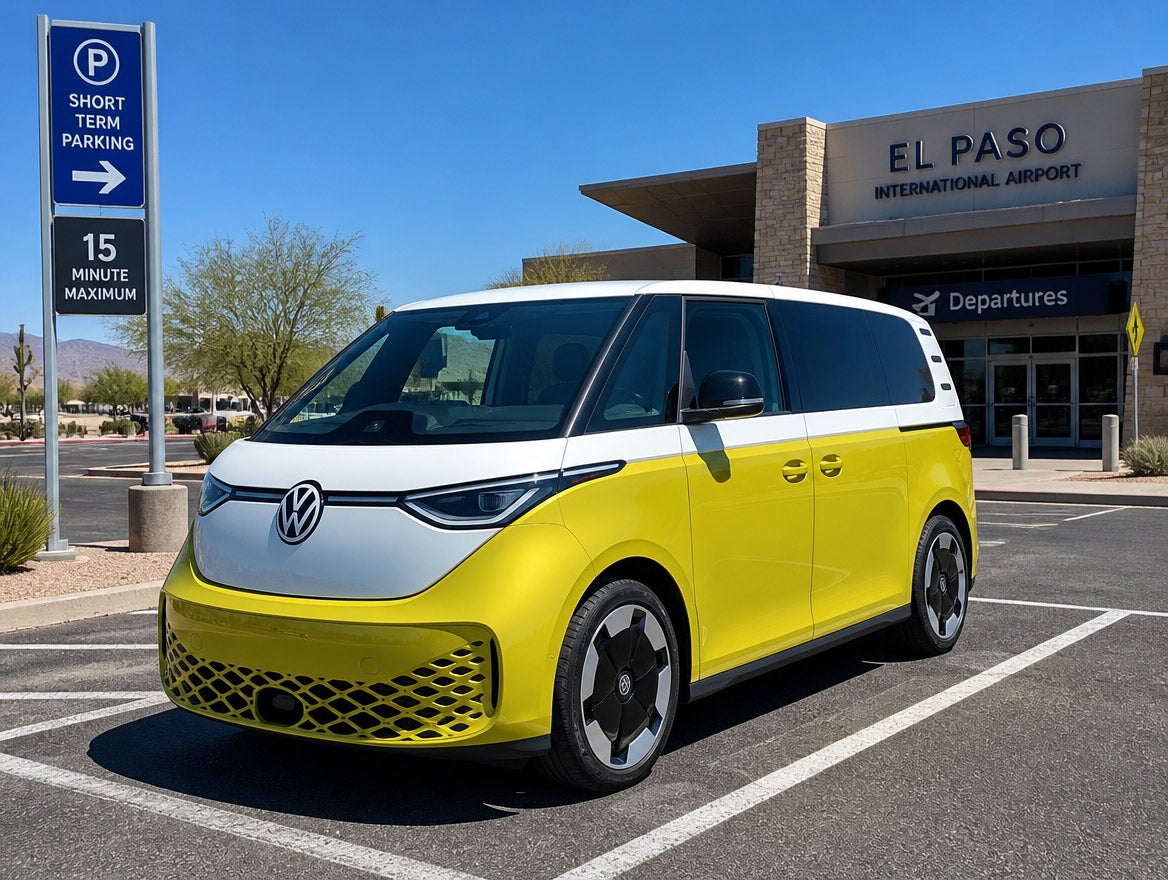
2027 Volkswagen ID. Buzz parked at El Paso International Airport short-term lot

The good news is that the Las Cruces-to-ELP round trip sits well inside the EPA-rated range of the Volkswagen ID. Buzz, and you won't need to touch a charger at the airport for most trips. The flip side matters too. Park for more than a day or two and the airport's on-site charging setup won't save you, so you'll want to plan for that before you leave the driveway.

That covers the bottom line, and here's the full play.

Browse the Volkswagen ID. Buzz at Sisbarro Volkswagen

Where Do You Park, and When Do You Need to Arrive?

For a quick pickup you'll want the short-term lot right out front, and for a multi-day stay the on-site long-term lots take over, though those long-term lots carry no EV chargers at all, so you'll charge before you arrive rather than at the terminal. El Paso International Airport (ELP) sits at 6701 Convair Road, about 4 miles northeast of downtown El Paso, which puts it roughly 45 to 50 miles from Las Cruces via I-10. The drive itself is dead-simple. The airport runs compact by major-hub standards, but the parking picture has a few layers worth knowing before you pull in.

Arrive By Best Lot ID. Buzz Fit Note Key Tip
Drop-off only (under 10 min) Short-term lot, front of terminal Sliding doors make loading fast; pull forward to stay clear of traffic First 10 minutes are free
1-2 hours (pickup / waiting) Short-term lot Blink Level 2 chargers in this lot near the exit; 4 stalls available Good for a short top-up while waiting
1-3 days Long-term lots (on-site) No EV chargers in long-term; plan your charge before you arrive Two long-term lots; 5,738 total spaces on property
4+ days Long-term lots or off-site Off-airport shuttles run to the terminal; van-sized vehicles fit easily Leave with a full charge from home
Running late (under 30 min to flight) Short-term or Premium Reserved Premium Reserved is covered and closest to the main entrance Don't rely on finding a spot at drop-off in peak periods

The short-term lot sits directly in front of the main terminal, and the Premium Reserved area is covered. For a van the size of the ID. Buzz, those sliding rear doors are a genuine advantage in the tighter bays. You won't swing a wide door arc into the neighboring car's side panel. On a packed lot, that pays off.

The Maneuvering and Fit Picture

The Volkswagen ID. Buzz is a long-wheelbase three-row van, and it's bigger than it looks in photos, which means the size helps you in some airport bays and costs a little patience in others. Knowing where each shows up saves you the hassle.

See current ID. Buzz availability

In a tight bay, the sliding rear doors let passengers load and unload without drama. The upright greenhouse and large windows give genuinely good outward visibility, which helps when you're inching into a space with traffic behind you. Where the Buzz asks for patience is a covered or low-clearance structure. The Premium Reserved area is covered but surface-level, so clearance isn't a concern there. Multi-story garages at other spots in El Paso are where you'd want to verify height limits before committing.

Explore financing options for the Volkswagen ID. Buzz

For the I-10 run from Las Cruces, the van is genuinely comfortable. Three rows, climate control, quiet cabin. The person you're picking up from baggage claim will appreciate it more than they would a sedan.

Insider note: The boxy shape of the ID. Buzz is aerodynamically honest. Volkswagen rates the EPA range at 234 miles for the rear-wheel-drive model and 231 miles for the 4Motion all-wheel-drive, and those figures hold up well at I-10 highway speeds because Volkswagen tuned the platform for real-world family driving, not wind-tunnel numbers alone. At about 95-100 miles total, a Las Cruces-to-ELP round trip leaves you with substantial range margin, so you're not sweating the return leg.
Etiquette note: At ELP's short-term Blink stalls, the 4 charging terminals are shared among all EV drivers. If you're just picking someone up and don't need a charge, leave the stalls free for someone who does. It's a small lot and a short list of chargers.

Before You Go: The Print-and-Go Checklist

A good airport run in the ID. Buzz isn't complicated, and you won't need a charger at ELP for a short stay, but a little prep before you roll out of Las Cruces is what keeps the day seamless. Charge at home, confirm your lot, and mind the I-10 traffic. The rest takes care of itself.

  • [ ] Charge to at least 80% at home the night before (the round trip runs around 95-100 miles; 80% gives you plenty of buffer)
  • [ ] If you own a 2027 ID. Buzz, verify your NACS adapter is in the vehicle (Volkswagen confirmed standard NACS ports on 2027 models, opening Tesla Supercharger access along the I-10 corridor)
  • [ ] Check the ELP parking map at elpasointernationalairport.com before you leave so you know which lot you're targeting
  • [ ] For stays of 3 days or more, plan to charge at home or a nearby DC fast charger before your return drive, not at the airport (ELP's on-site stalls are Level 2 Blink units at 4 terminals in the short-term lot; they add range slowly, not rapidly)
  • [ ] Use the three-zone Climatronic climate control to pre-condition the cabin while still plugged in at home on hot September days; that protects your range for the highway run
  • [ ] If you're dropping someone off, account for departure-day morning traffic on I-10 through Anthony and the outskirts of El Paso
  • [ ] For multi-day parking, confirm long-term lot availability on the ELP website ahead of peak travel weekends

Schedule a pre-trip service check at Sisbarro Volkswagen

The Volkswagen ID. Buzz handles this corridor naturally. Las Cruces to ELP is exactly the trip you'll want this vehicle for. A manageable distance, a family to move, and cargo to load without wrestling a hatch. Point the ID. Buzz at ELP and go enjoy the drive.

By the Sisbarro Volkswagen Team | September 2026
Sisbarro Volkswagen

1115 S Valley Dr, Las Cruces, NM 88005

(575) 319-9131

Posted in:

Related Posts

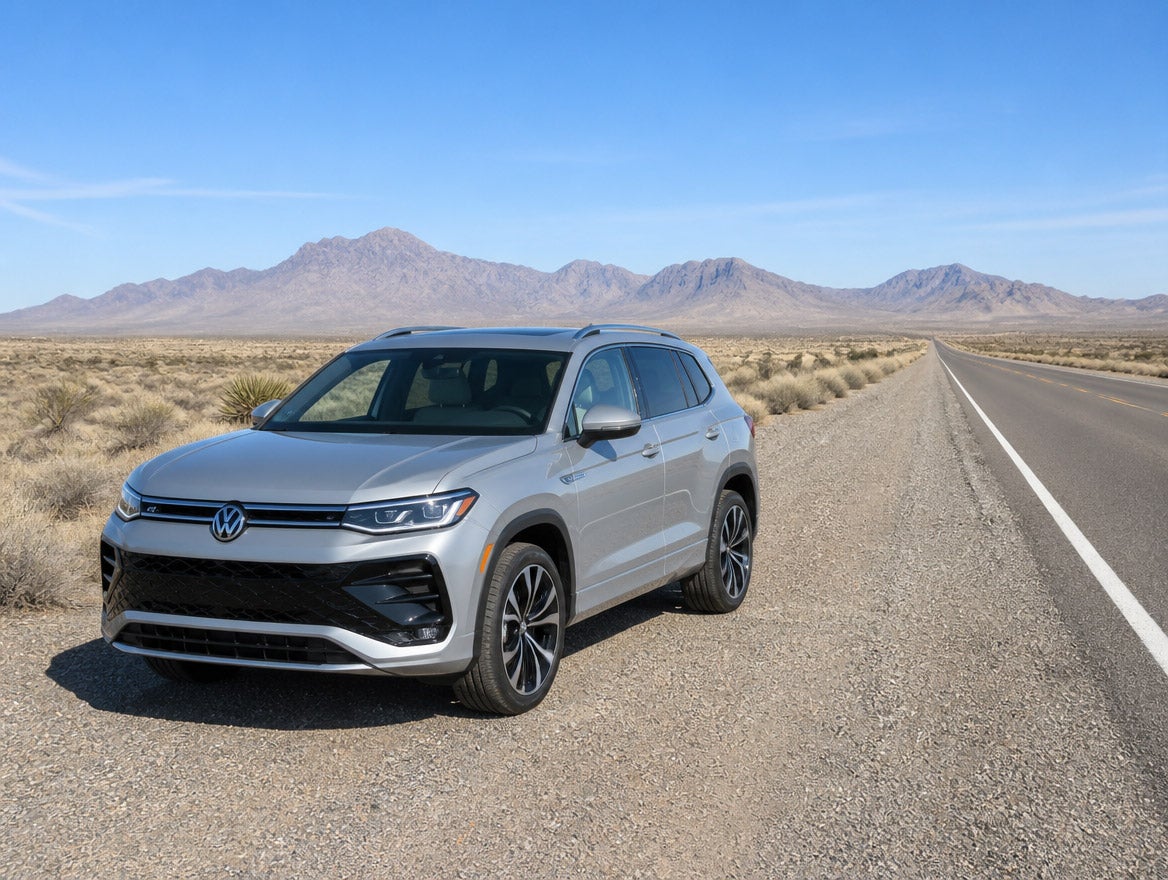
2026 Volkswagen Tiguan parked on U.S. 180 desert highway shoulder near Las Cruces, New Mexico

What to Keep in Your Volkswagen for Regular Trips on U.S. 180 between Las Cruces and Deming

That 60-mile run looks simple on the map. The road is signed, it's a freeway, and you've probably driven it a dozen times without a second thought. The honest version reads a little differently. U.S. 180 concurrent with I-10 between Las Cruces and Deming crosses open Chihuahuan Desert with long service gaps, documented dust-storm closures that can drop visibility to near zero, and monsoon flash flooding in late summer that hits without much warning. Keep the right gear in your Volkswagen Tiguan, or whichever Volkswagen you're running, and you've handled the realistic worst-case before it happens. What Goes on the Checklist? Every item below earns its place for this specific corridor, listed in priority order, and none of it is exotic gear you'll struggle to find. Check the kit every six months per the National Safety Council's guidance, and refresh anything you pull out right after a trip so the bag is ready for the next run. Water (at least one gallon per person). The Chihuahuan Desert at roughly 3,900 feet of elevation is dry enough in August that dehydration becomes a real risk if you're stuck roadside for even an hour in midday sun. Pack sealed jugs, not bottles that have been baking in the cargo area for weeks. Jumper cables or a lithium jump starter. Dead batteries rank among the most common roadside problems. A compact lithium jump starter tucks behind the rear seat and works without a second vehicle. Tire repair kit + portable inflator. The 2026 Tiguan comes with all-season tires as standard equipment. A quality portable inflator and a can of tire sealant handle slow leaks and minor punctures fast enough to get you to Deming or back to Las Cruces. First aid kit. Keep one stocked with sterile gauze, bandages, antiseptic wipes, medical tape, and tweezers. The Red Cross recommends supplies sufficient for at least the people in your vehicle. Flashlight with spare batteries (or hand-crank). If a breakdown lands after dark on this stretch, you need to be visible before you need anything else. Reflective warning triangles or flares. Three is the standard recommendation. During a dust-storm closure, they're how other drivers know you're there before they can see you. Reflective safety vest. Step out of the vehicle on the shoulder in a blowing-dust event and you'll want it on. Make wearing it a habit. Rain poncho. Monsoon season in southern New Mexico, roughly July through mid-September, brings fast, heavy downpours. If you climb out to inspect a tire during one, you'll be glad it's there. Windshield sunshade. A parked car on open desert asphalt in August gets dangerously hot inside. The sunshade buys you time and keeps interior surfaces touchable if you have to wait for a tow. Charged battery pack (phone charger). Cell service on the I-10/U.S. 180 corridor thins noticeably in the high-desert sections between exits. A fully charged power bank means your phone's ready to make the call the moment you finally catch a bar. Paper map or downloaded offline map. Phones don't find service on demand out here. Know your exits before you leave. Non-perishable snacks. A granola bar isn't glamorous. It earns its keep when you're waiting with kids. Schedule a Pre-Trip Vehicle Check Why These Items Matter on This Particular Run Scheduling routine service before a regular U.S. 180 run pays off in a way it never does on a quick errand across town, because this corridor asks more of your Volkswagen than the map lets on. The gear matters for three concrete reasons, and each one shows up on this stretch in a way you can plan around. The dust closures are documented and serious. In March 2025, the New Mexico Department of Transportation closed both directions of I-10 from milepost 132 in Las Cruces to milepost 81 near Deming because of blowing dust and severely reduced visibility. That covers nearly the full stretch. Get caught in it without water, warning triangles, and a sunshade, and what felt like a nuisance turns uncomfortable in a hurry and potentially unsafe. Reflective triangles placed behind your vehicle and a vest on your body are the practical answers. Monsoon flooding changes the calculus in late summer. The NWS classifies our region's monsoon season as running from approximately mid-June through mid-September. In July 2025, flooding hit communities along the I-10 corridor south of Las Cruces hard, with NMDOT reporting standing water on the roadway. Ready.gov is direct on this. Six inches of water can cause a vehicle to lose control. Don't drive through a flooded section of roadway. If water is moving across the road ahead of you, stop and wait it out. Services thin out fast west of the metro. Once you're past the Las Cruces exits and into the high desert toward Deming, you're committed. No gas station waits at every exit, no cell signal at every mile marker. You're on your own. Topping off your fuel before you leave town is practical, not paranoid. The EPA rates the front-wheel-drive 2026 Tiguan at 34 miles per gallon on the highway, which means a full tank takes you well beyond Deming in either direction, but you still want to start full. Quick callout. Check that your spare tire, or tire repair kit depending on trim, is properly inflated before any desert highway run. Tire pressure drops roughly one PSI for every 10-degree Fahrenheit drop in temperature (desert mornings versus desert afternoons can swing that math a fair bit). Item / Why It Matters on U.S. 180 Item Why It Matters on This Corridor Water (1 gal/person min.) Chihuahuan Desert heat + potential wait during closures Jump starter Dead batteries are the top breakdown cause; no help nearby Tire inflator + sealant Long service gaps mean you may need to self-rescue First aid kit Response time is longer out here than in town Reflective triangles Dust-storm zero-visibility requires you to mark your position Reflective vest Stepping out on a desert shoulder in any low-visibility event Rain poncho Monsoon downpours arrive fast and soak you before you react Windshield sunshade Interior temps spike quickly parked on open asphalt Phone power bank Cell service is spotty in high-desert sections Offline map Have the route downloaded before you lose signal Atlas owners and Jetta drivers, the kit contents stay the same regardless of which Volkswagen you're running. The Atlas gives you more rear cargo space to lay everything out flat. Smaller sedans do better with a compact, organized bag that won't slide around. The Print-and-Go Recap Browse our current Volkswagen inventory if a more capable setup is on your mind for these runs, but for the vehicle sitting in your driveway right now, use the version below that you can screenshot or print before your next trip west. Before you leave Las Cruces: Fuel tank full. Tire pressure checked (including the spare or repair kit). Phone fully charged, power bank charged. Offline map of the corridor downloaded. Water confirmed in the cargo area. Check NMDOT road conditions for I-10/U.S. 180 (high-wind and dust advisories post quickly during spring and monsoon season). In the cargo area at all times: Compact first aid kit. Reflective warning triangles (three recommended). Reflective safety vest. Tire inflator and sealant. Jumper cables or lithium jump starter. Flashlight with spare batteries. Water (sealed jugs, rotated out often). Windshield sunshade. Rain poncho. Phone power bank. Non-perishable snacks. None of it is exotic, none of it expensive. The kit is what makes a 60-mile desert freeway run feel like what it should be: routine. By the Sisbarro Volkswagen Team | August 2026 Frequently Asked Questions { "@context": "https://schema.org", "@type": "FAQPage", "mainEntity": [ { "@type": "Question", "name": "Is U.S. 180 between Las Cruces and Deming a separate road from I-10?", "acceptedAnswer": { "@type": "Answer", "text": "Not in the practical sense. On this segment, U.S. Route 180 is concurrent with Interstate 10, meaning they share the same pavement. The U.S. 180 designation branches off separately in Deming toward Silver City to the northwest. Between Las Cruces and Deming, you're on the interstate. We flag the U.S. 180 name because locals and regulars still use it, and it's accurate for that leg, though the driving surface and conditions are all I-10." } }, { "@type": "Question", "name": "How often should we refresh the emergency kit in our Volkswagen?", "acceptedAnswer": { "@type": "Answer", "text": "The National Safety Council recommends checking your emergency kit every six months. We'd add a practical layer for this corridor. Check water before every trip, since sealed containers that've sat in a hot trunk for weeks aren't reliable hydration, and replace anything you used right away rather than waiting for the biannual check. A quick look before any trip longer than a local errand costs you two minutes and earns you real peace of mind." } } ] } Is U.S. 180 between Las Cruces and Deming a separate road from I-10? Not in the practical sense. On this segment, U.S. Route 180 is concurrent with Interstate 10, meaning they share the same pavement. The U.S. 180 designation branches off separately in Deming toward Silver City to the northwest. Between Las Cruces and Deming, you're on the interstate. We flag the U.S. 180 name because locals and regulars still use it, and it's accurate for that leg, though the driving surface and conditions are all I-10. How often should we refresh the emergency kit in our Volkswagen? The National Safety Council recommends checking your emergency kit every six months. We'd add a practical layer for this corridor. Check water before every trip, since sealed containers that've sat in a hot trunk for weeks aren't reliable hydration, and replace anything you used right away rather than waiting for the biannual check. A quick look before any trip longer than a local errand costs you two minutes and earns you real peace of mind. Get Your Volkswagen Ready for the Road Sisbarro Volkswagen 1115 S Valley Dr, Las Cruces, NM 88005 (575) 319-9131

Original-17962-LIPMANJL21670

The 2026 Volkswagen Jetta GLI Is an "Underrated" Sports Sedan

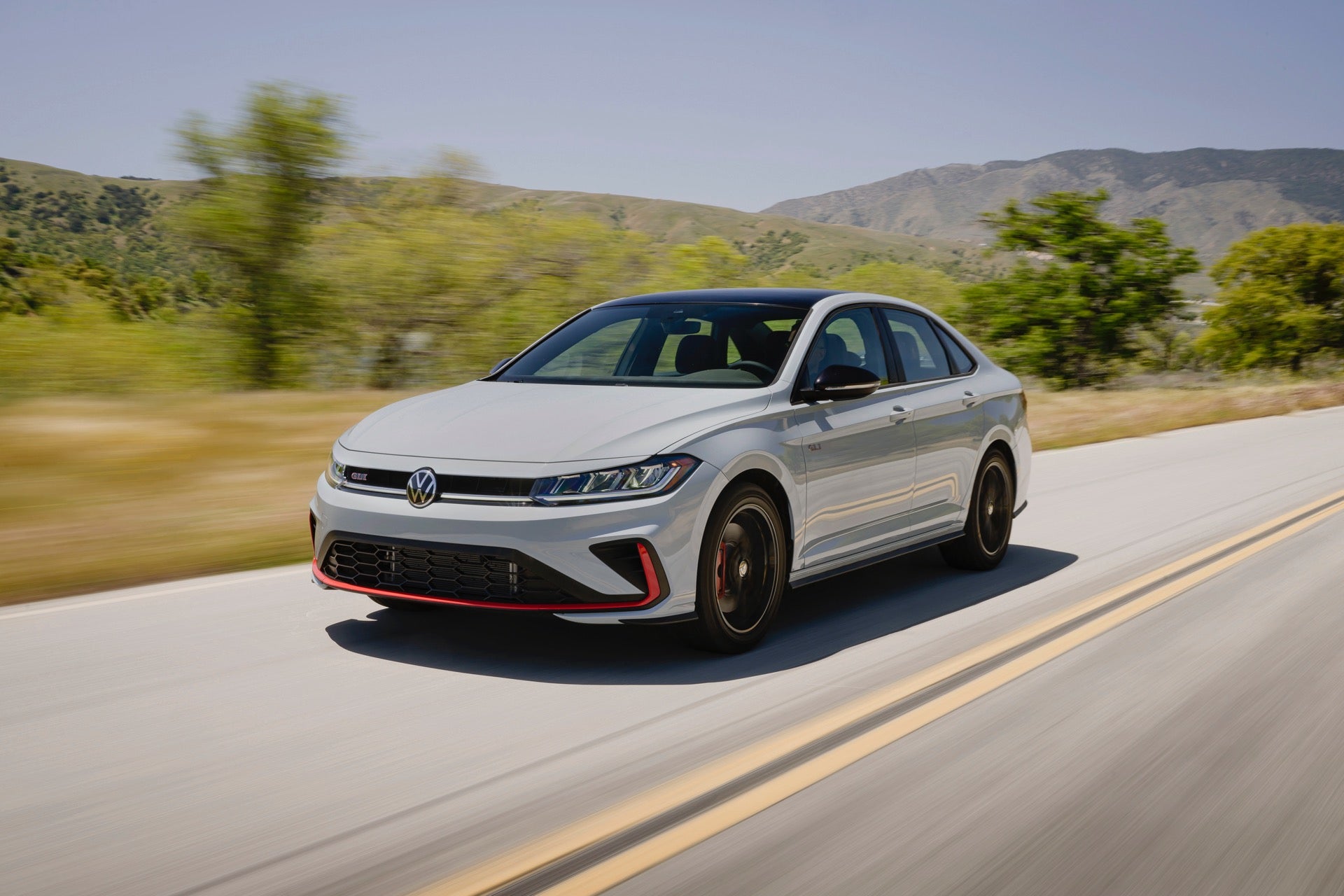
When it comes to sports compacts, Volkswagen wrote the book on them for the past 50 years. The first one that comes to mind is the Golf GTI. It sets the benchmark for all sports compacts to follow, including our own. Did you know that Volkswagen has offered a Jetta GLI for every generation? Today’s 2026 Jetta GLI continues to provide excitement for enthusiasts who are looking for a quick four-door sedan with a trunk. It is also the most affordable, honest sports sedan available in this country. According to the Top Speed website, the Jetta GLI is very “underrated.” What makes the 2026 Jetta GLI special starts with what’s underneath the hood. The EA888 turbocharged 2.0-liter engine offers up 228 horsepower and 258 pound-feet of torque. It is one of the few vehicles left to be equipped with a six-speed manual transmission. You can also opt for a DSG gearbox. To keep things in line, the VAQ Limited-Slip front differential ensures confidence when you put down the accelerator. Keeping the 2026 Jetta GLI planted on the tarmac is a rear multilink suspension set-up. With DCC and Adaptive Chassis Control, you can adjust the firmness of the dampers to fit the kind of driving you want. If tackling the twisty roads in the mountains is on your agenda, put your 2026 Jetta GLI into Sport mode and ride the curves. For boulevard cruising in town, Normal or Comfort will keep things mellow. The dynamic steering system enhances precision, while putting the DCC into Sport mode weighs down the feel for more control at every turn. While it delivers driving excitement, the 2026 Jetta GLI invites you to sit down and take control. With front seats that offer support, an infotainment touchscreen with a performance page, and a comprehensive Digital Cockpit Pro instrument cluster, you will be inspired to take your 2026 Jetta GLI to the next adventure – including rush hour. Still, the 2026 Jetta GLI is a practical sedan at its core. You can seat up to five people and fill the 14.1 cubic foot trunk with luggage for everyone on a weekend trip out of town. Of course, you can’t ignore the 2026 Jetta GLI with its badges and red trim inside and out. Plus, those gloss black finished 18-inch multi-spoke alloy wheels mounted just give it a cool vibe. If you consider all of the good things that make up this sports sedan, why would anyone still call this “underrated”? Top Speed explains that there’s “ nothing inherently wrong” with it, because it “does the sporty bit extremely well” compared to its competitors. After 40-plus years, the Jetta GLI remains an exciting compact sports sedan for enthusiasts who want a pure driving experience. If this is your kind of vehicle, contact us at Sisbarro Volkswagen and let us introduce you to one soon.

2026 Volkswagen Tiguan on a wet Las Cruces road during monsoon season with dark storm clouds above the Organ Mountains

Do Las Cruces Drivers Need Volkswagen 4MOTION All-Wheel Drive?

For most Las Cruces commuters running I-10 on dry pavement, a front-wheel-drive Tiguan or Atlas does the job well and saves fuel. The honest answer shifts, though, once monsoon season arrives. During Chihuahuan Desert monsoons, when arroyos fill in minutes and the New Mexico Department of Transportation posts standing-water alerts on I-25 through the city, Volkswagen 4MOTION all-wheel drive earns its cost in a way no dry-weather statistic can capture. Does 4MOTION Actually Do Anything in a Desert Climate? Yes, and the reason is water, not the snow this region barely sees. Las Cruces gets almost none. What it does get is violent summer monsoons. The ground bakes hard all spring and early summer, then the rains hit fast and water sheets across the roads before it can soak in. That's the low-grip, sudden-traction-loss scenario 4MOTION was built for. The Volkswagen 4MOTION system runs primarily as front-wheel drive under normal conditions. When the sensors detect wheel slip (or anticipate it from throttle input, steering angle, and vehicle dynamics data), it engages the rear axle proactively through a multi-plate Haldex clutch, catching a slide before it develops. On a rain-slicked I-25 on-ramp in August, that timing difference is everything. The National Weather Service issued a Flood Watch for Southern Dona Ana County and the Mesilla Valley on August 1, 2026. NMDOT has documented standing water on I-25 at the University Avenue exit and on I-10 near the Mesquite area during recent monsoon events. These aren't hypothetical conditions. Our team has watched customers cross a monsoon-soaked parking lot and a wet on-ramp, and the composure gap shows depending on what they're driving. Condition Front-Wheel Drive 4MOTION AWD Dry I-10 daily commute Fully capable No meaningful advantage Wet monsoon pavement Adequate with smooth inputs Proactive rear engagement, more margin Paved arroyo crossings Workable if water is shallow Better traction on slippery exit grade Dirt roads near Organ Mountains Depends on surface Noticeably more confident Sand or loose desert gravel Prone to wheelspin More controlled power delivery The three-row Atlas adds one more variable. It carries more people, so losing traction on a slick exit ramp raises the stakes, which makes 4MOTION a reasonable call even when your route stays entirely paved. More passengers, less room for error. What Does Choosing 4MOTION Actually Cost You? Fuel economy is where you pay for it, and the EPA numbers make that tradeoff concrete rather than abstract. 4MOTION adds mechanical complexity and weight, both of which pull mileage down, so we'll lay the figures out plainly instead of glossing over them. On the 2026 Tiguan with the base 2.0-liter turbo, the EPA rates the front-wheel-drive model at 26 city and 34 highway. The same Tiguan equipped with 4MOTION drops to 22 city and 30 highway. That's a real four-mpg gap on the highway. Run fifty highway miles a day on the El Paso corridor and you'll feel it at the pump over a year. We're not pretending otherwise. The 2026 Atlas tells a tighter story. The EPA rates the Atlas FWD at 20 city and 27 highway combined, while the 4MOTION version gives up just one highway mpg, landing at 20 city and 26 highway. For a three-row SUV that size, the penalty is truly modest. Model Drivetrain EPA City EPA Highway Best For 2026 Tiguan (base engine) FWD 26 mpg 34 mpg Daily I-10 commuters, dry-weather driving 2026 Tiguan (base engine) 4MOTION 22 mpg 30 mpg Monsoon-season drivers, Organ Mountains day trips 2026 Tiguan SEL R-Line Turbo 4MOTION (standard) See Volkswagen.com See Volkswagen.com Performance buyers; 268 hp, 4MOTION included 2026 Atlas SE FWD 20 mpg 27 mpg Families on primarily dry paved routes 2026 Atlas SE 4MOTION 20 mpg 26 mpg Families who want monsoon and road-trip confidence One mechanical detail is worth knowing. The base 2.0-liter turbo of the 2026 Tiguan produces 207 lb-ft of torque in the FWD configuration. Pair that same engine with 4MOTION and the output rises to 221 lb-ft. The drivetrain calibration shifts when the AWD hardware is present. That's a genuine spec difference you can point to. For Las Cruces drivers, 4MOTION isn't a snow feature. It's a monsoon-season and loose-surface feature, and the Tiguan fuel economy tradeoff (about four highway mpg) is the real, concrete cost of that confidence. Monsoon Note: Arroyos throughout the Mesilla Valley can go from bone dry to flowing in under ten minutes during a heavy storm cell. 4MOTION won't replace good judgment about standing water, but it gives you better grip on the wet pavement and mud-slicked asphalt on the far side of a crossing. Which Volkswagen Models in Our Lineup Offer 4MOTION? Not every Volkswagen offers 4MOTION, and on the models that do, it isn't always standard, so the answer depends on which vehicle and trim you're weighing. Here's how it breaks down across our current lineup. On the 2026 Tiguan, 4MOTION is an available option on the S, SE, and SE R-Line Black trims. It comes standard on the SEL R-Line Turbo. That top trim also steps up to 268 horsepower and 258 lb-ft of torque, compared with 201 horsepower in the base configuration. Want the higher-output engine? 4MOTION comes with it automatically. Check the Atlas trim ladder next. FWD is only available on SE and SE with Technology trims. Every higher trim (SEL, SEL Premium R-Line, and Peak Edition) comes standard with 4MOTION. The Jetta and Golf GTI don't offer 4MOTION in the current Volkswagen lineup. Both are capable daily drivers, and both are front-wheel drive only. The Taos is worth a mention. Volkswagen offers 4MOTION on multiple Taos trims, which makes it a compact entry point for buyers who want AWD confidence without stepping into a larger SUV. If a full Tiguan is more vehicle than you need, the Taos with 4MOTION is a real option worth considering. Explore Financing Options By the Sisbarro Volkswagen Team | August 2026 Frequently Asked Questions About Volkswagen 4MOTION in Las Cruces Does Las Cruces get enough rain to make AWD worth it? Las Cruces averages roughly 9.5 inches of annual precipitation, which sounds like almost nothing. The catch is that about half of that falls as concentrated monsoon downpours between July and September, hitting baked hardpan that can't absorb water fast enough. The New Mexico Department of Transportation has documented standing water on both I-25 and I-10 within city limits during these events. That concentrated wet-season intensity, rather than the annual total, is what makes 4MOTION relevant here. How does Volkswagen 4MOTION differ from four-wheel drive? 4MOTION is an all-wheel-drive system engineered for on-road conditions. It runs primarily as front-wheel drive in normal driving and engages the rear axle automatically through a multi-plate clutch when the system detects or anticipates traction loss. There's no low-range transfer case for serious off-road work. Think of it as intelligent, proactive grip on wet pavement and moderate loose surfaces (well short of a trail-rated rock-crawling setup) that operates without any input from the driver. Can I add 4MOTION to any Volkswagen I choose, or is it trim-specific? It depends on the model. On the 2026 Tiguan, 4MOTION is available as an option on most trims below the SEL R-Line Turbo, where it's standard. On the 2026 Atlas, front-wheel drive is only offered on SE-level trims, so higher-trim buyers get 4MOTION automatically. The Jetta, Jetta GLI, and Golf GTI don't offer 4MOTION at any trim level. Our team can walk you through exactly which configurations are available in our current inventory. Value Your Trade Sisbarro Volkswagen 1115 S Valley Dr, Las Cruces, NM 88005 (575) 319-9131