
Blog / Service

Volkswagen Service Checklist Before a Trip to White Sands National Park

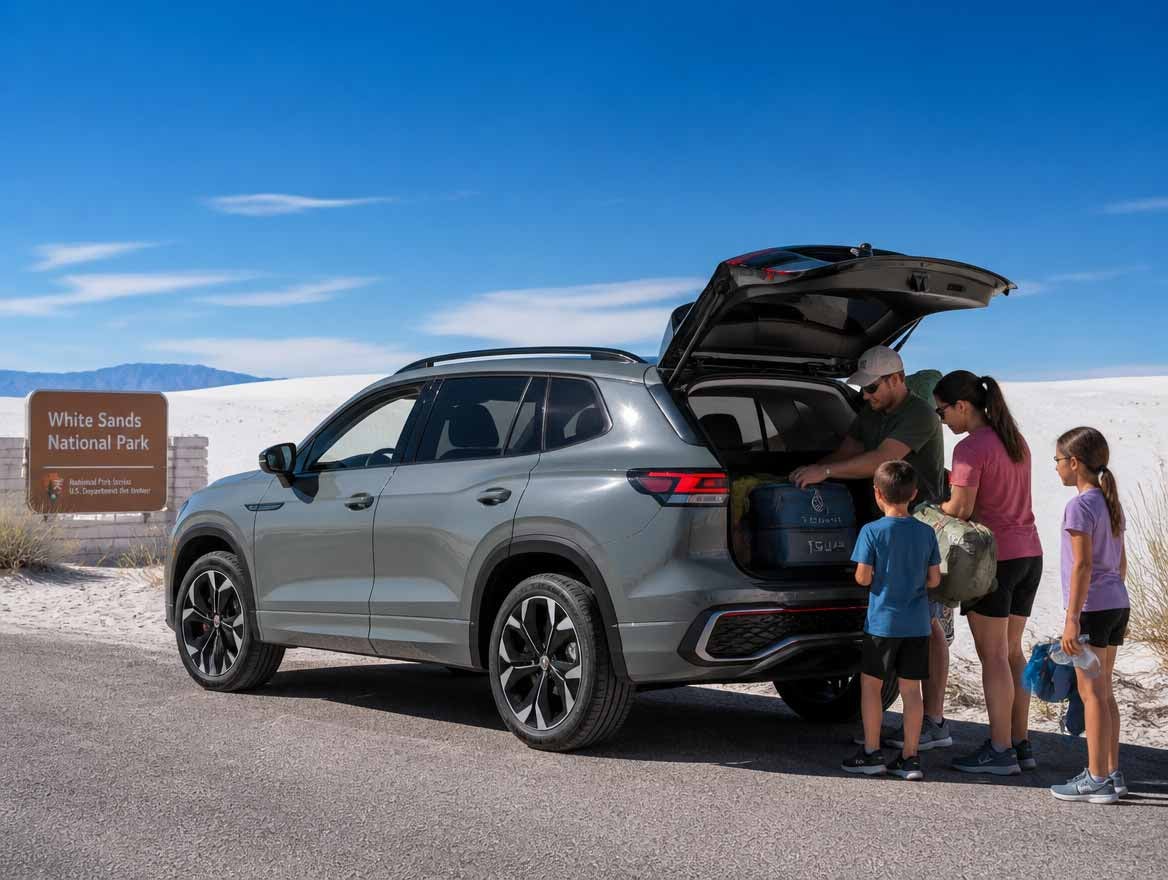
2026 Volkswagen Tiguan at White Sands National Park gypsum dunes, Las Cruces NM road trip

White Sands sits about 45 miles east of us on US-70, an easy run on paper. And it stays easy right up until your A/C starts losing ground on a 97-degree afternoon, or US-70 closes for a missile test while you're waiting to head home, or you catch a warning light on the gypsum-packed Dunes Drive with no cell signal and no shoulder. None of those scenarios need bad luck. They just need a skipped pre-trip walk-around. We tell our own customers the same thing before they pull out. Spend twenty minutes on this list, and the trip takes care of itself.

Book a pre-trip service visit with our team before you go

What Goes on the Checklist?

Every item below actually matters for the specific conditions between Las Cruces and White Sands: sustained highway speeds on open desert, a hardpack gypsum road inside the park, September heat that's still regularly hitting the low-to-mid 90s, and afternoon monsoon thunderstorms that can materialize fast on the drive back.

Print it, tape it to the dash, and check things off as you go.

Volkswagen Pre-Trip Checklist: Las Cruces to White Sands

  • [ ] NHTSA recall status (Atlas and Atlas Cross Sport owners, check this first) (verify your VIN at NHTSA.gov before you load anything)
  • [ ] Tire pressure (check cold, before you leave the driveway; PSI lives on the sticker inside your driver's door, not the sidewall number)
  • [ ] Tire tread depth (4/32" or below is a hard stop before any highway run; gypsum surface on Dunes Drive is packed but unforgiving on worn rubber)
  • [ ] Engine oil level and service interval (The published schedule for the Jetta, Taos, Tiguan, and Atlas calls for every 10,000 miles or 12 months using approved synthetic; if you're within about 1,500 miles, go ahead and change it before you go)
  • [ ] Coolant level (high desert at elevation means your cooling system runs harder; check the reservoir cold)
  • [ ] Brake fluid (brake fluid absorbs moisture over time and degrades; have it inspected if it's been more than two years)
  • [ ] A/C performance (this one matters more than people expect; September temps at White Sands still average in the low 90s, and a weak A/C on the Dunes Drive with the car parked in direct sun is a genuinely uncomfortable situation)
  • [ ] Windshield washer fluid (desert dust and bug splatter happen fast on US-70; keep it full)
  • [ ] All exterior lights functional (headlights, brake lights, reverse lights; a Monday late-afternoon return from White Sands can put you on US-70 at dusk)
  • [ ] Wiper blades (monsoon season runs through late September; afternoon storms on the return drive are real)
  • [ ] Battery (heat accelerates battery degradation; if yours is over three years old, have it load-tested)
  • [ ] Cargo area and roof load secure (the last four miles of Dunes Drive are hard-packed gypsum, not pavement; anything loose in the cargo area will know it)
  • [ ] Emergency kit (water for passengers (at least a gallon per person for a summer-adjacent visit), first aid kit, jumper cables or a jump pack, phone charger, and a physical paper map or downloaded offline navigation for inside the park where signal drops)
  • [ ] US-70 closure plan (US-70 passes through White Sands Missile Range and closes temporarily for testing; check conditions the morning of your trip (NPS.gov or the park's recorded line) and build a buffer into your return time)

Why These Items Matter on This Specific Route

Desert heat and the Dunes Drive put different demands on a Volkswagen than a typical I-10 commute. So the key items on that list earn more than a quick glance.

The A/C and Cooling System: Your Biggest Risk Factor

A/C failures rarely announce themselves on your grocery run. They announce themselves at mile 30 on an open highway with no shade. The gypsum dunes at White Sands reflect sunlight in a way that makes the air feel even hotter than the thermometer says, and a parked car can turn into a genuine heat problem in under ten minutes. Heat builds fast. When we run a pre-trip check, our service team looks at refrigerant charge, belt condition, and condenser cleanliness. Three things that stay invisible in daily use get obvious under sustained desert load.

The Tiguan and Atlas both run climate-control systems that do real work on a day like this. And that work needs a system that's genuinely in good shape.

Tires: The Gypsum Dunes Drive Is Not a Parking Lot

The first four miles of Dunes Drive inside the park are paved. The last four are hard-packed gypsum. Not sand, so you won't need a truck or 4WD. But it's an abrasive, fine-particulate surface that stresses tire sidewalls and shows up any existing damage you might've missed on asphalt. A tire with a slow sidewall crack or a bubble rarely blows on I-25. Get that same tire flexing on an uneven surface at low speed, though, and it can let go, which is exactly what those final four miles deliver. Tread below 4/32" on any corner is a reason to reschedule or take a different vehicle. There's no workaround, no exceptions.

Note for Atlas and Atlas Cross Sport owners: NHTSA recall 44BW covers certain 2026 Atlas and Atlas Cross Sport vehicles produced between late October and early November 2025 for incorrect wheel bolts installed during manufacturing. Per NHTSA, affected owners were advised not to drive their vehicles until the repair is complete. The fix is free at any Volkswagen dealer. Check your VIN at NHTSA.gov before this trip (it takes two minutes, and we can confirm your status and complete the repair if needed).

Oil Interval: The Short-Commute Problem

If your day-to-day driving is mostly short trips around Las Cruces (school runs, NMSU campus loops, quick errands), your oil is working harder than the mileage suggests. Short trips that don't fully warm the engine let moisture and combustion byproducts build up in the oil faster than they would on a highway commute. The Volkswagen maintenance guidance accounts for this. If your driving pattern has been mostly short runs, the practical service interval sits closer than the odometer reading implies. A 90-mile round trip to White Sands on US-70 at highway speed is sustained heat load on an engine that may have spent most of the summer in warm-up mode. If you're within 1,500 miles of your interval, change it first.

Taos owners should note that Volkswagen lists the 2026 Taos oil service interval as every 10,000 miles or 12 months using approved synthetic. The same cadence applies across the Jetta and Tiguan lineup. Always confirm the spec in your owner's manual for your exact engine.

The Jetta and Jetta GLI share that interval. Confirm the spec for your engine in your owner's manual; your service team is the right call when you're not sure.

ItemWhy It Matters on This Route
A/C systemSustained desert highway heat; reflected gypsum sunlight inside the park
Tire conditionLast 4 miles of Dunes Drive are hard-packed gypsum, stresses sidewalls
Oil intervalShort-trip Las Cruces driving degrades oil faster than mileage suggests
Coolant levelHigh-desert elevation adds load on the cooling system at sustained highway speeds
Battery healthSummer heat accelerates battery degradation; test before a remote destination
Wiper bladesSeptember monsoon tail-end means real chance of afternoon storms on US-70
Exterior lightsLate returns on US-70 at dusk are common; lights need to be verified
NHTSA VIN checkRecall 44BW affects certain 2026 Atlas and Atlas Cross Sport (wheel bolts)

You don't need a full service visit for every item on this list. Some of it you can knock out in the driveway in ten minutes. The ones that need a lift (brake fluid, A/C refrigerant, battery load test, recall verification) are worth booking with us a few days before you go. Grab the short version below, snap a photo, and take it with you.

Do in the driveway:

  1. Tire pressure (cold, driver-door sticker PSI)
  2. Coolant reservoir level (engine cold)
  3. Washer fluid (top it off)
  4. All exterior lights (walk around the car with someone watching)
  5. Cargo secure, emergency kit loaded

Book with our service team:

  1. A/C performance and refrigerant check
  2. Battery load test (especially if it's 3+ years old)
  3. Oil change if you're within 1,500 miles of your interval
  4. Brake fluid inspection
  5. NHTSA VIN recall check (Atlas and Atlas Cross Sport owners: do this before anything else)

The morning of the trip:

  1. Check NPS.gov or call the park for US-70 closure info
  2. Download offline maps for the park (cell signal is unreliable inside)
  3. Pack water. At least a gallon per person for September visits when temps still reach the low 90s.

Schedule Your Pre-Trip Service Check

Frequently Asked Questions

Do I need 4WD or AWD to drive through White Sands National Park?

No. The Dunes Drive is fully passable in a standard front-wheel-drive Volkswagen. The NPS confirms the road is suitable for cars, motorcycles, and recreational vehicles. The last four miles are hard-packed gypsum rather than pavement, so good tire condition matters. Ground clearance and drivetrain are not limiting factors for most visitors. An AWD Tiguan or Atlas Cross Sport gives you a bit more composure on the gypsum surface, but it isn't a requirement.

When should I schedule a pre-trip service visit at Sisbarro Volkswagen?

Aim for at least three to four days before you plan to leave. That gives us time to complete any work that turns up during the inspection (an oil change, a battery replacement, or a recall repair) without rushing. If you're planning a September trip around the Labor Day window or a weekend, book earlier. A brief pre-trip check covers the items that need a lift (A/C, brake fluid, battery) in one visit.
Sisbarro Volkswagen

1115 S Valley Dr, Las Cruces, NM 88005

(575) 319-9131


Posted in:

Related Posts

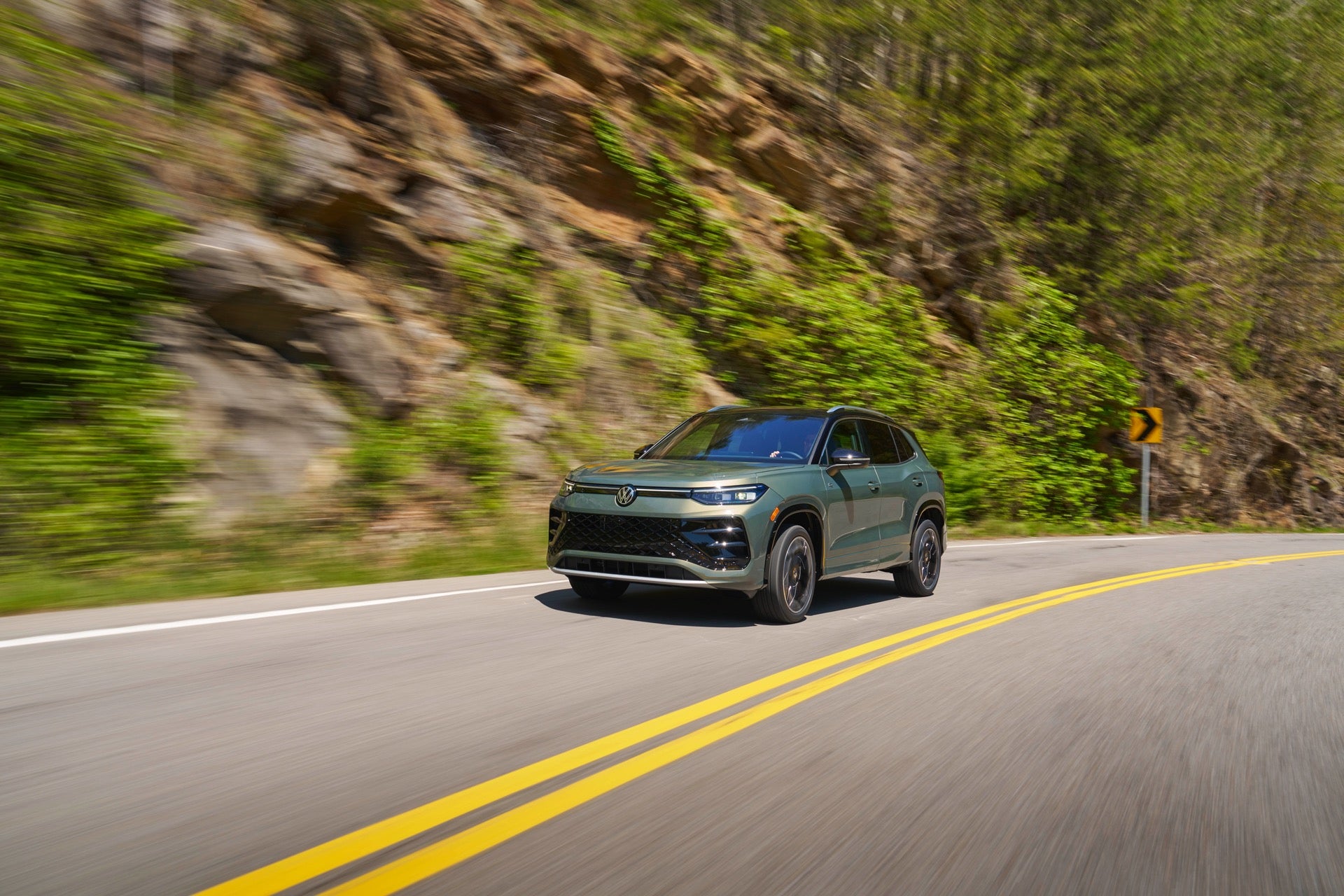
An Avocado Green 2026 Volkswagen Tiguan, Driving On The Highway Towards The Road Trip's Next Destination

​​Take a Scenic Drive in New Mexico This Year in Your Volkswagen​

We call our state of New Mexico the “Land of Enchantment.” With 121,589 square miles of diverse landscape, you can go from desert exploring to skiing and mountain climbing all within its borders. Las Cruces is just a speck on the map. Well…a huge speck in the south-central part of our state. To the north of us is a vast land that is constantly beckoning, imploring that little corner of our brain that loves to get out and drive to go take a Volkswagen on a road trip. Why not do so while exploring what New Mexico has to offer? The Trip Advisor website and app came up with a list of scenic drives you can take within hours of Las Cruces, and it suggested several interesting options, most located just north of our fair city. The Highroad to Taos Scenic Byway, to start, follows a part of New Mexico Highway 76 through the remnants of Old Spain. You get a glimpse of Spanish architecture while traversing through the mountains into Taos. Heading back, you can take the Lowroad from Taos and Santa Fe to our state’s capital. West of Santa Fe is the Jemez Mountain Trail National Scenic Byway. This takes you into the Santa Fe National Forest to the Jemez Pueblo. Along the way, there are some amazing waterfalls and hot springs that bring this mountainous loop drive to life. Keep to the north, and you’ll find another mountain loop known as the Enchanted Circle Drive. Starting in Taos, this loop encircles several alpine peaks while taking you through the history of this state and the land grant given to that area. You will pass through an old mining area that has no longer yielded its treasure. If you like a good rugged road, the Quebrados Backcountry Byway is an experience to drive. It is a 24-mile-long unpaved road that starts in Escondido off Interstate 25 to the north of us. The landscape is worth the trek along this road. This is a great experience that is closer to home. Our state is vast in size, as well as in topography. To enjoy some of these roads, you and your Volkswagen will be racking in the miles happily. We are 353 miles away from Taos, 284 miles to Santa Fe and 149 miles to the start of the Quebrados Backcountry Byway in Escondido. If you are up for an adventure, make sure your Volkswagen is ready to tackle the miles getting there and on these great roads. Before you go, make an appointment to bring your vehicle into the service center at Sisbarro Volkswagen for a thorough fluid check – including an oil change – and other inspections to make sure your Volkswagen is road trip ready. Our service center is still open during construction.

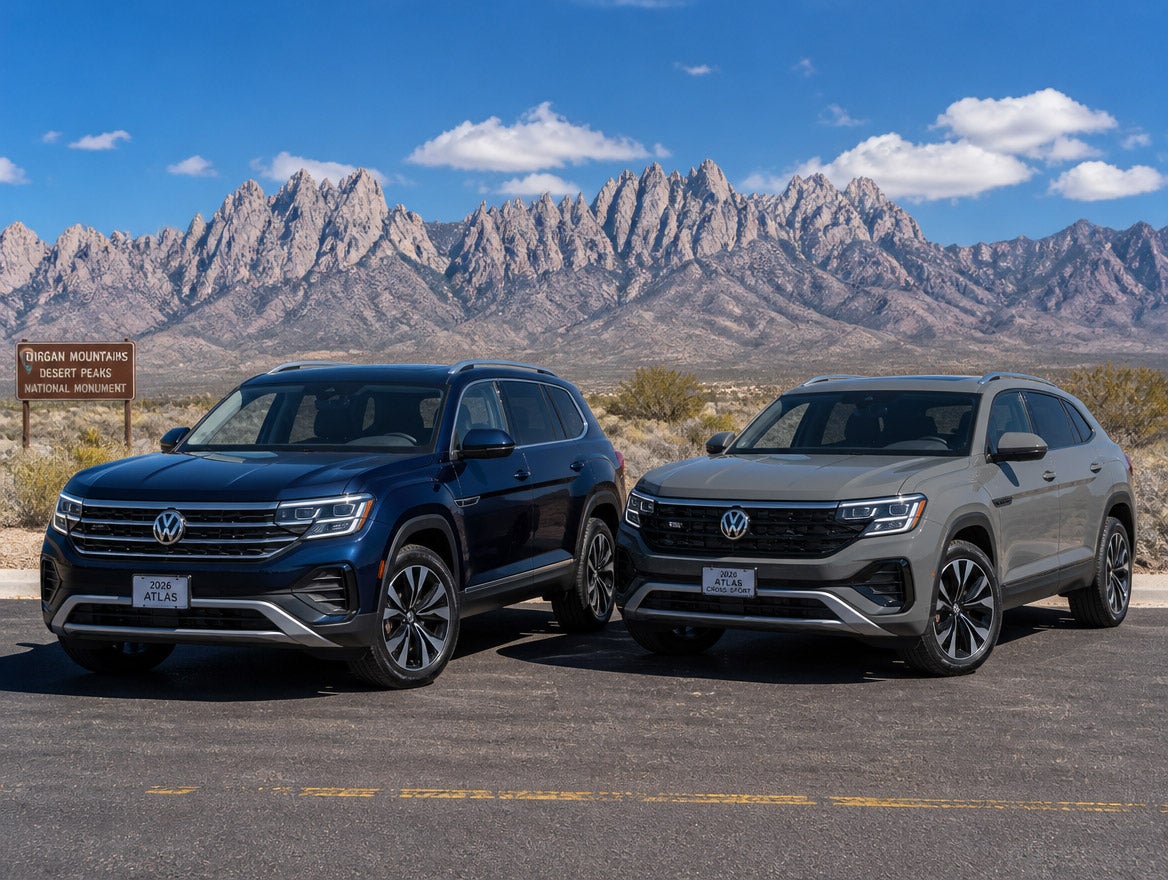
2026 Volkswagen Atlas and 2026 Volkswagen Atlas Cross Sport side by side on a southern New Mexico desert highway with the Organ Mountains behind them

Volkswagen Atlas vs. Atlas Cross Sport for Las Cruces Families

In this article What's the Real Difference Between These Two? Does the Third Row Actually Matter for Your Family? Room for the Drive to White Sands (and Everything You Pack for It) So Which Should You Pick? The short answer runs shorter than you'd expect. Seat more than five people on the regular, and the Atlas is your pick. If you don't, the Atlas Cross Sport hands you a bigger, more adult-friendly rear seat and more usable everyday cargo room, in a package that's a little easier to place in a garage or a Walmart parking lot on a busy Saturday. The nuances still matter, though, and they're not what most comparison articles cover. We'll walk through the breakdown that does. The short version The 2026 Atlas seats up to seven; the 2026 Atlas Cross Sport seats five, full stop. Both share the same 269-horsepower engine, the same 117.3-inch wheelbase, and the same maximum 5,000-lb tow rating when properly equipped. The second-row legroom of the Cross Sport (40.4 inches) actually beats the second row of the Atlas (37.6 inches), because no third-row seat eats into the packaging. Cargo behind the last row: Atlas gives you 20.6 cu ft; Cross Sport gives you 40.3 cu ft. With seats folded: Atlas 96.6 cu ft vs. Cross Sport 77.6 cu ft. Both earned the IIHS TOP SAFETY PICK for 2026 and the NHTSA five-star overall safety rating. Pick the Atlas if you need that third row now or in the foreseeable future. Pick the Cross Sport if five seats are genuinely enough and you want a more practical two-row footprint. Households in the middle (not sure whether that third row will matter at all) should keep reading. That decision is what this guide is for. the 2026 Volkswagen Atlas What's the Real Difference Between These Two? Mechanically these two are nearly identical, so the difference you'll feel every day isn't power or fuel economy but seat count and cargo layout, and the choice really comes down to how many people ride behind you and how much room you keep when everyone's aboard. The rest is body length. Under the hood, both the 2026 Atlas and 2026 Atlas Cross Sport run the same Evo4 2.0-liter turbocharged four-cylinder producing 269 horsepower and 273 lb-ft of torque, paired to the same eight-speed automatic. Volkswagen lists the wheelbase at 117.3 inches on both. That shared foundation means identical powertrain behavior, identical fuel economy ratings (the EPA puts FWD models of both at 20 city / 27 highway), and the same tow rating of up to 5,000 lbs when properly equipped on upper trims. These are genuinely the same vehicle from the firewall forward. Where they split is the body structure behind the B-pillar. The Atlas stretches to 200.7 inches overall length to accommodate that third row. The Cross Sport cuts 5.1 inches off the tail and lowers the roofline, giving it a sleeker profile that also happens to fit more comfortably in a standard garage. Spec 2026 Atlas 2026 Atlas Cross Sport Rows / max seats 3 rows / 7 (or 6 w/ captain's chairs) 2 rows / 5 Cargo behind last row 20.6 cu ft 40.3 cu ft Cargo (all rows folded) 96.6 cu ft 77.6 cu ft Row 2 legroom 37.6 in 40.4 in Overall length 200.7 in 195.6 in Engine 2.0L turbo, 269 hp / 273 lb-ft 2.0L turbo, 269 hp / 273 lb-ft Tow capacity (properly equipped) Up to 5,000 lbs Up to 5,000 lbs EPA mpg (FWD, combined) 23 mpg 23 mpg IIHS rating TOP SAFETY PICK TOP SAFETY PICK NHTSA overall 5 stars Not separately listed at time of publication The single deciding factor: do you currently seat, or expect to regularly seat, more than five people? If yes, buy the Atlas. If no, the rear-seat and cargo layout of the Cross Sport will serve you better in day-to-day use. Does the Third Row Actually Matter for Your Family? Whether the third row earns its keep depends entirely on how often you'll fill it, and the simple audit is less about spec sheets than about being straight with yourself over who rides in the back on a normal week around Las Cruces. Do that honestly and the pick makes itself. The third row of the Atlas really works. In practice, the layout looks like this: With 33.7 inches of legroom back there, it's suited for kids and smaller adults on shorter runs. The sliding second-row bench moves fore and aft 7.7 inches, so you can redistribute space between rows two and three depending on who's riding that day. When the third row is empty, though, you're left with 20.6 cubic feet of trunk space behind it. Call it compact-SUV territory. A full grocery run for a family of five fills it fast. The Cross Sport flips that equation. With the third row removed entirely, the cargo bay behind the second row opens to 40.3 cubic feet (effectively double the usable trunk space of the Atlas when everyone's on board). And because the rear passengers of the Cross Sport aren't sharing packaging with a third row, they get 40.4 inches of legroom, nearly three inches more than Atlas row-two riders. For a family of four, that's a more comfortable daily experience, and you feel it on every trip. See the 2026 Volkswagen Atlas Cross Sport on our lot, alongside the full three-row Atlas, and compare that cargo bay in person. You notice it the moment you load a stroller. Browse our current Volkswagen inventory to see what's available now. The trap to avoid is buying the Atlas "just in case." If carpool duty is a regular fact of life, or you have three kids and a dog, the third row pays for itself in flexibility immediately. If your household is solidly two adults and two kids, you're giving up everyday trunk space for a seat that may ride folded flat most of the year. Room for the Drive to White Sands (and Everything You Pack for It) Both SUVs handle the US-70 run east from Las Cruces to White Sands National Park with room to spare, so the deciding factor isn't capability at all but how much gear you're hauling and how many people are riding along for a full day at the dunes. The drive is an under-an-hour stretch of open highway where real-world comfort matters more than any spec-sheet number. On that drive, both SUVs feel planted and quiet. The 269-horsepower turbo four pulls confidently through the pass with a full load, and the EPA's 27-mpg highway rating for FWD versions of both models means the return trip to town isn't a punishment at the pump. The choice shows itself when you load up. Pack for five people for a full day at the dunes and the 40.3 cubic feet of cargo space for the Cross Sport behind the second row handles boards, coolers, shoes, and bags without a Tetris session. In the Atlas, 20.6 cubic feet behind that third row makes you choose what comes and what stays home. Fold the third row and you've got an Atlas-sized cargo hold and a five-person vehicle anyway. Per IIHS: Both the 2026 Volkswagen Atlas and 2026 Volkswagen Atlas Cross Sport earned the TOP SAFETY PICK designation, achieving Good ratings in the small overlap front, updated moderate overlap front, and updated side tests, with standard LED headlights rated Good across all trims. Families with three kids will load that third row and lean on the Atlas on the return trip when everyone's tired and space-sharing patience is short. Families of four making that same run with gear will appreciate having the trunk they need. So Which Should You Pick? Pick the Atlas if you need seats now or expect to soon, and pick the Cross Sport if five seats cover you and you'd rather have the roomier rear bench and bigger everyday trunk, because the two vehicles drive the same and the decision really is about seat count and how you use the cargo area day to day. We'll be direct from here. Get the 2026 Atlas if: You have three or more kids, or you regularly carpool additional passengers. You need the occasional ability to seat six or seven, even if it's not every day. Extended family visits or road trips with grandparents are part of your routine. A larger footprint doesn't factor into your parking situation. Get the 2026 Atlas Cross Sport if: Your household is consistently four or five people. You want the more useful daily trunk (40.3 cu ft vs. 20.6 cu ft with everyone on board). Your rear passengers are adults who'll notice the extra legroom. Garage clearance or parking-lot maneuverability matters to you. One caveat worth naming: the Atlas is the better hedge if your family is still growing, or if you're buying a vehicle you plan to keep for seven-plus years. The Cross Sport is the better vehicle right now for a household that knows its size. Talk yourself into the third row, and you may keep it folded flat nine months out of twelve. There's nothing wrong with that flexibility, but it does cost you trunk space on every single trip where you're using it. Explore financing options for either model with our team. Both are excellent, and both earned IIHS TOP SAFETY PICK status for 2026. The decision really does come down to seat count and how you use your vehicle day to day, not which one sounds more capable on paper. Come drive both back to back at Sisbarro Volkswagen. You'll know within ten minutes. By the Sisbarro Volkswagen Team | September 2026 Frequently Asked Questions Do the Atlas and Atlas Cross Sport have the same engine? Yes. Both the 2026 Volkswagen Atlas and the 2026 Volkswagen Atlas Cross Sport use the Volkswagen Evo4 2.0-liter turbocharged four-cylinder engine producing 269 horsepower and 273 lb-ft of torque, paired with an eight-speed automatic transmission. Front-wheel drive is standard on base trims; 4Motion all-wheel drive is available on both models and standard on upper trims. The EPA rates FWD versions of both at 20 city and 27 highway miles per gallon. Is the back seat of the Atlas Cross Sport actually bigger than that of the Atlas? For second-row passengers, yes. With no third row eating into the package, the rear seat of the Atlas Cross Sport offers 40.4 inches of legroom. The second row of the Atlas provides 37.6 inches. That nearly three-inch difference is noticeable for adult passengers on longer drives. If the third row of the Atlas is in use, its legroom is 33.7 inches, which works well for children but is a tighter fit for adults on anything beyond a short trip. Value Your Trade-In Toward an Atlas or Atlas Cross Sport Sisbarro Volkswagen 1115 S Valley Dr, Las Cruces, NM 88005 (575) 319-9131

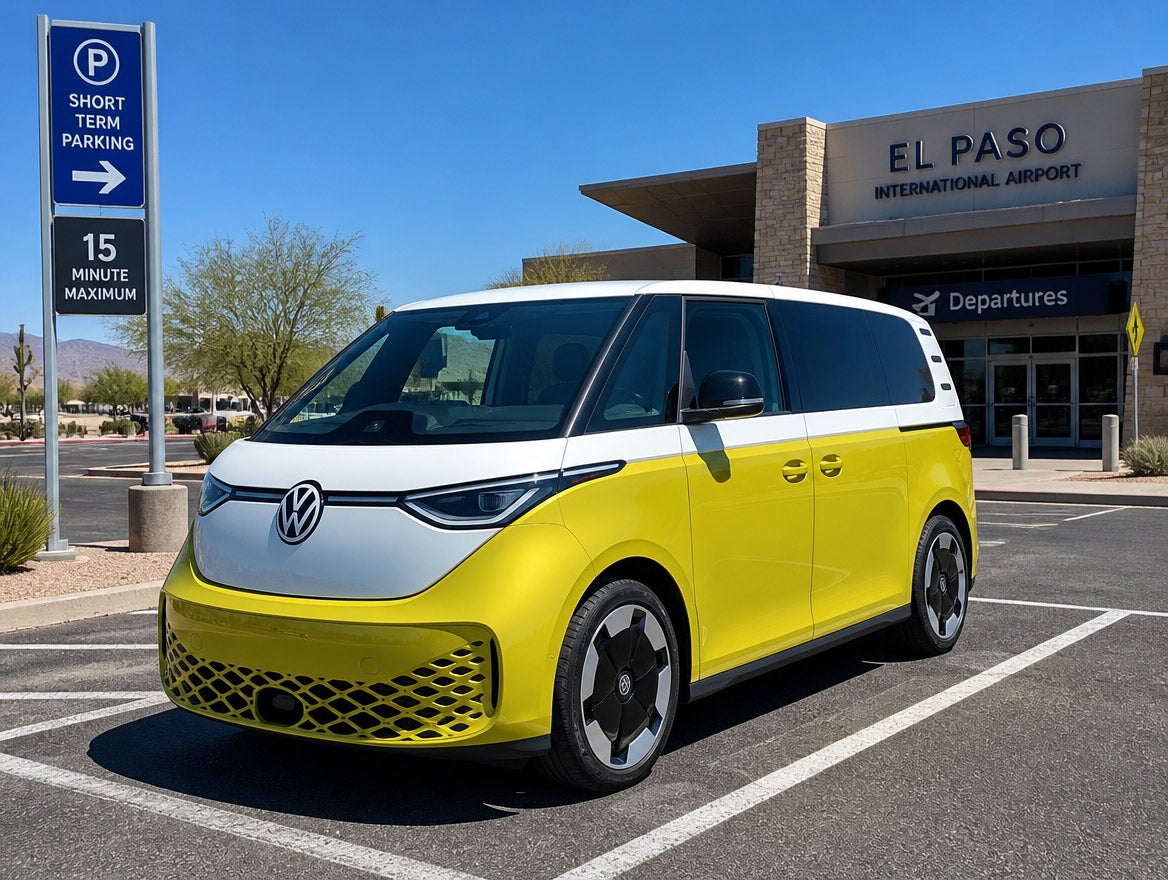
2027 Volkswagen ID. Buzz parked at El Paso International Airport short-term lot

Volkswagen ID. Buzz for El Paso International Airport Runs: Charging, Range, and Parking Questions

The good news is that the Las Cruces-to-ELP round trip sits well inside the EPA-rated range of the Volkswagen ID. Buzz, and you won't need to touch a charger at the airport for most trips. The flip side matters too. Park for more than a day or two and the airport's on-site charging setup won't save you, so you'll want to plan for that before you leave the driveway. That covers the bottom line, and here's the full play. Browse the Volkswagen ID. Buzz at Sisbarro Volkswagen Where Do You Park, and When Do You Need to Arrive? For a quick pickup you'll want the short-term lot right out front, and for a multi-day stay the on-site long-term lots take over, though those long-term lots carry no EV chargers at all, so you'll charge before you arrive rather than at the terminal. El Paso International Airport (ELP) sits at 6701 Convair Road, about 4 miles northeast of downtown El Paso, which puts it roughly 45 to 50 miles from Las Cruces via I-10. The drive itself is dead-simple. The airport runs compact by major-hub standards, but the parking picture has a few layers worth knowing before you pull in. Arrive By Best Lot ID. Buzz Fit Note Key Tip Drop-off only (under 10 min) Short-term lot, front of terminal Sliding doors make loading fast; pull forward to stay clear of traffic First 10 minutes are free 1-2 hours (pickup / waiting) Short-term lot Blink Level 2 chargers in this lot near the exit; 4 stalls available Good for a short top-up while waiting 1-3 days Long-term lots (on-site) No EV chargers in long-term; plan your charge before you arrive Two long-term lots; 5,738 total spaces on property 4+ days Long-term lots or off-site Off-airport shuttles run to the terminal; van-sized vehicles fit easily Leave with a full charge from home Running late (under 30 min to flight) Short-term or Premium Reserved Premium Reserved is covered and closest to the main entrance Don't rely on finding a spot at drop-off in peak periods The short-term lot sits directly in front of the main terminal, and the Premium Reserved area is covered. For a van the size of the ID. Buzz, those sliding rear doors are a genuine advantage in the tighter bays. You won't swing a wide door arc into the neighboring car's side panel. On a packed lot, that pays off. The Maneuvering and Fit Picture The Volkswagen ID. Buzz is a long-wheelbase three-row van, and it's bigger than it looks in photos, which means the size helps you in some airport bays and costs a little patience in others. Knowing where each shows up saves you the hassle. See current ID. Buzz availability In a tight bay, the sliding rear doors let passengers load and unload without drama. The upright greenhouse and large windows give genuinely good outward visibility, which helps when you're inching into a space with traffic behind you. Where the Buzz asks for patience is a covered or low-clearance structure. The Premium Reserved area is covered but surface-level, so clearance isn't a concern there. Multi-story garages at other spots in El Paso are where you'd want to verify height limits before committing. Explore financing options for the Volkswagen ID. Buzz For the I-10 run from Las Cruces, the van is genuinely comfortable. Three rows, climate control, quiet cabin. The person you're picking up from baggage claim will appreciate it more than they would a sedan. Insider note: The boxy shape of the ID. Buzz is aerodynamically honest. Volkswagen rates the EPA range at 234 miles for the rear-wheel-drive model and 231 miles for the 4Motion all-wheel-drive, and those figures hold up well at I-10 highway speeds because Volkswagen tuned the platform for real-world family driving, not wind-tunnel numbers alone. At about 95-100 miles total, a Las Cruces-to-ELP round trip leaves you with substantial range margin, so you're not sweating the return leg. Etiquette note: At ELP's short-term Blink stalls, the 4 charging terminals are shared among all EV drivers. If you're just picking someone up and don't need a charge, leave the stalls free for someone who does. It's a small lot and a short list of chargers. Before You Go: The Print-and-Go Checklist A good airport run in the ID. Buzz isn't complicated, and you won't need a charger at ELP for a short stay, but a little prep before you roll out of Las Cruces is what keeps the day seamless. Charge at home, confirm your lot, and mind the I-10 traffic. The rest takes care of itself. [ ] Charge to at least 80% at home the night before (the round trip runs around 95-100 miles; 80% gives you plenty of buffer) [ ] If you own a 2027 ID. Buzz, verify your NACS adapter is in the vehicle (Volkswagen confirmed standard NACS ports on 2027 models, opening Tesla Supercharger access along the I-10 corridor) [ ] Check the ELP parking map at elpasointernationalairport.com before you leave so you know which lot you're targeting [ ] For stays of 3 days or more, plan to charge at home or a nearby DC fast charger before your return drive, not at the airport (ELP's on-site stalls are Level 2 Blink units at 4 terminals in the short-term lot; they add range slowly, not rapidly) [ ] Use the three-zone Climatronic climate control to pre-condition the cabin while still plugged in at home on hot September days; that protects your range for the highway run [ ] If you're dropping someone off, account for departure-day morning traffic on I-10 through Anthony and the outskirts of El Paso [ ] For multi-day parking, confirm long-term lot availability on the ELP website ahead of peak travel weekends Schedule a pre-trip service check at Sisbarro Volkswagen The Volkswagen ID. Buzz handles this corridor naturally. Las Cruces to ELP is exactly the trip you'll want this vehicle for. A manageable distance, a family to move, and cargo to load without wrestling a hatch. Point the ID. Buzz at ELP and go enjoy the drive. By the Sisbarro Volkswagen Team | September 2026 Schedule a Pre-Trip Service Check Sisbarro Volkswagen 1115 S Valley Dr, Las Cruces, NM 88005 (575) 319-9131