
Blog / Volkswagen Taos

Blog

All Volkswagen Taos Las Cruces Volkswagen Dealer Volkswagen New Cars News New Inventory Technology Las Cruces Volkswagen Service Informative Awards and Recognition Features Volkswagen Golf GTI Las Cruces Used Cars Golf R Finance Safety Specs Volkswagen Jetta Events Pre-Owned Inventory Volkswagen Atlas Volkswagen Tiguan Comparison Sisbarro Autoworld Volkswagen Service Volkswagen Jetta GLI Review Sedan Towing Volkswagen Atlas CrossSport Volkswagen ID.4 Volkswagen ID.Buzz Electric Vehicle Service SUV Volkswagen Jetta Sport
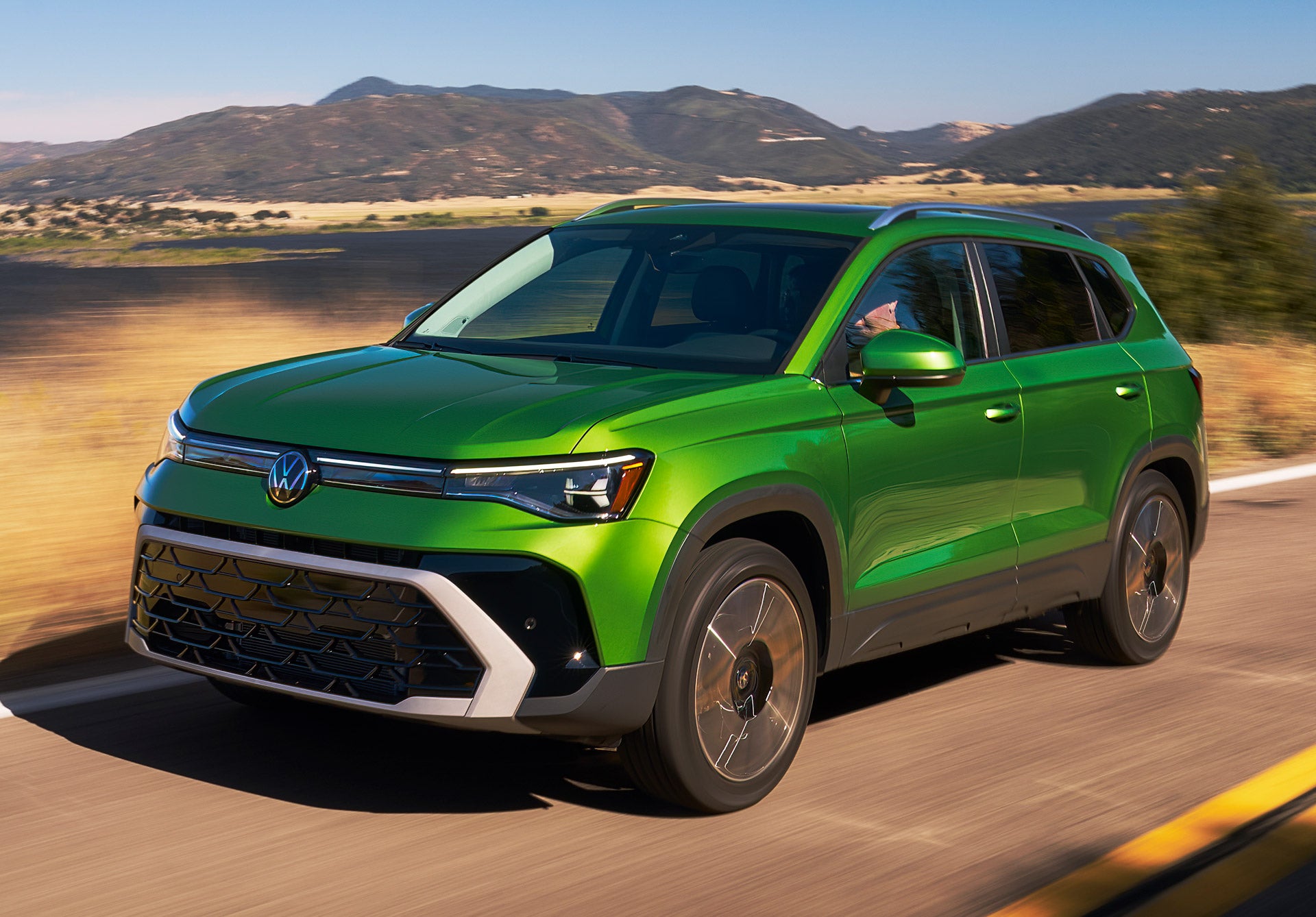
Volkswagen Taos running shot

Volkswagen Taos vs. Jetta for Las Cruces Student Drivers

In this article What's the Real Difference Between These Two? Does Fuel Economy Actually Matter Here, and Which One Wins? Parking, Parking, Parking Do You Actually Need AWD in Las Cruces? So Which One Should You Pick? The honest answer fits in one sentence. If you're parking near NMSU and running the I-10 corridor every week, the 2026 Volkswagen Jetta will almost certainly cost less to fuel and feel more natural in the city. The 2026 Volkswagen Taos earns its higher entry point only when you genuinely need hatch-open cargo flexibility or have a real lifestyle reason to want an SUV silhouette. The short version The 2026 Jetta gets an EPA-estimated 40 mpg highway; the 2026 Taos FWD tops out at 36 mpg highway. That gap adds up across a semester on I-10. Cargo is the strongest card for the Taos: up to 60.2 cubic feet of maximum load space vs. the fixed 14.1-cubic-foot trunk of the Jetta. Neither vehicle needs AWD for typical Las Cruces driving. FWD handles I-10 and I-25 in our climate without compromise. Both come standard with the Volkswagen full IQ.Drive driver-assistance suite, including stop-and-go adaptive cruise and automatic emergency braking. Pick the Jetta for pure commuter efficiency. Pick the Taos if hauling gear or SUV flexibility genuinely changes your daily routine. What's the Real Difference Between These Two? Both cars share a platform, the same 184 lb-ft of torque, and a nearly identical feature checklist, so the difference that actually matters is body shape, and shape carries real-world consequences for how you park, what you haul, and what you spend at the pump. The Jetta is a sedan built to sip fuel, move through traffic, and fit neatly into campus parking. The Taos is a compact SUV built to swallow duffel bags, sit higher off the ground, and offer an optional all-wheel-drive system that Las Cruces conditions rarely call for. Spec 2026 Volkswagen Jetta 2026 Volkswagen Taos FWD Engine 1.5L turbo, 158 hp 1.5L turbo, 174 hp Torque 184 lb-ft 184 lb-ft EPA City / Hwy / Combined 29 / 40 / 34 mpg 28 / 36 / 31 mpg Cargo (behind rear seats) 14.1 cu ft (sealed trunk) 24.9 cu ft Cargo (max, seats folded) 14.1 cu ft 60.2 cu ft Ground clearance N/A (sedan) 6.5 in FWD / 7.6 in AWD Drivetrain options FWD only FWD or 4MOTION AWD Standard driver assists Full IQ.Drive suite Full IQ.Drive suite Fuel tank 13.2 gal 14.5 gal Sources: EPA (fueleconomy.gov); Volkswagen official media (media.vw.com); Volkswagen model specifications. Both vehicles include wireless Apple CarPlay and Android Auto, an 8-inch touchscreen, Volkswagen Digital Cockpit, and the complete IQ.Drive suite across every trim. The suite covers forward collision warning with pedestrian detection, automatic emergency braking, blind-spot monitoring, rear cross-traffic alert, stop-and-go adaptive cruise control, and lane-centering. Adaptive cruise being standard on an entry-level Volkswagen SUV is genuinely uncommon in this segment, and it's a feature that earns its keep on long desert highway runs. The single deciding factor: if your cargo is a laptop bag and a week's worth of groceries, the trunk of the Jetta is more than sufficient and its highway fuel economy pays real dividends across a school year. If your cargo includes bike tires, camping gear, or move-in-day furniture, the fold-flat hatch of the Taos changes the calculation entirely. Does Fuel Economy Actually Matter Here, and Which One Wins? Fuel economy matters on the I-10 corridor more than a single fill-up ever reveals, and on that measure the Jetta wins clearly, though the margin only stacks up over a full semester rather than on any one drive between Las Cruces and El Paso. The EPA rates the 2026 Volkswagen Jetta at 40 mpg highway and 34 mpg combined. The EPA rates the 2026 Taos FWD at 36 mpg highway and 31 mpg combined. Three mpg combined isn't dramatic on any single trip. Across an entire semester of commuting between Las Cruces and El Paso, or logging miles on I-25 toward Albuquerque, you'll notice it at the pump. We'll name the tradeoff plainly. The trunk of the Jetta is sealed and fixed at 14.1 cubic feet, and you can't fold the rear seats flat. It handles luggage, grocery runs, and a reasonable amount of student life without complaint. It won't take a flat-pack bookshelf, a set of mountain bike wheels, or a cooler and two tent bags at the same time. The Taos opens up to 60.2 cubic feet with the rear seats folded and a liftgate that swings wide for awkward shapes. Call it four times the cargo volume. No small difference. Las Cruces sits at the crossroads of I-10 and I-25. Highway miles add up faster here than a new commuter expects. If you have an El Paso internship, a weekend habit of hitting White Sands, or family anywhere north on I-25, the 40 mpg highway figure for the Jetta is working for you constantly. And both engines run on regular 87-octane, per published specs from Volkswagen. No premium fuel premium here. See available 2026 Jetta trims on our lot and compare entry points with the Taos before you decide. Explore Financing Options Parking, Parking, Parking Parking is the axis most comparisons skip, and for an NMSU student or anyone threading the streets around downtown Las Cruces it matters more than raw dimensions suggest, since the two cars are identical in length and separate instead on how they feel to place. The number worth knowing is that both vehicles measure 175.8 inches long. Exactly the same length. The footprint argument doesn't split them. What splits them is body style and the feel of placing the car. The lower sedan profile of the Jetta is easier to navigate in covered structures and closer quarters, and the fixed trunk gives you a clear, intuitive sense of where the rear corners are. Newer drivers tend to build confidence in sedans faster for exactly this reason. The higher seating position of the Taos offers a better sight line over surrounding traffic, which some people find reassuring, especially on I-10 at speed. Neither is hard to park. But if you're a driver who came straight from a Texas or New Mexico high school parking lot and this is your first solo vehicle, the Jetta will feel smaller and easier to place sooner. Do You Actually Need AWD in Las Cruces? For everyday driving around Las Cruces you almost certainly don't need all-wheel drive, and setting aside one real exception, the case against it comes down to simple geography and mild weather rather than any knock on the drivetrain you'd notice here. Las Cruces sits at roughly 3,900 feet in the Chihuahuan Desert, where winters are mild and snow on city streets is rare. Both I-10 and I-25 stay passable through most weather this market sees in a typical year. Front-wheel drive handles the conditions this market actually throws at you without issue. AWD also carries a fuel economy penalty inside the Taos lineup. The EPA rates the 2026 Taos 4MOTION at 25 city / 33 highway / 28 combined, compared to 28/36/31 for the FWD version. Three mpg combined separates the two versions of the same SUV. If you're buying the Taos for Las Cruces daily use, the FWD is both the practical and economical call. The Jetta has no AWD option, which is no disadvantage here. AWD does earn its keep in one case. If you often drive unpaved roads toward the Organ Mountains or make frequent trips to high-elevation mountain routes where conditions are genuinely different, it's worth the fuel tradeoff. For campus-to-apartment-to-I-10 driving, it doesn't. So Which One Should You Pick? The right pick comes down to how you live with the car day to day, and both answers hold up, so the split is clean and easy to make once you're straight about your own cargo, your parking, and how many highway miles you log each week. Both are legitimate calls, and neither leaves you shortchanged on technology or safety gear. Pick the Jetta from our current inventory if you drive meaningful highway mileage, park in tight spots often, and your cargo is people and everyday bags. The EPA's 40 mpg highway figure is real and verifiable, the sedan is simple to place on the road, and every trim comes fully loaded with technology and safety equipment. As a package, the Jetta fits the Las Cruces student commuter profile. Hard to beat for that job. Pick the Taos if you're hauling gear week to week, if the higher seating position clearly matters to you, or if you've always wanted an SUV and you know you'll fill that cargo space. Choose FWD unless you have a specific reason for 4MOTION AWD, and you'll keep fuel economy in a reasonable range for this climate. We'll put it plainly. The Jetta is harder to outgrow over four years of school. The Taos is more rewarding when your life actually fills it up, and genuinely frustrating when it doesn't. Frequently Asked Questions { "@context": "https://schema.org", "@type": "FAQPage", "mainEntity": [ { "@type": "Question", "name": "Is the Volkswagen Jetta or Taos better for an NMSU student?", "acceptedAnswer": { "@type": "Answer", "text": "For most NMSU students, the Jetta is the more practical fit. The EPA rates the 2026 Jetta at 34 mpg combined and 40 mpg highway, which pays off measurably on I-10 commutes between Las Cruces and El Paso. Its 14.1-cubic-foot trunk handles everyday student cargo without issue. The Taos makes more sense if you regularly transport larger items: it offers up to 60.2 cubic feet of cargo space with the rear seats folded and a hatch that opens wide for bulky loads. Both vehicles carry the full Volkswagen IQ.Drive driver-assistance suite as standard equipment across every trim." } }, { "@type": "Question", "name": "Does the Volkswagen Taos need AWD in Las Cruces, NM?", "acceptedAnswer": { "@type": "Answer", "text": "For typical Las Cruces and southern New Mexico driving, no. The Chihuahuan Desert climate at roughly 3,900 feet means mild winters with little to no snow accumulation on city roads or on I-10 and I-25. Front-wheel drive handles the conditions most drivers encounter here. The 2026 Taos FWD also earns better EPA fuel economy (28 city / 36 highway / 31 combined) than the 4MOTION AWD version (25 city / 33 highway / 28 combined), so FWD is the more economical and practical call for this market. If you regularly drive rougher terrain near the Organ Mountains, AWD is worth considering. For daily Las Cruces and El Paso corridor driving, it's rarely necessary." } }, { "@type": "Question", "name": "Which vehicle holds its value better, the Jetta or Taos?", "acceptedAnswer": { "@type": "Answer", "text": "Both Volkswagen models maintain strong residual value in the compact sedan and compact SUV segments respectively. The Taos, as the newer nameplate in the company’s U.S. lineup, has built strong market demand. The long history of the Jetta and proven reliability support stable resale value. Your actual resale outcome will depend more on mileage, condition, and market timing than on which model you choose. We'd recommend testing both at our lot before deciding." } } ] } Is the Volkswagen Jetta or Taos better for an NMSU student? For most NMSU students, the Jetta is the more practical fit. The EPA rates the 2026 Jetta at 34 mpg combined and 40 mpg highway, which pays off measurably on I-10 commutes between Las Cruces and El Paso. Its 14.1-cubic-foot trunk handles everyday student cargo without issue. The Taos makes more sense if you regularly transport larger items: it offers up to 60.2 cubic feet of cargo space with the rear seats folded and a hatch that opens wide for bulky loads. Both vehicles carry the full Volkswagen IQ.Drive driver-assistance suite as standard equipment across every trim. Does the Volkswagen Taos need AWD in Las Cruces, NM? For typical Las Cruces and southern New Mexico driving, no. The Chihuahuan Desert climate at roughly 3,900 feet means mild winters with little to no snow accumulation on city roads or on I-10 and I-25. Front-wheel drive handles the conditions most drivers encounter here. The 2026 Taos FWD also earns better EPA fuel economy (28 city / 36 highway / 31 combined) than the 4MOTION AWD version (25 city / 33 highway / 28 combined), so FWD is the more economical and practical call for this market. If you regularly drive rougher terrain near the Organ Mountains, AWD is worth considering. For daily Las Cruces and El Paso corridor driving, it's rarely necessary. Which vehicle holds its value better, the Jetta or Taos? Both Volkswagen models maintain strong residual value in the compact sedan and compact SUV segments respectively. The Taos, as the newer nameplate in the U.S Volkswagen lineup, has built strong market demand. The long history of the Jetta and proven reliability support stable resale value. Your actual resale outcome will depend more on mileage, condition, and market timing than on which model you choose. We'd recommend testing both at our lot before deciding. Value Your Trade-In Sisbarro Volkswagen 1115 S Valley Dr, Las Cruces, NM 88005 (575) 319-9131
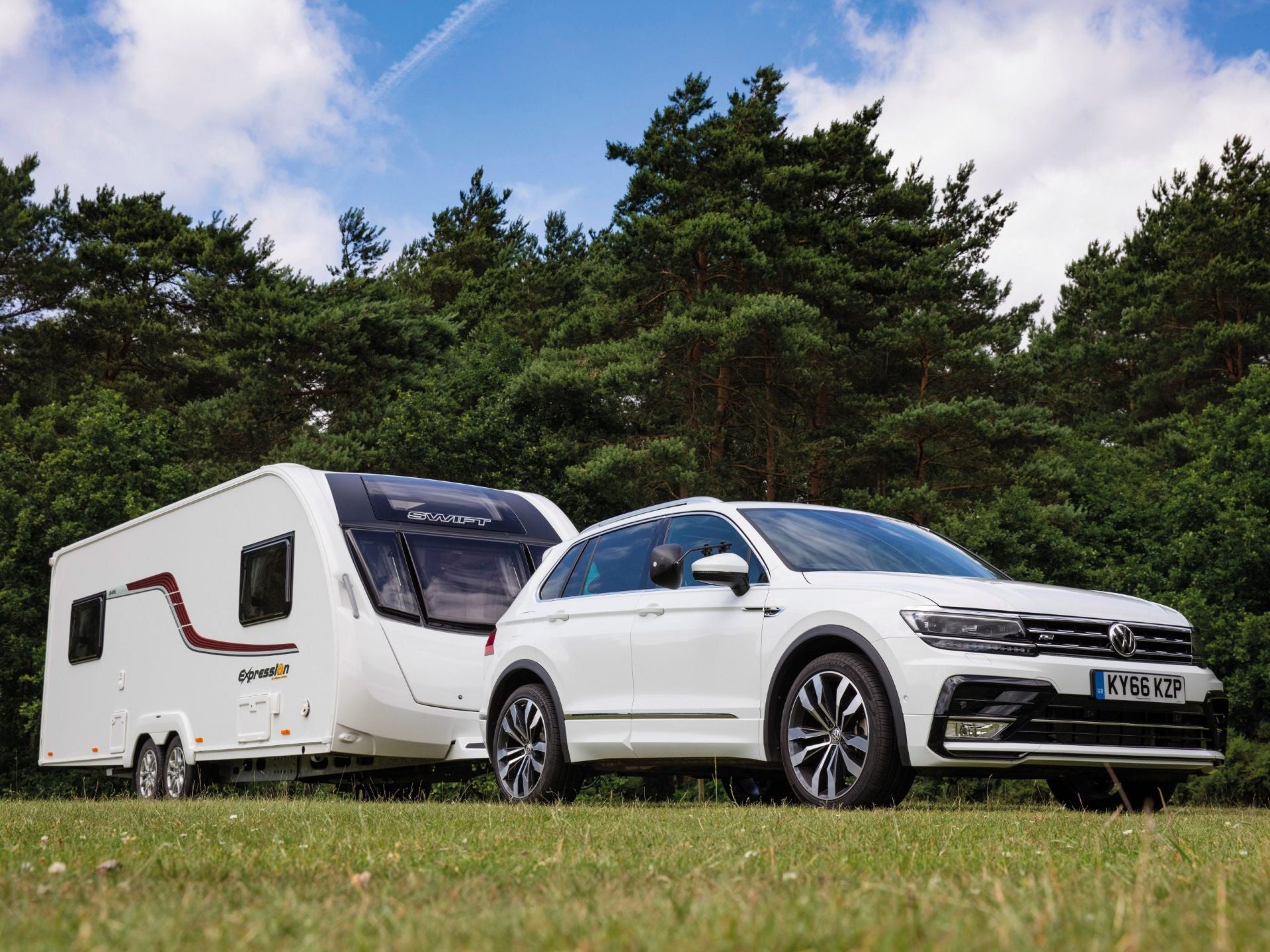
The Powerful Volkswagen Tiguan Towing A Long, White Trailer With Ease

How Much Can a Volkswagen Tow?

Sometimes, the trunk or cargo hold isn’t enough, and attaching a roof rack isn’t sufficient either because what you want to take is too large to pack in or on your vehicle. Sometimes, what you want to take is even a temporary home or a motorized toy for trail, snow, or water. Big trailers need a towing-focused vehicle, but what if you're towing something light? Can you do it with a regular Volkswagen? Possibly. Sisbarro Volkswagen discusses what you can and cannot tow with your Volkswagen. Cars used to be built differently, mostly with body-on-frame construction, where the chassis handled all loads, and the body was simply bolted on. This allowed a single model line to offer a range of body styles, including sedans, coupes, convertibles, and station wagons. Volkswagen, for example, built multiple models, including the Beetle, Bus, Fastback, Kammback, and Karman Ghia, on mostly the same chassis. Towing ability was common among these vehicles because load impacts were absorbed by the chassis alone. Rear-wheel drive also helped by limiting trailer loads to the frame between the rear axle and the hitch. Even the Beetle could tow up to 1,500 pounds, though steep inclines challenged its engine. Today, most cars and crossovers are built using unibody construction, in which the body itself serves as the frame.  There are several advantages of this, including weight reduction, which improves both performance and efficiency, and better handling because the body has less flex, enabling a more comfortable and quieter ride. Front wheel drive architecture in which the engine is turned sideways with the transmission beside it (instead of behind) and the crankshaft essentially lines up with the front axles.  Almost every all-wheel-drive vehicle uses a front-wheel-drive architecture, including all modern Volkswagen models. One drawback of unibody construction is that it limits towing ability. This is because the towing pull stress is now distributed across the entire vehicle body, and the front-wheel-drive architecture exacerbates the problem. This doesn’t mean that no unibody vehicles can tow, but most will tow less than similar-sized body-on-frame vehicles, which are now mostly pickup trucks and SUVs on pickup-truck chassis. This may lead you to wonder if any VW vehicles can tow at all.  The answer is some can, and some cannot. Cannot Tow In general, towing increases with the vehicle size. Thus, it is the smaller models that are not recommended for towing of any kind.  These include: Golf GTI and Golf R Jetta and Jetta GLI Taos Can Tow The Tiguan, when fitted with a Class 1 hitch, can tow up to 1,500 pounds with FWD and 1,800 pounds with AWD.  This may be enough for a compact camping trailer with room for one double bed and a small kitchen.  It may also be enough for a trailer containing a single mid-size ATV or two dirt bikes. With a properly installed hitch, the Atlas and Atlas CrossSport are both rated to tow up to 5,000 pounds regardless of whether they are FWD or AWD.  This is enough for most pop-up campers and light travel trailers from 15 to 20 feet that sleep four and have amenities like a bathroom and even a single slide-out to expand the living space.  Some small boats and trailers may also come under this figure. Can Tow But… Electric motors' high torque aids towing; the ID.4 has a max capacity of 2,200–2,700 pounds, depending on the model, and the ID.Buzz can tow 3,500 pounds with AWD and 2,700 with FWD. Range reduction limits practicality for long-distance towing. Towing reduces a vehicle’s efficiency—but it’s more critical for EVs because they have limited stored energy. The larger 82kWh battery of the ID.4 holds about 2.4 gallons of gas, and the electric motor’s efficiency enables up to 291 miles on a full charge, but trailers can reduce this range. Know Your GCWR Knowing the trailer weight isn't enough for safe towing; you must also consider your model’s Gross Combined Weight Rating (GCWR), the maximum total combined weight of your vehicle and trailer, including passengers, cargo, and fuel. Exceeding GCWR can cause brake failure and damage. For example, the Atlas's GCWR is about 9,000–10,000 pounds, depending on the model. If fully loaded with passengers, cargo, and additional trailer cargo, you may go over the limit. It's best to weigh your vehicle and trailer at a public scale and add passenger and cargo weight before towing. If you have something you want to tow with your Volkswagen, ask the experts at the Sisbarro Volkswagen Service Department about the best steps to take.

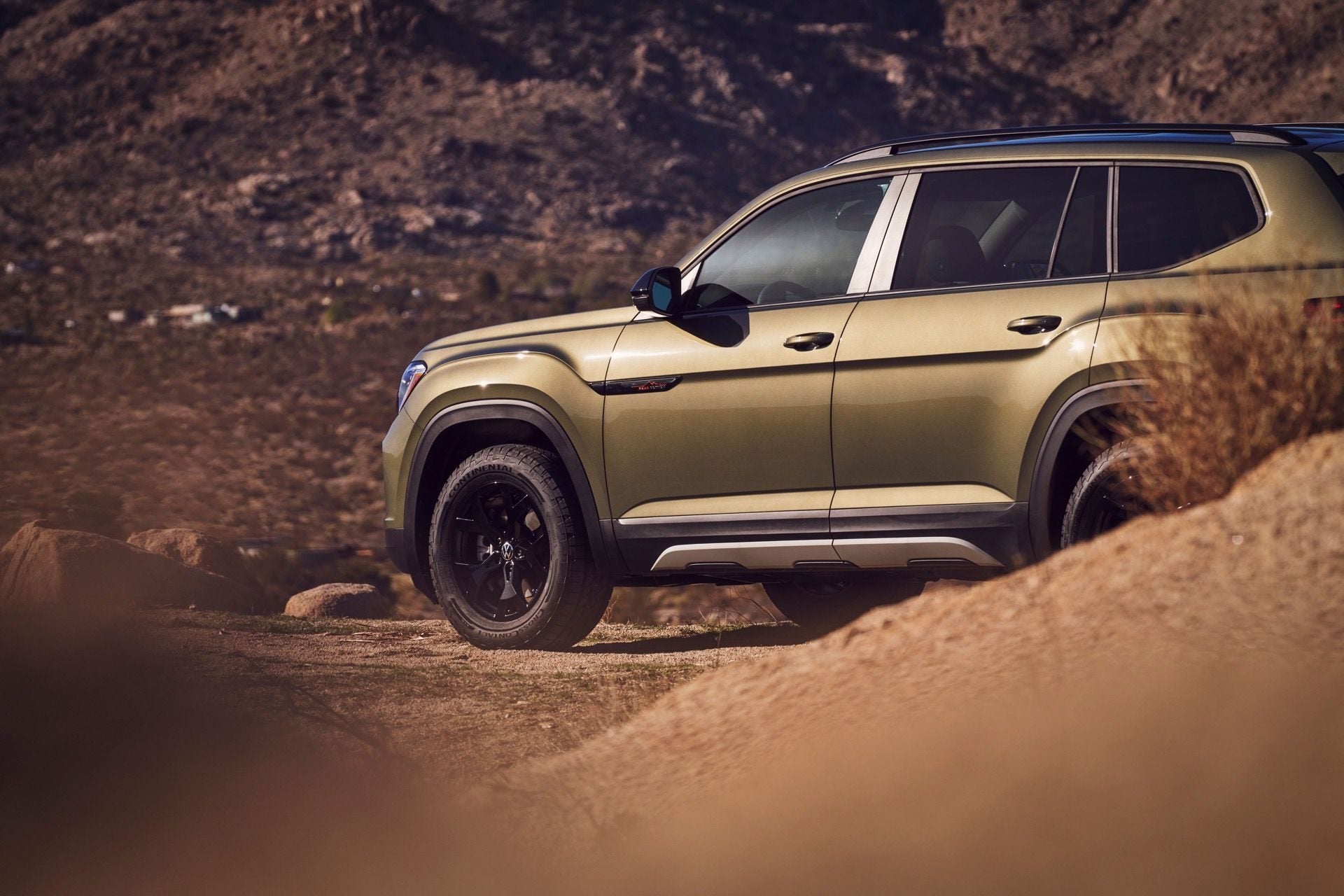
The Golden Volkswagen Atlas Driving Through Hot, Rocky Area

​​The Best Features on Your Volkswagen to Keep You Cool This Summer​

Summer in New Mexico and West Texas is very enchanting and very enjoyable. However, the heat can be a challenge for everyone. It could mean less comfort for everyone.  When it comes to keeping you comfortable, Volkswagen offers a lineup of family-friendly SUVs designed to beat the heat. Inside each of our models in the lineup are features designed to keep you cool, comfortable, and refreshed upon arrival at your destination. Let’s start with front ventilated seats. When you turn them on from the climate control system, they simply cool the seats through vents inside them. You can turn on the fan to maximize seat cooling. They can be found on higher-trim versions of the 2026 Atlas, Atlas Cross Sport, Tiguan, Taos, ID.4, Jetta, Jetta GLI, Golf GTI, and Golf R. Other systems offer precise temperature control, along with a range of fan speeds. Vents are positioned where you really want them to be – especially in three-row vehicles, such as the 2026 Atlas and 2025 ID.Buzz. For two-row SUVs, sedans, and hatchbacks, you may find a rear vent that keeps you comfortable. Upper models of the 2026 Atlas and Atlas Cross Sport may feature a three-zone climate control system with a separate rear climate setting. On the 2026 Tiguan SEL R-Line Turbo, there is a separate control panel for the rear passengers to control their own temperature. Another feature that may come in handy is a 115-volt outlet located in either the front or rear seating area. When it is enabled, you can run your power cooler to keep drinks and snacks cool. This is available on some 2026 Atlas and Atlas Cross Sport trim levels. When it is really hot outside, you dread getting out to unlock the doors, start up the vehicle, and turn on the climate control. The solution is right in your hand with the myVW app. You have several functions available at your fingertips, such as remote start, remote lock and unlock, and cabin pre-cooling. You can even find your vehicle through the last parked location. Your Volkswagen should be compatible with myVW and myVW+ services from your smartphone. When the heat is on, get ready to stay cool in a Volkswagen. Contact us at Sisbarro Volkswagen so we can show you all the great features that make your summer on the road a relaxing one.

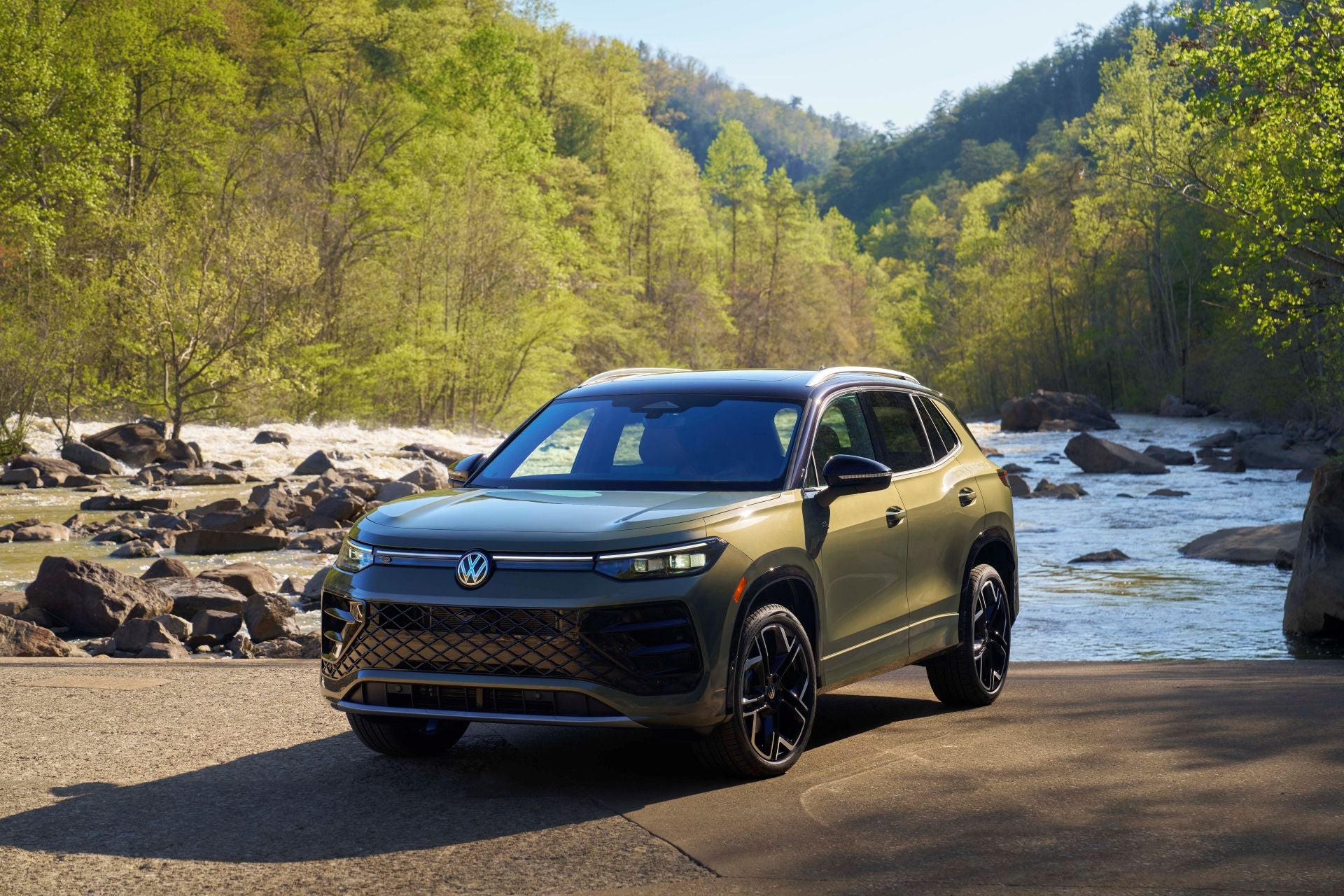
The Magnificent 2026 Volkswagen Tiguan In Front Of A Glorious River With Rocks Sprinkled Around.

​​The Differences Between The Taos and Tiguan​

Volkswagen offers some of the best SUVs that fit nearly any budget. Two of those great options just happen to be the Taos and Tiguan. Both vehicles have recently received all-new updates, and while the Tiguan is the older sibling and the best-selling Volkswagen model, the Taos is becoming very popular with buyers who want a crossover that still feels nimble like a car. 2026 Pricing When it comes to price, both vehicles aren’t far apart. The 2026 Volkswagen Taos starts from $27,975, and the 2026 Tiguan has a base price of $32,280. Both come standard with front-wheel drive or 4Motion all-wheel drive available on all trim levels. Let’s take a deeper look at both models to see which one best fits your budget and lifestyle needs. The VW Taos The Taos is available in four trim levels: S, SE, SE Black, and SEL. All trims feature a 1.5-liter turbocharged and intercooled four-cylinder engine that delivers 174 horsepower and 184 lb-ft of torque, which is perfectly paired with an 8-speed automatic gearbox that helps the crossover get an EPA estimated 28 mpg in the city and 36 mpg on the highway for FWD models and just three mpg less in each driving cycle for AWD models. Cargo Space When equipped with FWD, owners will have 24.9 cubic feet of cargo space behind the rear seats, which increases to 65.9 cu.ft, when those seats are folded. Models with 4Motion AWD will have 24.9 cu.ft. of space behind the rear seats and 60.2 when they’re folded. How Much Can the Taos Tow? If you are looking for a vehicle that can tow, the Taos can handle up to 1,500 lbs. So, if you have a motorcycle, a jet ski, some smaller boats, and even rental trailers to move you between homes or apartments. This way, you can save money on moving vans and services every few years. The Taos Offers Great Interior Tech When it comes to interior technology, the Taos does not disappoint. Both it and the Tiguan offer similar equipment. As standard, you will have two 45-watt fast-charging USB-C ports, adaptive cruise control, an 8-inch touchscreen infotainment system, an 8-inch Digital Cockpit gauge cluster, and wireless Apple CarPlay and Android Auto. An extra 45-watt USB-C charging port and wireless charging pad are all standard on SE and higher trims, while a 10.25-inch Digital Cockpit Pro gauge cluster is standard on SEL models. The Tiguan Offers a Bit More The 2026 Tiguan is also available in four trim levels: S, SE, SE R-Line Black, and the brand-new SEL R-Line Turbo. For the extra money spent, the Tiguan comes with a 2.0-liter turbo engine that produces 201 horsepower and 207 lb-ft of torque with FWD, or 221 lb-ft of torque with 4Motion AWD. The special SEL R-Line Turbo ups the ante even more with a total of 268 horsepower and 258 lb-ft of torque, for an experience compared to the GTI hot hatch, but in SUV form. Fuel Economy in the Tiguan While the Taos offers better EPA fuel mileage, the Tiguan is no slouch with an estimated 26 mpg city and 34 mpg highway with FWD and 22 mpg in city driving and 30 mpg on the highway with AWD. Behind the rear seats, you’ll find 33.8 cubic feet of space that expands to 69.8 cubic feet with the rear seats folded. This gives owners some of the most interior volume of any SUV in the class. How Much Can the Tiguan Tow? If you plan to use your Tiguan for any towing duties, front-wheel-drive models have the same 1,500 lbs of towing capacity as the Taos, while 4Motion models can tow up to 1,800 lbs when properly equipped, of course. The Tiguan Offers Great Tech Features The extra price of the Tiguan really starts to make sense when you see the level of standard features you will get. The 10.25-inch Digital Cockpit Pro digital instrument cluster, available only on the Taos SEL, is standard on all Tiguan models, as is a larger 12.9-inch touchscreen infotainment system. Even more so, the top SEL R-Line Turbo comes standard with a 15-inch infotainment system. Every trim level features Speech with an A.I. voice assistant, wireless Apple CarPlay and Android Auto, four 45-watt fast-charging USB-C ports with two more optional, and a 15-watt wireless charging pad. SEL R-Line Black and R-Line Turbo models also get a Head-Up Display as standard. All Volkswagen Vehicles Feature Great Standard Safety Both vehicles also offer excellent standard safety equipment thanks to IQ.Drive. The Taos and Tiguan both come standard with Automatic Post-Collision Braking System, Travel Assist, Front Assist Forward Collision Warning, and Automatic Emergency Braking with Pedestrian Monitoring, Active Blind Spot Monitor, Rear Traffic Alert, Adaptive Cruise Control with Stop and Go, Lane Assist Lane Keeping System, and Emergency Assist. Let Sisbarro Volkswagen Help You Find the Right Model To experience both models in all their glory and test drive them back-to-back, the wonderful sales professionals at Sisbarro Volkswagen would be happy to assist you in making an informed decision. Your salesperson will also work hard to make sure you get the best possible price on your new vehicle and to offer you a great price on your trade-in vehicle, if you have one. Why Choose Sisbarro Volkswagen Take a trip to Sisbarro Volkswagen to get acquainted with all the 2026 Volkswagen models. At Sisbarro Volkswagen, we are proud to offer the best prices and services on both new and used Volkswagen models. Our sales team will work to find you the car you want, and our finance department will help you get the best possible price. When it’s time to service your car, our service department will work hard to ensure your car or SUV receives the best care imaginable. We thank you for trusting us, and we look forward to serving you soon.

Contact Us

Fill out this form below and we'll contact you shortly
*Required Fields