

Blog / Service

Blog

All Service Las Cruces Volkswagen Dealer Volkswagen New Cars News New Inventory Informative Las Cruces Volkswagen Service Technology Awards and Recognition Features Golf GTI Volkswagen Volkswagen Atlas Las Cruces Used Cars Golf R Safety Specs Volkswagen Jetta Volkswagen Taos Volkswagen Tiguan Comparison Finance Events Pre-Owned Inventory Volkswagen Jetta GLI Sisbarro Autoworld Volkswagen Service Volkswagen Atlas CrossSport Volkswagen ID.4 Volkswagen ID.Buzz Electric Vehicle Review Sedan Towing SUV Volkswagen Jetta Sport
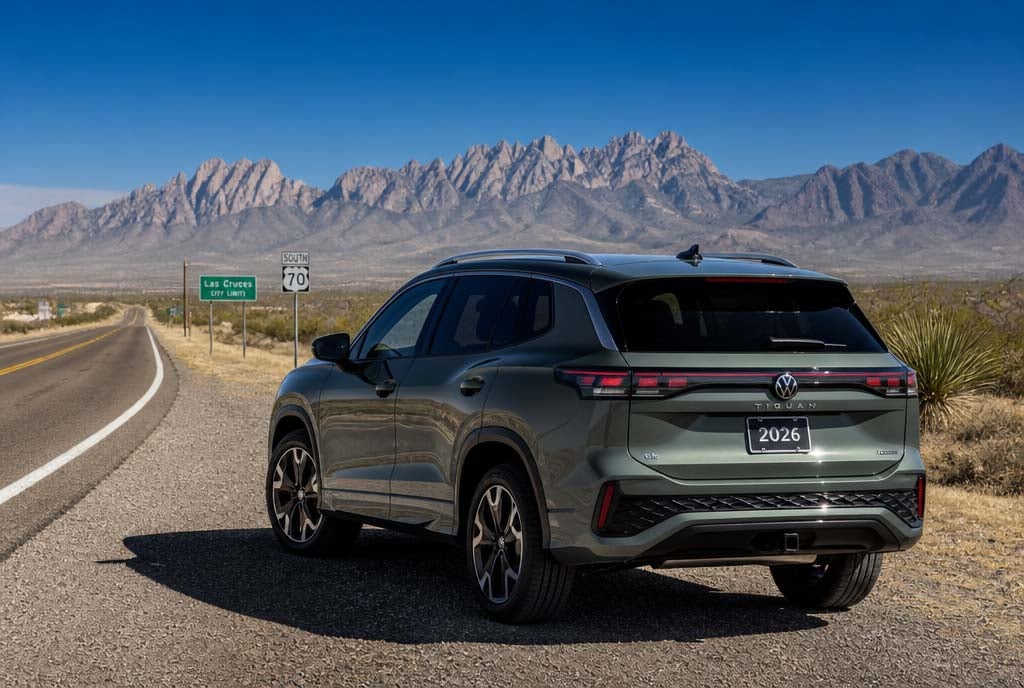
2026 Volkswagen Tiguan on a desert highway near Las Cruces NM with the Organ Mountains in the background

Why Desert Driving Requires Regular Volkswagen Maintenance

The Volkswagen maintenance schedule already includes language written for drivers like you. Plenty of Las Cruces owners never read it. Tucked inside the 2026 Volkswagen service literature you'll find a clause about "severe operation." Excessive dust and extreme heat both qualify, and the Chihuahuan Desert around Las Cruces clears that bar every single summer. The clause shortens specific intervals for filters, fluids, and drivetrain components. Not all of them. Not dramatically. But enough that skipping the fine print costs you real money and real reliability. We drive these roads with our customers in mind. Below is what the schedule actually says, and what it means for the way you use your Tiguan on US-70 toward White Sands, on I-10 heading south to El Paso, or just running daily errands across Las Cruces in heat that still touches 90 degrees F. Browse our 2026 Volkswagen Tiguan inventory The 2026 Volkswagen service schedule explicitly lists "excessive dust" and severe heat as conditions that shorten air filter and engine oil intervals. Las Cruces Chihuahuan Desert driving qualifies. What Do the Volkswagen Service Intervals Actually Mean for Desert Drivers? The standard Volkswagen schedule runs on a 10,000-mile or 12-month cadence (whichever comes first), covering oil and filter, brake inspection, and a multi-point safety check, and that baseline still stands in the desert. What changes is the fine print. The schedule spells out that severe conditions including excessive dust push certain items to earlier attention than you'd otherwise plan. Airflow components get dirty faster. Brake fluid absorbs moisture faster when temperature swings are wide, and coolant condition degrades under sustained heat load. Service Item Standard Volkswagen Interval Desert/Severe Condition Note Engine oil and filter Every 10,000 miles or 1 year Check sooner if driving in excessive dust or sustained heat Engine air filter Every 15,000-30,000 miles May need inspection or replacement before standard interval in high-dust conditions Cabin air filter Annually or per inspection In dusty desert climates, annual replacement is often not enough Brake fluid First flush at 3 years, then every 2 years Time-based regardless of mileage; desert heat cycling can accelerate moisture absorption Spark plugs (Tiguan 2.0T) Every 80,000 miles or 6 years Interval unchanged, but carbon buildup on turbocharged engines accelerates with heat DSG transmission fluid Every 60,000 miles (severe), 80,000 miles (normal) High-load or hot-climate driving qualifies as severe for this interval Sources: official 2026 Volkswagen maintenance schedule (Volkswagen Group of America); Tiguan-specific service documentation confirmed for the RM1 platform. The DSG figure is the one worth a double take. Sixty thousand miles sounds distant when you're buying new, but if you're running the El Paso commute five days a week and the gearbox is working in triple-digit ambient temperatures, the clock runs faster than paper shows. The Three Desert Realities That Change the Math Las Cruces isn't just hot; it's a specific combination of heat, altitude, and alkaline dust that hits multiple vehicle systems at once, and that overlap is exactly what the Volkswagen severe-conditions language was built to address. Each of the three works on the Tiguan a little differently. Fine alkaline dust is the quiet threat. Check the engine air filter sooner than the calendar alone suggests. The Chihuahuan Desert produces exceptionally fine particulate (the kind that defeats a loose or partially clogged engine air filter before you notice reduced power). The official Volkswagen service note specifically flags excessive dust as a trigger for between-interval attention. Our team pulls cabin filters at the one-year mark and finds them noticeably loaded compared to what we'd see in a humid climate. A restricted cabin filter doesn't just affect air quality inside. It forces the HVAC blower to work harder, which puts additional load on the system that's already cooling your cabin against 95 degrees F ambient air. Schedule a service appointment with our team Heat cycles accelerate moisture in brake fluid. The brake fluid replacement schedule per Volkswagen runs on the calendar, not the odometer. First flush comes three years after registration, then every two years after that. That interval doesn't change in the desert, but the reason it matters does. Brake fluid is hygroscopic (it absorbs moisture from the air). Las Cruces temperature swings between 110 degrees F daytime and 60 degrees F overnight create condensation cycles inside brake lines. Old, moisture-laden fluid has a lower boiling point. For most daily driving that's a background concern. On a steep I-25 descent or a canyon road coming back from Organ Mountains-Desert Peaks National Monument, it's not background at all. Turbocharged engines and desert heat need the right oil spec. Every 2026 Volkswagen Tiguan runs a turbocharged engine. Volkswagen specifies SAE 0W-20 full synthetic meeting Volkswagen 508 00 specification. That spec isn't interchangeable. In sustained desert heat, the wrong oil viscosity means inadequate film protection at operating temperature, which the turbocharger notices first. Carbon buildup on turbocharged Volkswagen engines is a documented pattern. Heat accelerates it, and short low-speed trips in hot conditions make it worse. Per the 2026 Volkswagen maintenance schedule (Volkswagen Group of America): "In case of severe conditions, such as extremely low temperatures, excessive dust, etc., it is necessary for certain operations to be carried out in between the given intervals. This applies particularly to engine oil changes and the cleaning or replacing of the air cleaner filter element." See our Volkswagen Jetta lineup for the commuter in your family Maintenance note: The 2026 Volkswagen schedule lists 4MOTION AWD models separately. If your Tiguan has 4MOTION, the Haldex coupling fluid and rear differential carry their own inspection points, and on desert surfaces (anything from paved highway to graded dirt near recreational areas) they'll wear faster if service gets deferred. Who This Maintenance Approach Actually Fits Staying on the OEM schedule isn't the same as over-servicing, and that distinction matters for any owner worried we're padding the ticket, because the honest reading is that the desert clause simply moves a few intervals earlier rather than inventing new ones. We're not suggesting you double every interval. We're saying the Volkswagen schedule has a desert clause, Las Cruces trips that clause, and ignoring it is the only thing that counts as skipping maintenance. The Tiguan is a composed, well-engineered crossover, and it handles Las Cruces driving well. I-10 runs south from Las Cruces to El Paso. It's comfortable on that long run, capable enough for the dirt pullouts east of the city, and refined enough that university families at NMSU find it a notch above the generic compact SUV options. The tradeoff you accept is that its turbocharged 2.0T engine and DSG transmission are more specification-sensitive than a naturally aspirated engine paired with a conventional automatic. They reward owners who follow the right fluids and intervals. They're less forgiving of the "I'll do it next month" drift. None of that is a knock. It's a design tradeoff in favor of driving feel and efficiency that Volkswagen engineers made deliberately. Our job is making sure you get the benefit of it across the full ownership arc in this climate. Explore the Volkswagen Taos for a lighter footprint in the desert Frequently Asked Questions Does the desert count as "severe" driving conditions for my Volkswagen? Yes. The official 2026 Volkswagen maintenance schedule explicitly names excessive dust and extreme temperatures as examples of severe conditions that warrant between-interval attention for engine oil and air filter elements. The Chihuahuan Desert environment around Las Cruces (with fine alkaline particulate, summer highs approaching 100 degrees F, and wide day-to-night temperature swings) meets that threshold. It doesn't mean every interval changes, but it does mean air and oil filtration deserve earlier inspection than standard-conditions guidance suggests. How often should I replace the cabin air filter on my Volkswagen in Las Cruces? The standard recommendation is annually or per inspection. In Las Cruces conditions (high dust loading from desert particulate combined with heavy A/C use across a long summer) annual replacement is often the right cadence, and in some cases you'll want a mid-year inspection if you notice reduced airflow from your vents or unusual odors when the HVAC runs. A restricted cabin filter puts extra load on the blower motor and reduces the cooling efficiency you need most in a desert climate. Book Your Volkswagen Desert Service Check Sisbarro Volkswagen 1115 S Valley Dr, Las Cruces, NM 88005 (575) 319-9131

2026 Volkswagen Tiguan at White Sands National Park gypsum dunes, Las Cruces NM road trip

Volkswagen Service Checklist Before a Trip to White Sands National Park

White Sands sits about 45 miles east of us on US-70, an easy run on paper. And it stays easy right up until your A/C starts losing ground on a 97-degree afternoon, or US-70 closes for a missile test while you're waiting to head home, or you catch a warning light on the gypsum-packed Dunes Drive with no cell signal and no shoulder. None of those scenarios need bad luck. They just need a skipped pre-trip walk-around. We tell our own customers the same thing before they pull out. Spend twenty minutes on this list, and the trip takes care of itself. Book a pre-trip service visit with our team before you go What Goes on the Checklist? Every item below actually matters for the specific conditions between Las Cruces and White Sands: sustained highway speeds on open desert, a hardpack gypsum road inside the park, September heat that's still regularly hitting the low-to-mid 90s, and afternoon monsoon thunderstorms that can materialize fast on the drive back. Print it, tape it to the dash, and check things off as you go. Volkswagen Pre-Trip Checklist: Las Cruces to White Sands [ ] NHTSA recall status (Atlas and Atlas Cross Sport owners, check this first) (verify your VIN at NHTSA.gov before you load anything) [ ] Tire pressure (check cold, before you leave the driveway; PSI lives on the sticker inside your driver's door, not the sidewall number) [ ] Tire tread depth (4/32" or below is a hard stop before any highway run; gypsum surface on Dunes Drive is packed but unforgiving on worn rubber) [ ] Engine oil level and service interval (The published schedule for the Jetta, Taos, Tiguan, and Atlas calls for every 10,000 miles or 12 months using approved synthetic; if you're within about 1,500 miles, go ahead and change it before you go) [ ] Coolant level (high desert at elevation means your cooling system runs harder; check the reservoir cold) [ ] Brake fluid (brake fluid absorbs moisture over time and degrades; have it inspected if it's been more than two years) [ ] A/C performance (this one matters more than people expect; September temps at White Sands still average in the low 90s, and a weak A/C on the Dunes Drive with the car parked in direct sun is a genuinely uncomfortable situation) [ ] Windshield washer fluid (desert dust and bug splatter happen fast on US-70; keep it full) [ ] All exterior lights functional (headlights, brake lights, reverse lights; a Monday late-afternoon return from White Sands can put you on US-70 at dusk) [ ] Wiper blades (monsoon season runs through late September; afternoon storms on the return drive are real) [ ] Battery (heat accelerates battery degradation; if yours is over three years old, have it load-tested) [ ] Cargo area and roof load secure (the last four miles of Dunes Drive are hard-packed gypsum, not pavement; anything loose in the cargo area will know it) [ ] Emergency kit (water for passengers (at least a gallon per person for a summer-adjacent visit), first aid kit, jumper cables or a jump pack, phone charger, and a physical paper map or downloaded offline navigation for inside the park where signal drops) [ ] US-70 closure plan (US-70 passes through White Sands Missile Range and closes temporarily for testing; check conditions the morning of your trip (NPS.gov or the park's recorded line) and build a buffer into your return time) Why These Items Matter on This Specific Route Desert heat and the Dunes Drive put different demands on a Volkswagen than a typical I-10 commute. So the key items on that list earn more than a quick glance. The A/C and Cooling System: Your Biggest Risk Factor A/C failures rarely announce themselves on your grocery run. They announce themselves at mile 30 on an open highway with no shade. The gypsum dunes at White Sands reflect sunlight in a way that makes the air feel even hotter than the thermometer says, and a parked car can turn into a genuine heat problem in under ten minutes. Heat builds fast. When we run a pre-trip check, our service team looks at refrigerant charge, belt condition, and condenser cleanliness. Three things that stay invisible in daily use get obvious under sustained desert load. The Tiguan and Atlas both run climate-control systems that do real work on a day like this. And that work needs a system that's genuinely in good shape. Tires: The Gypsum Dunes Drive Is Not a Parking Lot The first four miles of Dunes Drive inside the park are paved. The last four are hard-packed gypsum. Not sand, so you won't need a truck or 4WD. But it's an abrasive, fine-particulate surface that stresses tire sidewalls and shows up any existing damage you might've missed on asphalt. A tire with a slow sidewall crack or a bubble rarely blows on I-25. Get that same tire flexing on an uneven surface at low speed, though, and it can let go, which is exactly what those final four miles deliver. Tread below 4/32" on any corner is a reason to reschedule or take a different vehicle. There's no workaround, no exceptions. Note for Atlas and Atlas Cross Sport owners: NHTSA recall 44BW covers certain 2026 Atlas and Atlas Cross Sport vehicles produced between late October and early November 2025 for incorrect wheel bolts installed during manufacturing. Per NHTSA, affected owners were advised not to drive their vehicles until the repair is complete. The fix is free at any Volkswagen dealer. Check your VIN at NHTSA.gov before this trip (it takes two minutes, and we can confirm your status and complete the repair if needed). Oil Interval: The Short-Commute Problem If your day-to-day driving is mostly short trips around Las Cruces (school runs, NMSU campus loops, quick errands), your oil is working harder than the mileage suggests. Short trips that don't fully warm the engine let moisture and combustion byproducts build up in the oil faster than they would on a highway commute. The Volkswagen maintenance guidance accounts for this. If your driving pattern has been mostly short runs, the practical service interval sits closer than the odometer reading implies. A 90-mile round trip to White Sands on US-70 at highway speed is sustained heat load on an engine that may have spent most of the summer in warm-up mode. If you're within 1,500 miles of your interval, change it first. Taos owners should note that Volkswagen lists the 2026 Taos oil service interval as every 10,000 miles or 12 months using approved synthetic. The same cadence applies across the Jetta and Tiguan lineup. Always confirm the spec in your owner's manual for your exact engine. The Jetta and Jetta GLI share that interval. Confirm the spec for your engine in your owner's manual; your service team is the right call when you're not sure. Item Why It Matters on This Route A/C system Sustained desert highway heat; reflected gypsum sunlight inside the park Tire condition Last 4 miles of Dunes Drive are hard-packed gypsum, stresses sidewalls Oil interval Short-trip Las Cruces driving degrades oil faster than mileage suggests Coolant level High-desert elevation adds load on the cooling system at sustained highway speeds Battery health Summer heat accelerates battery degradation; test before a remote destination Wiper blades September monsoon tail-end means real chance of afternoon storms on US-70 Exterior lights Late returns on US-70 at dusk are common; lights need to be verified NHTSA VIN check Recall 44BW affects certain 2026 Atlas and Atlas Cross Sport (wheel bolts) Print-and-Go: Your Pre-Trip Summary You don't need a full service visit for every item on this list. Some of it you can knock out in the driveway in ten minutes. The ones that need a lift (brake fluid, A/C refrigerant, battery load test, recall verification) are worth booking with us a few days before you go. Grab the short version below, snap a photo, and take it with you. Do in the driveway: Tire pressure (cold, driver-door sticker PSI) Coolant reservoir level (engine cold) Washer fluid (top it off) All exterior lights (walk around the car with someone watching) Cargo secure, emergency kit loaded Book with our service team: A/C performance and refrigerant check Battery load test (especially if it's 3+ years old) Oil change if you're within 1,500 miles of your interval Brake fluid inspection NHTSA VIN recall check (Atlas and Atlas Cross Sport owners: do this before anything else) The morning of the trip: Check NPS.gov or call the park for US-70 closure info Download offline maps for the park (cell signal is unreliable inside) Pack water. At least a gallon per person for September visits when temps still reach the low 90s. Schedule Your Pre-Trip Service Check Frequently Asked Questions Do I need 4WD or AWD to drive through White Sands National Park? No. The Dunes Drive is fully passable in a standard front-wheel-drive Volkswagen. The NPS confirms the road is suitable for cars, motorcycles, and recreational vehicles. The last four miles are hard-packed gypsum rather than pavement, so good tire condition matters. Ground clearance and drivetrain are not limiting factors for most visitors. An AWD Tiguan or Atlas Cross Sport gives you a bit more composure on the gypsum surface, but it isn't a requirement. When should I schedule a pre-trip service visit at Sisbarro Volkswagen? Aim for at least three to four days before you plan to leave. That gives us time to complete any work that turns up during the inspection (an oil change, a battery replacement, or a recall repair) without rushing. If you're planning a September trip around the Labor Day window or a weekend, book earlier. A brief pre-trip check covers the items that need a lift (A/C, brake fluid, battery) in one visit. Get Your Volkswagen Ready for the Road Sisbarro Volkswagen 1115 S Valley Dr, Las Cruces, NM 88005 (575) 319-9131
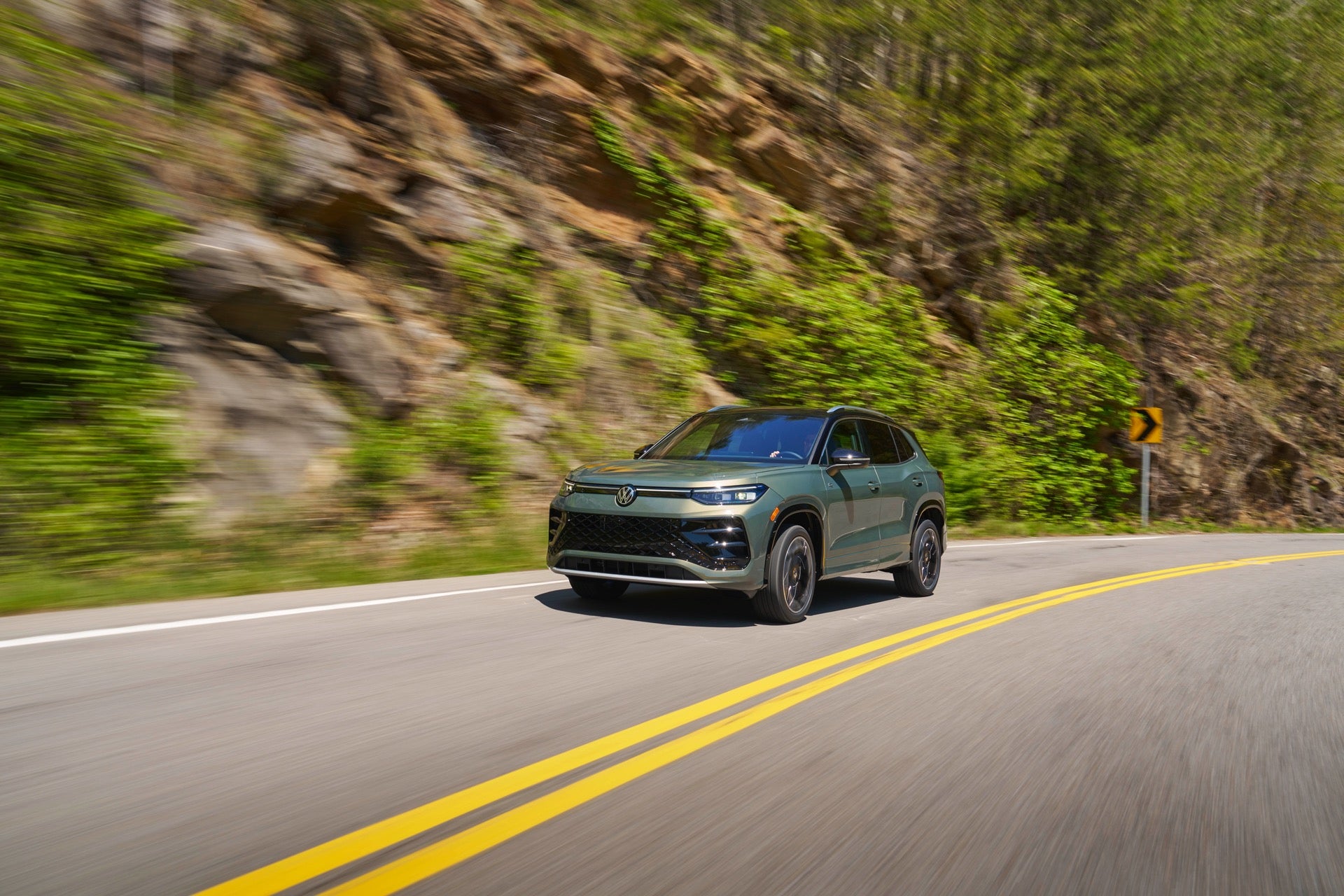
An Avocado Green 2026 Volkswagen Tiguan, Driving On The Highway Towards The Road Trip's Next Destination

​​Take a Scenic Drive in New Mexico This Year in Your Volkswagen​

We call our state of New Mexico the “Land of Enchantment.” With 121,589 square miles of diverse landscape, you can go from desert exploring to skiing and mountain climbing all within its borders. Las Cruces is just a speck on the map. Well…a huge speck in the south-central part of our state. To the north of us is a vast land that is constantly beckoning, imploring that little corner of our brain that loves to get out and drive to go take a Volkswagen on a road trip. Why not do so while exploring what New Mexico has to offer? The Trip Advisor website and app came up with a list of scenic drives you can take within hours of Las Cruces, and it suggested several interesting options, most located just north of our fair city. The Highroad to Taos Scenic Byway, to start, follows a part of New Mexico Highway 76 through the remnants of Old Spain. You get a glimpse of Spanish architecture while traversing through the mountains into Taos. Heading back, you can take the Lowroad from Taos and Santa Fe to our state’s capital. West of Santa Fe is the Jemez Mountain Trail National Scenic Byway. This takes you into the Santa Fe National Forest to the Jemez Pueblo. Along the way, there are some amazing waterfalls and hot springs that bring this mountainous loop drive to life. Keep to the north, and you’ll find another mountain loop known as the Enchanted Circle Drive. Starting in Taos, this loop encircles several alpine peaks while taking you through the history of this state and the land grant given to that area. You will pass through an old mining area that has no longer yielded its treasure. If you like a good rugged road, the Quebrados Backcountry Byway is an experience to drive. It is a 24-mile-long unpaved road that starts in Escondido off Interstate 25 to the north of us. The landscape is worth the trek along this road. This is a great experience that is closer to home. Our state is vast in size, as well as in topography. To enjoy some of these roads, you and your Volkswagen will be racking in the miles happily. We are 353 miles away from Taos, 284 miles to Santa Fe and 149 miles to the start of the Quebrados Backcountry Byway in Escondido. If you are up for an adventure, make sure your Volkswagen is ready to tackle the miles getting there and on these great roads. Before you go, make an appointment to bring your vehicle into the service center at Sisbarro Volkswagen for a thorough fluid check – including an oil change – and other inspections to make sure your Volkswagen is road trip ready. Our service center is still open during construction.

Contact Us

Fill out this form below and we'll contact you shortly
*Required Fields