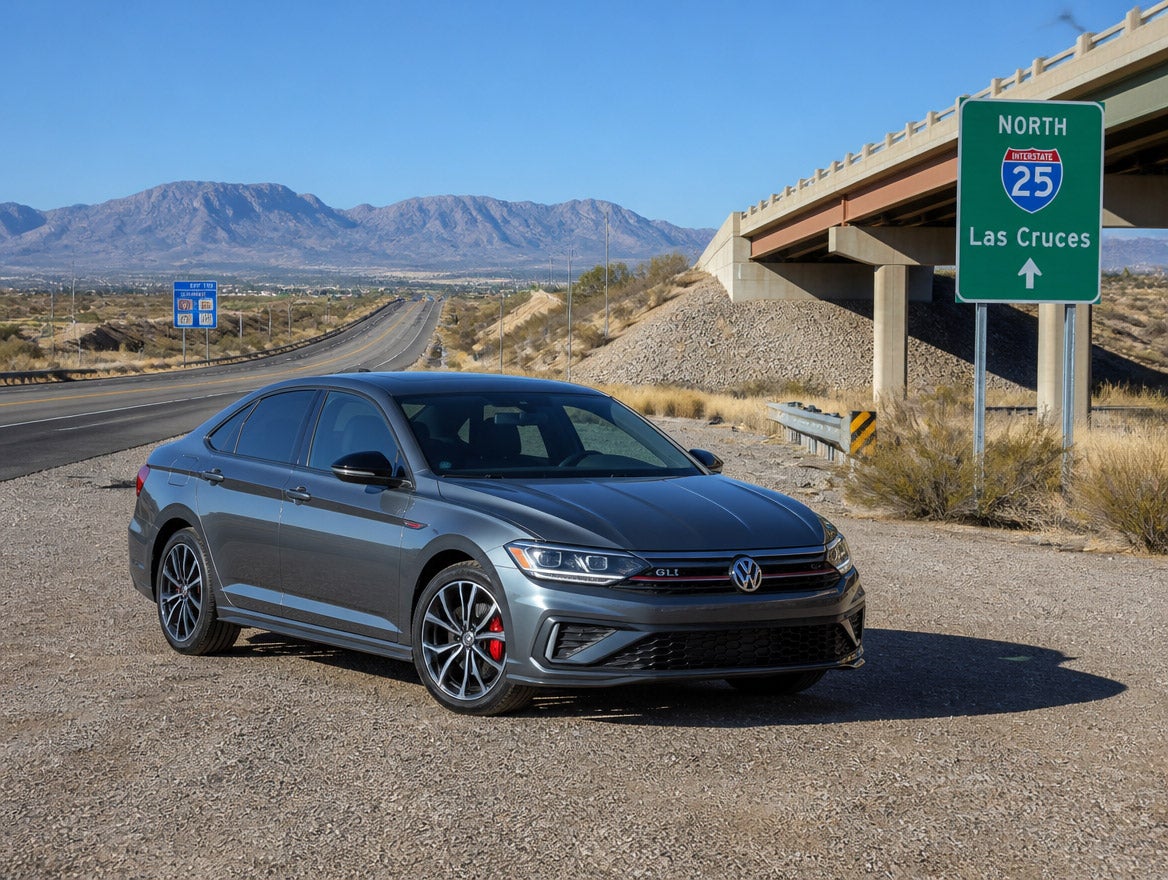


White Sands sits about 45 miles east of us on US-70, an easy run on paper. And it stays easy right up until your A/C starts losing ground on a 97-degree afternoon, or US-70 closes for a missile test while you're waiting to head home, or you catch a warning light on the gypsum-packed Dunes Drive with no cell signal and no shoulder. None of those scenarios need bad luck. They just need a skipped pre-trip walk-around. We tell our own customers the same thing before they pull out. Spend twenty minutes on this list, and the trip takes care of itself. Book a pre-trip service visit with our team before you go What Goes on the Checklist? Every item below actually matters for the specific conditions between Las Cruces and White Sands: sustained highway speeds on open desert, a hardpack gypsum road inside the park, September heat that's still regularly hitting the low-to-mid 90s, and afternoon monsoon thunderstorms that can materialize fast on the drive back. Print it, tape it to the dash, and check things off as you go. Volkswagen Pre-Trip Checklist: Las Cruces to White Sands [ ] NHTSA recall status (Atlas and Atlas Cross Sport owners, check this first) (verify your VIN at NHTSA.gov before you load anything) [ ] Tire pressure (check cold, before you leave the driveway; PSI lives on the sticker inside your driver's door, not the sidewall number) [ ] Tire tread depth (4/32" or below is a hard stop before any highway run; gypsum surface on Dunes Drive is packed but unforgiving on worn rubber) [ ] Engine oil level and service interval (The published schedule for the Jetta, Taos, Tiguan, and Atlas calls for every 10,000 miles or 12 months using approved synthetic; if you're within about 1,500 miles, go ahead and change it before you go) [ ] Coolant level (high desert at elevation means your cooling system runs harder; check the reservoir cold) [ ] Brake fluid (brake fluid absorbs moisture over time and degrades; have it inspected if it's been more than two years) [ ] A/C performance (this one matters more than people expect; September temps at White Sands still average in the low 90s, and a weak A/C on the Dunes Drive with the car parked in direct sun is a genuinely uncomfortable situation) [ ] Windshield washer fluid (desert dust and bug splatter happen fast on US-70; keep it full) [ ] All exterior lights functional (headlights, brake lights, reverse lights; a Monday late-afternoon return from White Sands can put you on US-70 at dusk) [ ] Wiper blades (monsoon season runs through late September; afternoon storms on the return drive are real) [ ] Battery (heat accelerates battery degradation; if yours is over three years old, have it load-tested) [ ] Cargo area and roof load secure (the last four miles of Dunes Drive are hard-packed gypsum, not pavement; anything loose in the cargo area will know it) [ ] Emergency kit (water for passengers (at least a gallon per person for a summer-adjacent visit), first aid kit, jumper cables or a jump pack, phone charger, and a physical paper map or downloaded offline navigation for inside the park where signal drops) [ ] US-70 closure plan (US-70 passes through White Sands Missile Range and closes temporarily for testing; check conditions the morning of your trip (NPS.gov or the park's recorded line) and build a buffer into your return time) Why These Items Matter on This Specific Route Desert heat and the Dunes Drive put different demands on a Volkswagen than a typical I-10 commute. So the key items on that list earn more than a quick glance. The A/C and Cooling System: Your Biggest Risk Factor A/C failures rarely announce themselves on your grocery run. They announce themselves at mile 30 on an open highway with no shade. The gypsum dunes at White Sands reflect sunlight in a way that makes the air feel even hotter than the thermometer says, and a parked car can turn into a genuine heat problem in under ten minutes. Heat builds fast. When we run a pre-trip check, our service team looks at refrigerant charge, belt condition, and condenser cleanliness. Three things that stay invisible in daily use get obvious under sustained desert load. The Tiguan and Atlas both run climate-control systems that do real work on a day like this. And that work needs a system that's genuinely in good shape. Tires: The Gypsum Dunes Drive Is Not a Parking Lot The first four miles of Dunes Drive inside the park are paved. The last four are hard-packed gypsum. Not sand, so you won't need a truck or 4WD. But it's an abrasive, fine-particulate surface that stresses tire sidewalls and shows up any existing damage you might've missed on asphalt. A tire with a slow sidewall crack or a bubble rarely blows on I-25. Get that same tire flexing on an uneven surface at low speed, though, and it can let go, which is exactly what those final four miles deliver. Tread below 4/32" on any corner is a reason to reschedule or take a different vehicle. There's no workaround, no exceptions. Note for Atlas and Atlas Cross Sport owners: NHTSA recall 44BW covers certain 2026 Atlas and Atlas Cross Sport vehicles produced between late October and early November 2025 for incorrect wheel bolts installed during manufacturing. Per NHTSA, affected owners were advised not to drive their vehicles until the repair is complete. The fix is free at any Volkswagen dealer. Check your VIN at NHTSA.gov before this trip (it takes two minutes, and we can confirm your status and complete the repair if needed). Oil Interval: The Short-Commute Problem If your day-to-day driving is mostly short trips around Las Cruces (school runs, NMSU campus loops, quick errands), your oil is working harder than the mileage suggests. Short trips that don't fully warm the engine let moisture and combustion byproducts build up in the oil faster than they would on a highway commute. The Volkswagen maintenance guidance accounts for this. If your driving pattern has been mostly short runs, the practical service interval sits closer than the odometer reading implies. A 90-mile round trip to White Sands on US-70 at highway speed is sustained heat load on an engine that may have spent most of the summer in warm-up mode. If you're within 1,500 miles of your interval, change it first. Taos owners should note that Volkswagen lists the 2026 Taos oil service interval as every 10,000 miles or 12 months using approved synthetic. The same cadence applies across the Jetta and Tiguan lineup. Always confirm the spec in your owner's manual for your exact engine. The Jetta and Jetta GLI share that interval. Confirm the spec for your engine in your owner's manual; your service team is the right call when you're not sure. Item Why It Matters on This Route A/C system Sustained desert highway heat; reflected gypsum sunlight inside the park Tire condition Last 4 miles of Dunes Drive are hard-packed gypsum, stresses sidewalls Oil interval Short-trip Las Cruces driving degrades oil faster than mileage suggests Coolant level High-desert elevation adds load on the cooling system at sustained highway speeds Battery health Summer heat accelerates battery degradation; test before a remote destination Wiper blades September monsoon tail-end means real chance of afternoon storms on US-70 Exterior lights Late returns on US-70 at dusk are common; lights need to be verified NHTSA VIN check Recall 44BW affects certain 2026 Atlas and Atlas Cross Sport (wheel bolts) Print-and-Go: Your Pre-Trip Summary You don't need a full service visit for every item on this list. Some of it you can knock out in the driveway in ten minutes. The ones that need a lift (brake fluid, A/C refrigerant, battery load test, recall verification) are worth booking with us a few days before you go. Grab the short version below, snap a photo, and take it with you. Do in the driveway: Tire pressure (cold, driver-door sticker PSI) Coolant reservoir level (engine cold) Washer fluid (top it off) All exterior lights (walk around the car with someone watching) Cargo secure, emergency kit loaded Book with our service team: A/C performance and refrigerant check Battery load test (especially if it's 3+ years old) Oil change if you're within 1,500 miles of your interval Brake fluid inspection NHTSA VIN recall check (Atlas and Atlas Cross Sport owners: do this before anything else) The morning of the trip: Check NPS.gov or call the park for US-70 closure info Download offline maps for the park (cell signal is unreliable inside) Pack water. At least a gallon per person for September visits when temps still reach the low 90s. Schedule Your Pre-Trip Service Check Frequently Asked Questions Do I need 4WD or AWD to drive through White Sands National Park? No. The Dunes Drive is fully passable in a standard front-wheel-drive Volkswagen. The NPS confirms the road is suitable for cars, motorcycles, and recreational vehicles. The last four miles are hard-packed gypsum rather than pavement, so good tire condition matters. Ground clearance and drivetrain are not limiting factors for most visitors. An AWD Tiguan or Atlas Cross Sport gives you a bit more composure on the gypsum surface, but it isn't a requirement. When should I schedule a pre-trip service visit at Sisbarro Volkswagen? Aim for at least three to four days before you plan to leave. That gives us time to complete any work that turns up during the inspection (an oil change, a battery replacement, or a recall repair) without rushing. If you're planning a September trip around the Labor Day window or a weekend, book earlier. A brief pre-trip check covers the items that need a lift (A/C, brake fluid, battery) in one visit. Get Your Volkswagen Ready for the Road Sisbarro Volkswagen 1115 S Valley Dr, Las Cruces, NM 88005 (575) 319-9131

Sisbarro Volkswagen Proudly Supports the 60th Southern New Mexico State Fair
Southern New Mexico State Fair 2026: Sisbarro Volkswagen Proudly Supports Las Cruces' 60th Annual Fair Some traditions in Doña Ana County don't need an invitation. When October gets close, families from Las Cruces, Mesilla, Anthony and El Paso start clearing a day on the calendar for the fair. This year is a milestone. The 60th Annual Southern New Mexico State Fair & Rodeo runs September 30 through October 4, 2026, and Sisbarro Volkswagen is proud to help make it happen. We're sponsoring alongside our sister stores: Sisbarro GMC, Sisbarro Chrysler Dodge Jeep Ram and the Sisbarro Truck Store. Below you'll find how to pick your best fair day, and how to make sure your ride is ready for the drive out I-10. Which Fair-Goer Are You? Finding Your Best Day at the Southern New Mexico State Fair Think of fair week like a five-course menu. Nobody eats every course. You pick the ones you came for and plan around them. Here's how most families we talk to naturally sort themselves out: The Barn Family. You have a kid showing an animal, or you just love the livestock barns. Shows start early: swine and market rabbits kick off at 8 a.m. on Wednesday, and the Junior Livestock Sale is Friday evening. The Rodeo Crowd. The Ranch Rodeo takes over Thursday night. The PRCA Rodeo follows Friday and Saturday at 7 p.m. and Sunday at 1 p.m., all at the Pete Domenici Rodeo Arena. The Concert Crowd. The Electric Company Concert Pavilion hosts Wade Bowen on Thursday, Oct. 1, Tyce Delk on Friday, Oct. 2, and Restless Road on Saturday, Oct. 3. The Car People. A Model A vintage car display fills the 4-H Building Saturday morning. Sunday brings an all-day car show at The Electric Company Pavilion. The Sisbarro Day Crowd. Wednesday, September 30 is Sisbarro Day. According to the fair's official schedule, admission is discounted all day, and the evening wraps with the opening ceremony and the carnival lights coming on. The takeaway: pick your day around your "must-see," then build the rest of the visit around it. You'll leave happier and less worn out. Southern New Mexico State Fair Trip Planner: Matching Your Plans to Your Ride A fair day in Southern New Mexico is really a road trip, a long day outdoors and a late drive home rolled into one. Your vehicle is part of the plan. Situation Cause / Reason Recommended Action Driving out daily for 4-H or FFA shows Early barn times and repeat trips on I-10 add up fast Check tires and brakes before the week starts. For heavy hauling, our Sisbarro GMC and Truck Store neighbors can help. Bringing the whole family for the carnival and the rodeo Strollers, coolers, jackets for the cooler night air and tired kids Consider three-row space like the Atlas or the ID. Buzz, and test drive one with your real gear in mind. Coming up from El Paso or Anthony for a concert A longer highway drive and a late return in the dark Book a quick pre-trip visit covering lights, wipers, fluids and tires. Showing off your car at Sunday's car show Desert dust and strong sun are hard on paint and interiors Ask about accessories and protection, and give the air filters a look afterward. Most people are surprised how much one fair day asks of their vehicle. A little prep keeps the focus on funnel cakes, not flashing dash lights. Why the Fair Matters in Las Cruces, and Why Sisbarro Shows Up The fairgrounds sit about 12 miles west of town on I-10, out on the open West Mesa. Take Exit 132 (Airport) or Exit 127 (Corralitos Road). On Friday and Saturday, the fair recommends the Corralitos exit for express parking. That drive tells you something about this region. People here cover real distance for the things they care about: ranch rodeos, youth livestock shows, family time and neighbors they only catch up with once a year. The Sisbarro family has been part of that story since 1981. Over more than 45 years, that's meant support for schools, youth athletics, local nonprofits and the Pat & Lou Sisbarro Community Park at New Mexico State University. You can see the full Sisbarro Southern New Mexico State Fair sponsorship page for more. You can also explore the wider list of Sisbarro Volkswagen community involvement across Doña Ana County. This matters for anyone who wants their car dollars to stay close to home. A local dealer that invests in local traditions is one you can hold accountable. Pre-Fair Checkup or Wait Until After? A Straight Answer Truth is, most well-maintained Volkswagen vehicles will handle a fair trip without a second thought. The real question is whether anything has been nagging at you. Here's the tipping point. If a warning light is on, your brakes feel soft or your tires are near the wear bars, don't wait. A dark stretch of I-10 at 11 p.m. with a carload of sleepy kids is the worst time to find out. If everything feels normal, enjoy the fair first. Then book a visit, because dusty lots are tough on air filters and paint. Either way, you can schedule Volkswagen service in Las Cruces online in a few minutes. What if the fair has you realizing you've outgrown your ride? Is a three-row SUV right for everyone? Not necessarily. A Tiguan or Taos covers plenty of families, while bigger crews may want the Atlas. Take your time. Browse new Volkswagen inventory, and if you're thinking about moving on from your current vehicle, start with a trade-in value estimate. No pressure, just information. Common Questions About the Southern New Mexico State Fair in Las Cruces Is there a way to save on admission to the Southern New Mexico State Fair? Yes. According to the fair's official 2026 schedule, Wednesday, September 30 is Sisbarro Day, with discounted admission all day. Thursday and Friday offer discounted admission until 2 p.m., and Saturday includes a discount for military members and first responders with valid ID. Confirm details with the fair before you go. What should I check on my Volkswagen before driving out to the fairgrounds? Focus on tire pressure and tread, brakes, headlights and taillights, and wiper blades. Your cabin and engine air filters take a beating on dusty desert lots. If a warning light is on, get it looked at before fair week, not after. When is the 2026 Southern New Mexico State Fair, and which day should I go? The fair runs September 30 through October 4, 2026. Livestock fans should go early in the week, and rodeo fans have Thursday through Sunday. Car lovers should circle Sunday for the all-day car show. How do I get to the Southern New Mexico State Fairgrounds from Las Cruces? Head west about 12 miles on I-10 and take Exit 132 (Airport) or Exit 127 (Corralitos Road). On Friday and Saturday, use the Corralitos exit for express parking. We'll See You at the Fair Sixty years is a long time for any tradition to last. It lasts because families keep showing up: the kid walking a lamb into the ring, the grandparents in the rodeo stands, the friends splitting a funnel cake under the carnival lights. Sisbarro Volkswagen is proud to be a small part of that. Whether you're headed out for Sisbarro Day or Sunday's car show, we hope you get there comfortably, stay a little late and drive home with a full heart. And when you're ready to talk about your next Volkswagen or your next service visit, our Las Cruces team is right here on South Valley Drive. Explore New Volkswagen Inventory Call Sales: 575-319-9131